The Scent of Cold Steel
The lead culinary artist of a celebrated dining establishment is discovered within the walk-in freezer. An investigation is initiated following a whispered remark from a staff member, prompting scrutiny of operational rivalries, private arrangements, and spoken denials that threaten the stability of professional standings and personal securities.
 Initial Crime Scene
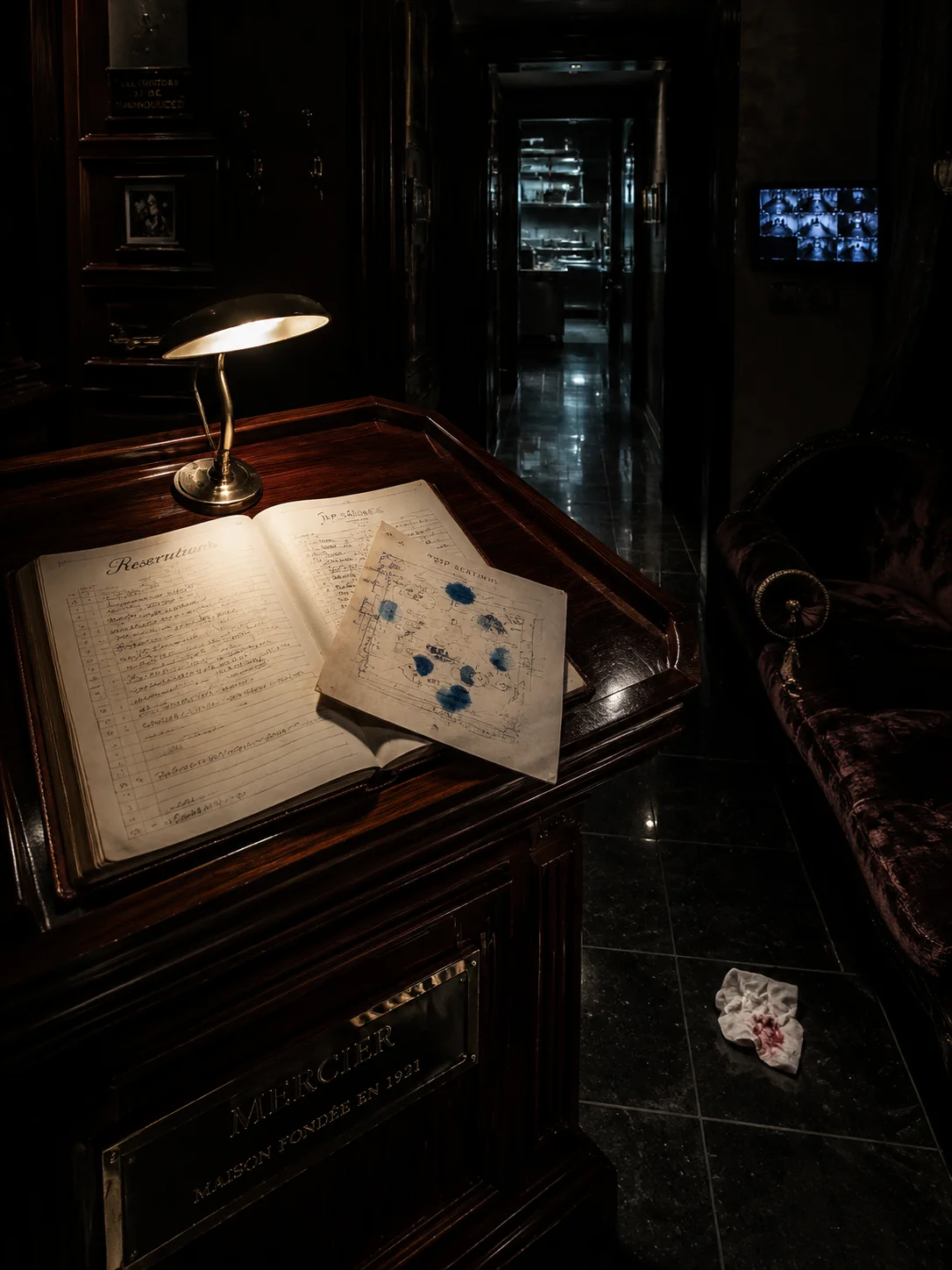
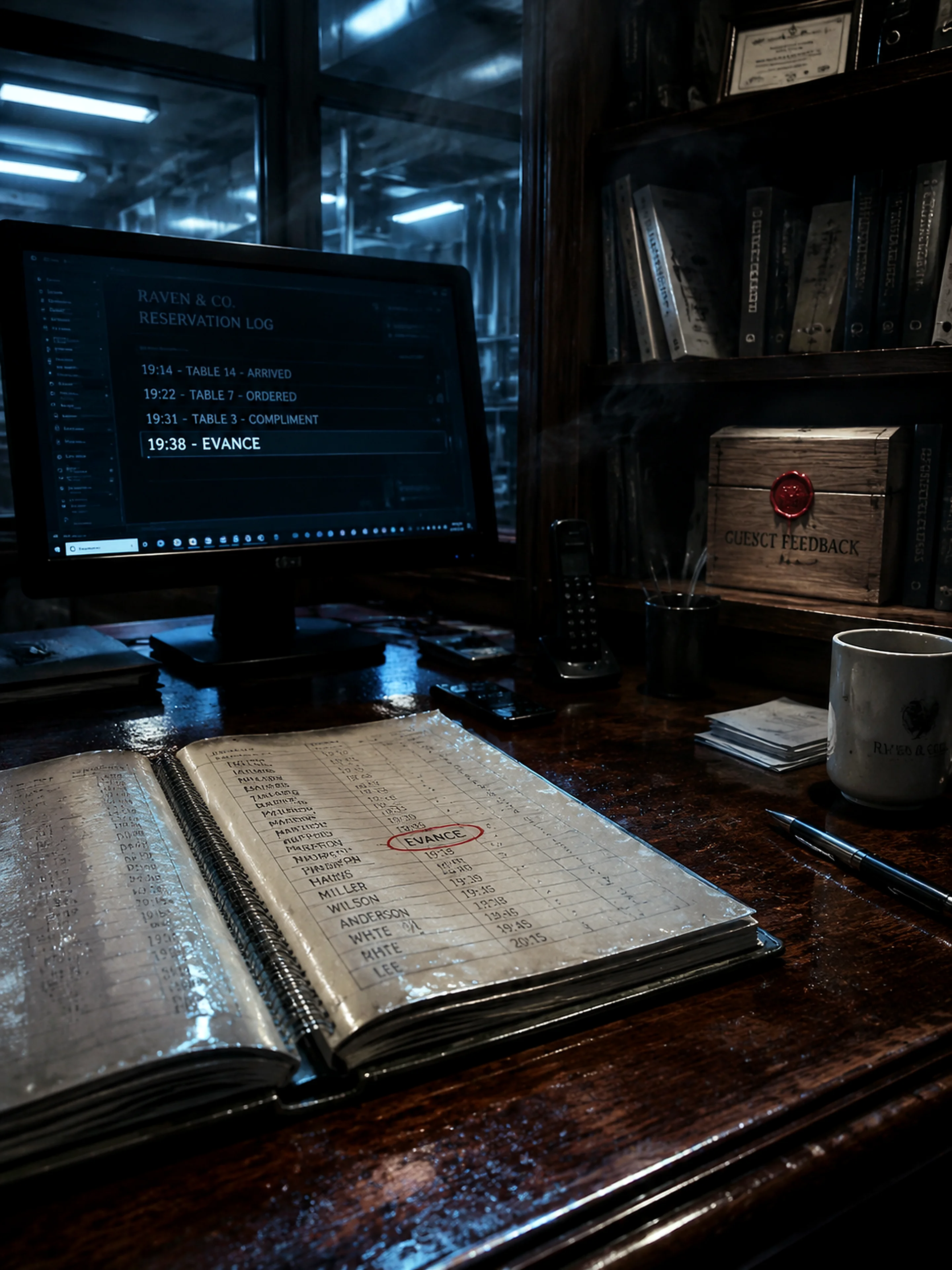
The air hits first—sharp, chemical lemon over a faint, metallic tang, a scent that coats the back of the throat. A low, persistent hum vibrates up from the refrigeration unit in the floor. Under the blue-white glare of the fluorescent panel, a sealed, laminated reservation book lies open on the mahogany desk, a name circled in red ink. A digital log glows on the computer screen behind it, its timestamp fixed at '19:38 - EVANCE'. A wax-sealed suggestion box on the bookshelf catches the light, its surface holding a faint, acrid odor of burnt material.
 Crime Scene Environment
The lighting profile is a stark, high-contrast fluorescent glare in interior spaces, with deeper, uneven shadows in storage corridors. The humidity/temperature profile is maintained at a cool, stable 1.0°C within sealed cold-storage units, while ambient kitchen areas hold a warm, steamy humidity thick with airborne grease. Acoustic density is layered: the deep, rhythmic thrum of compressors and ventilation systems underlies the distant, sharp clatter of metal pans and the hiss of searing surfaces from the kitchen line.
 Investigation Constraints
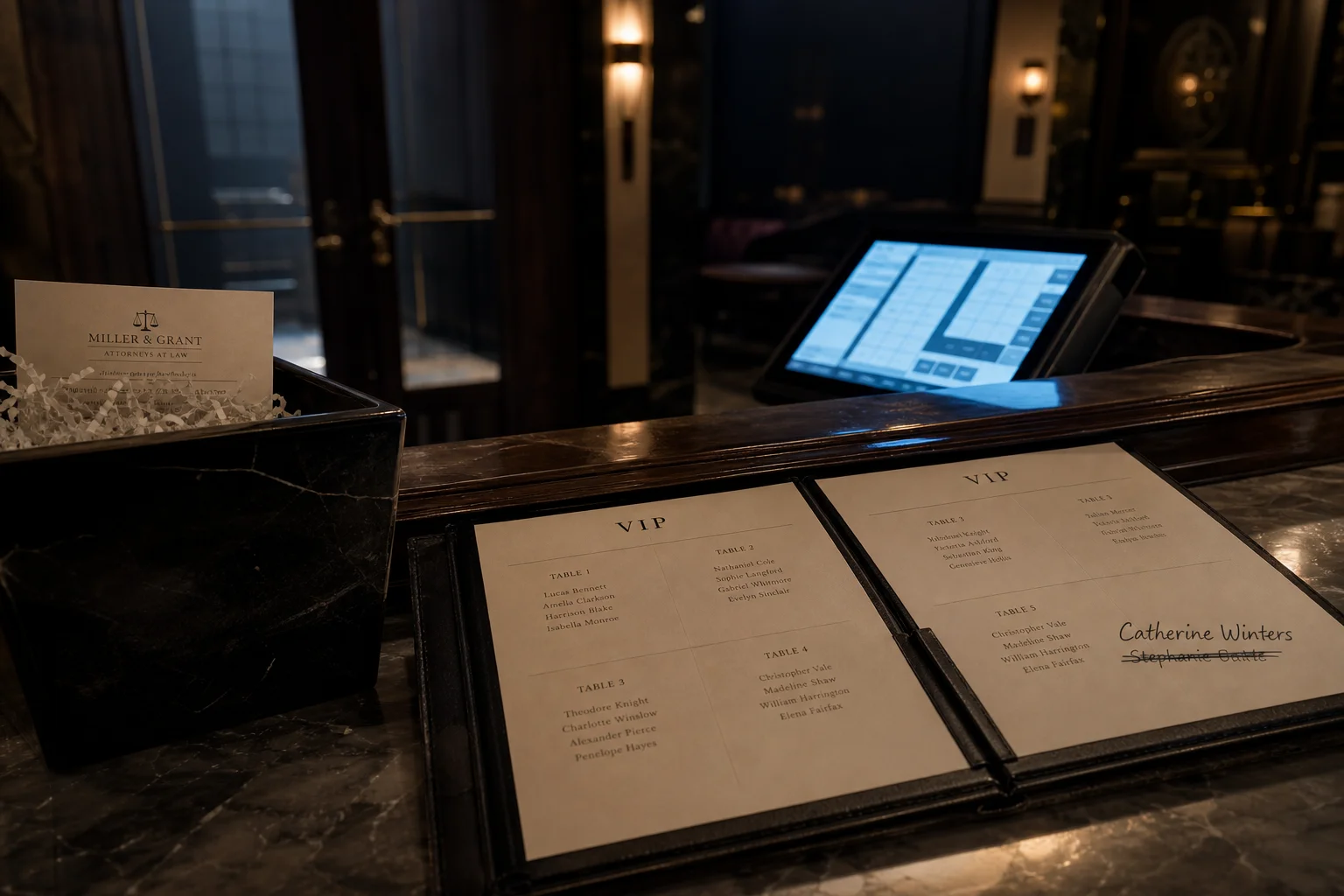
Modern, high-end restaurant environment. Includes: digital reservation and inventory systems (logged via tablet), security cameras with DVR recordings, smartphone communications (texts, social media DMs), printed staff schedules, handwritten prep lists, electronic door access logs for secure storage areas (wine cellar, manager's office), and a centralized HVAC control panel with digital readouts.
✦ Related Cases ✦