The Silence of the Grandfather Clocks
A society wedding at a historic country estate is interrupted by a structural failure, resulting in a fatality. An independent investigator is summoned to examine the physical premises, interview the attendees and staff, and document the sequence of events leading to the incident.
 Initial Crime Scene
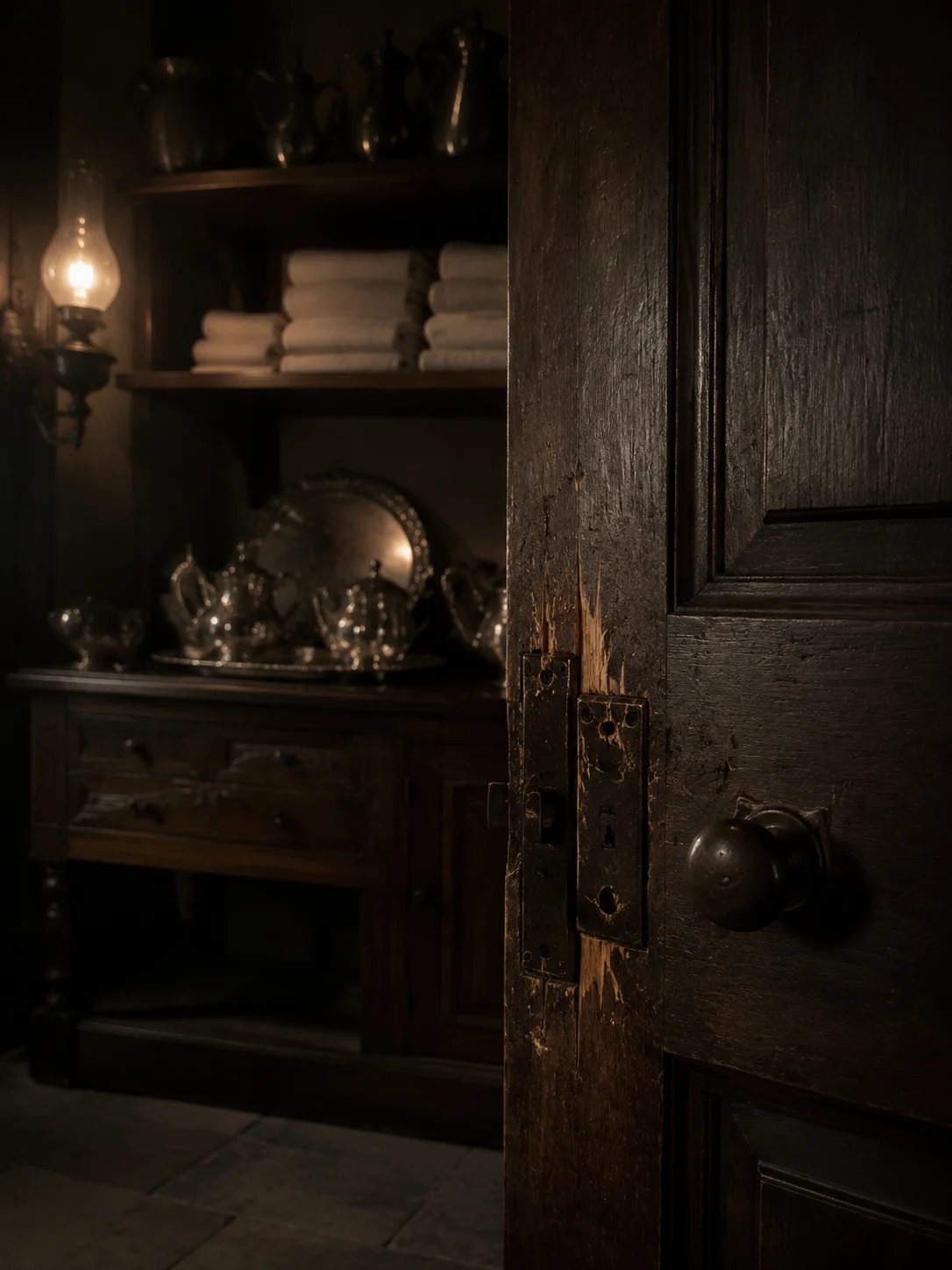
The scent of beeswax and cold meat hangs in the cool air of the service pantry, punctuated by the soft hiss of a gas lamp. A heavy oak door, its latch mechanism showing a fresh, deep gouge, stands slightly ajar. The deep, resonant tick of a large grandfather clock echoes from the corridor. Polished silver glints on a service tray, and stiff, folded linen napkins are stacked on a shelf.
 Crime Scene Environment
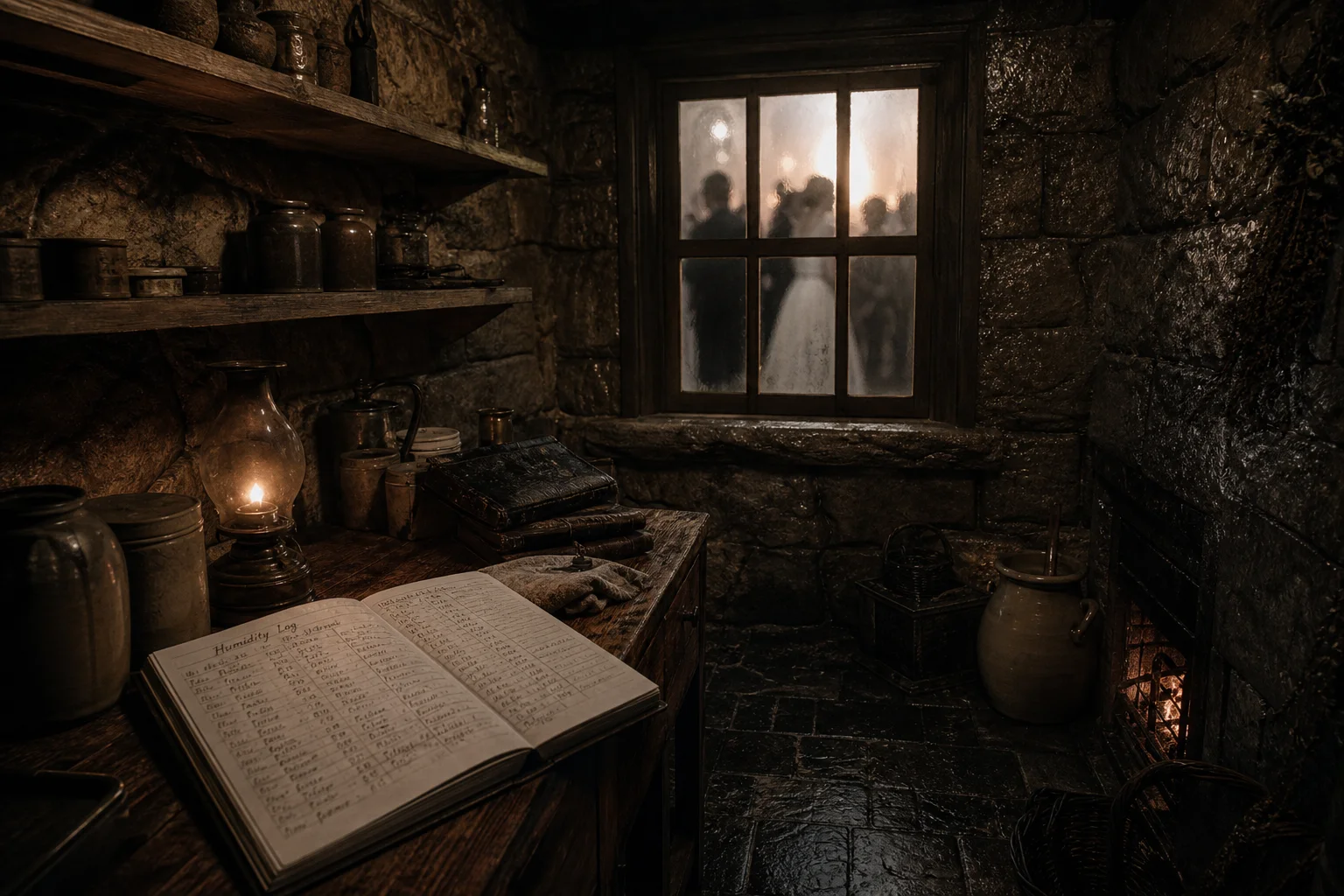
The environment is one of controlled, dim illumination, primarily from gas lamps and low-wattage basic electrical lighting in formal rooms, creating pools of light and deep shadow. The air carries a pervasive coolness and moderate humidity, consistent with stone construction and limited heating. Acoustic density is low, dominated by the rhythmic, mechanical ticking of multiple grandfather clocks, the rustle of heavy fabrics, and the occasional distant, muffled clink of china or crystal.
 Investigation Constraints
Edwardian-era (1905-1910) technology: mechanical clocks with pendulum mechanisms, manual telegraph systems, horse-drawn carriages, gas lamps, basic electrical lighting in upscale rooms, hand-cranked telephone switchboards, manual wine service tools, heavy oak doors with skeleton key locks, servants' bell-pull systems, wax-sealed letters, handwritten ledgers.
✦ Related Cases ✦