The Static in the System
A corporate jet's unplanned descent near a remote airfield triggers a forensic audit. A specialist is dispatched to reconstruct the event from magnetic tapes, carbon copies, and teletype logs, navigating a network of procedural records and competing accounts.
 Initial Crime Scene
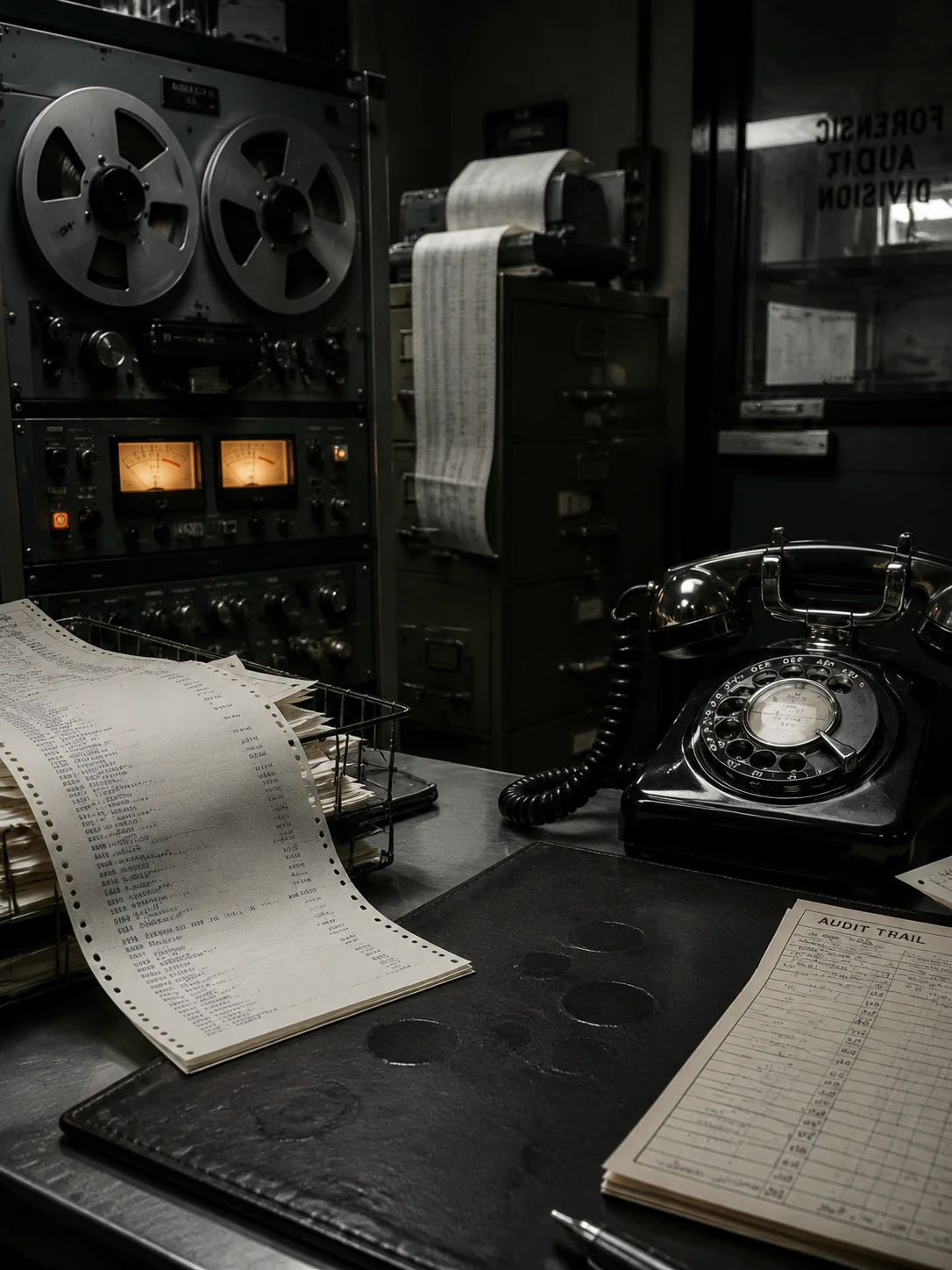
The fluorescent hum of the overhead light meets you first, a low, persistent buzz in the sterile air. A sharp, ozone smell, faint but distinct, emanates from a reel-to-reel playback unit in the corner. Your eyes adjust to the light, picking out the crisp, perforated edges of a teletype printout on the desk, the deep circular impressions pockmarking a leather blotter, and the glint of a rotary-dial telephone's chrome cradle.
 Crime Scene Environment
The space is defined by sterile, corporate fluorescent lighting. The air is dry and carries a persistent, low acoustic density—the hum of electronics and the whisper of climate control. Textures are analog: the gritty feel of ticker-tape paper, the slick surface of carbon copy sheets, the cold metal of filing cabinets.
 Investigation Constraints
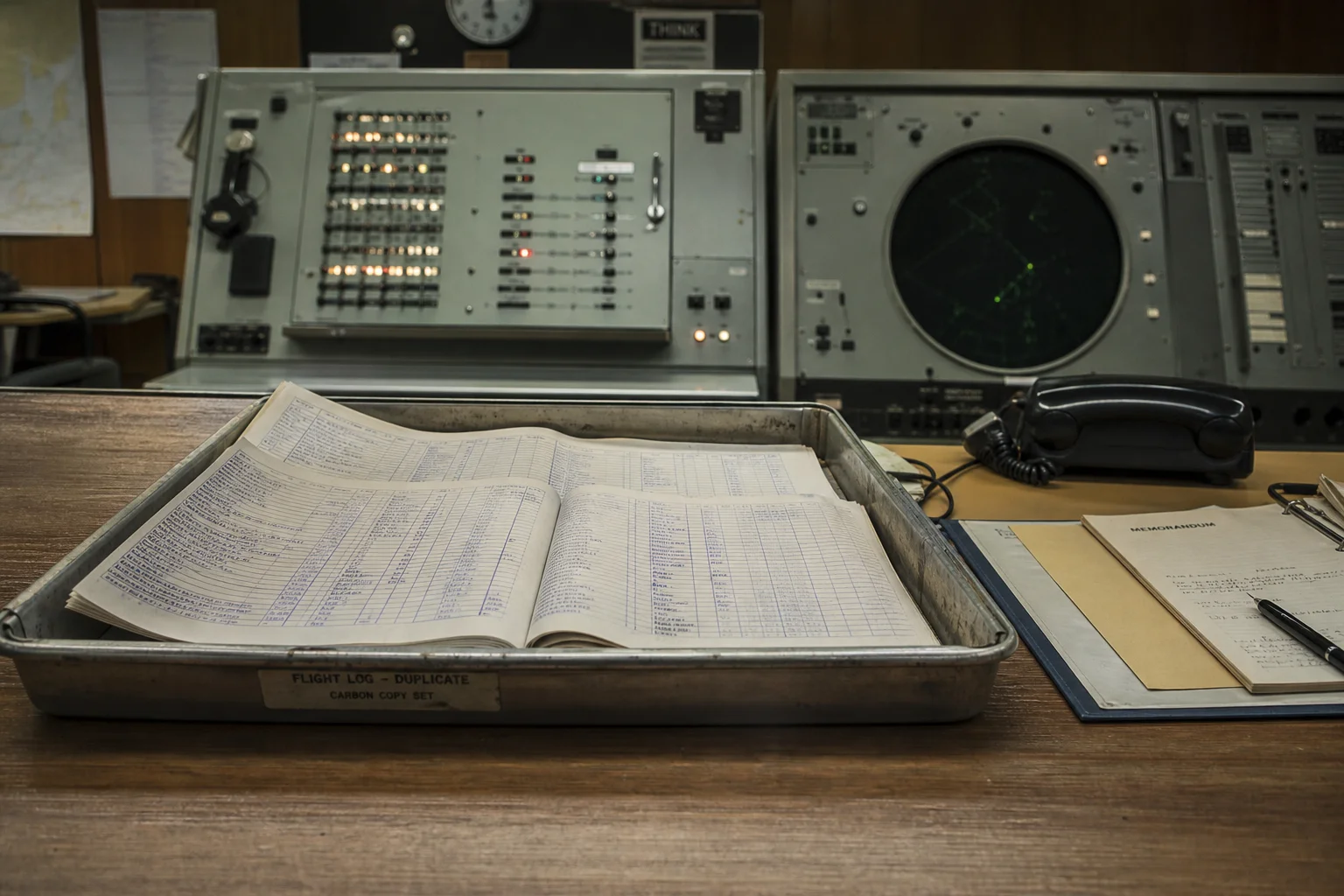
1990s-era corporate aviation technology. Key tools include: paper-based flight logs (handwritten, carbon-copied), analog cockpit voice recorders (CVR) with magnetic tape, early-model digital flight data recorders (FDR) with limited parameters, local airport radio communication logs (printed ticker tape), corporate internal telefax networks, and primitive weather teletype services. No internet, GPS, or real-time digital tracking. Information travels at the speed of paper and radio waves.
✦ Related Cases ✦