The Sterling-Vance Incident
The death of industrialist Elias Vance prompts a forensic specialist to investigate the corporate environment of Sterling-Vance Systems. The inquiry focuses on internal security logs, financial records, and personal accounts of company personnel, following a sequence of anomalous events on the evening of the incident.
 Initial Crime Scene
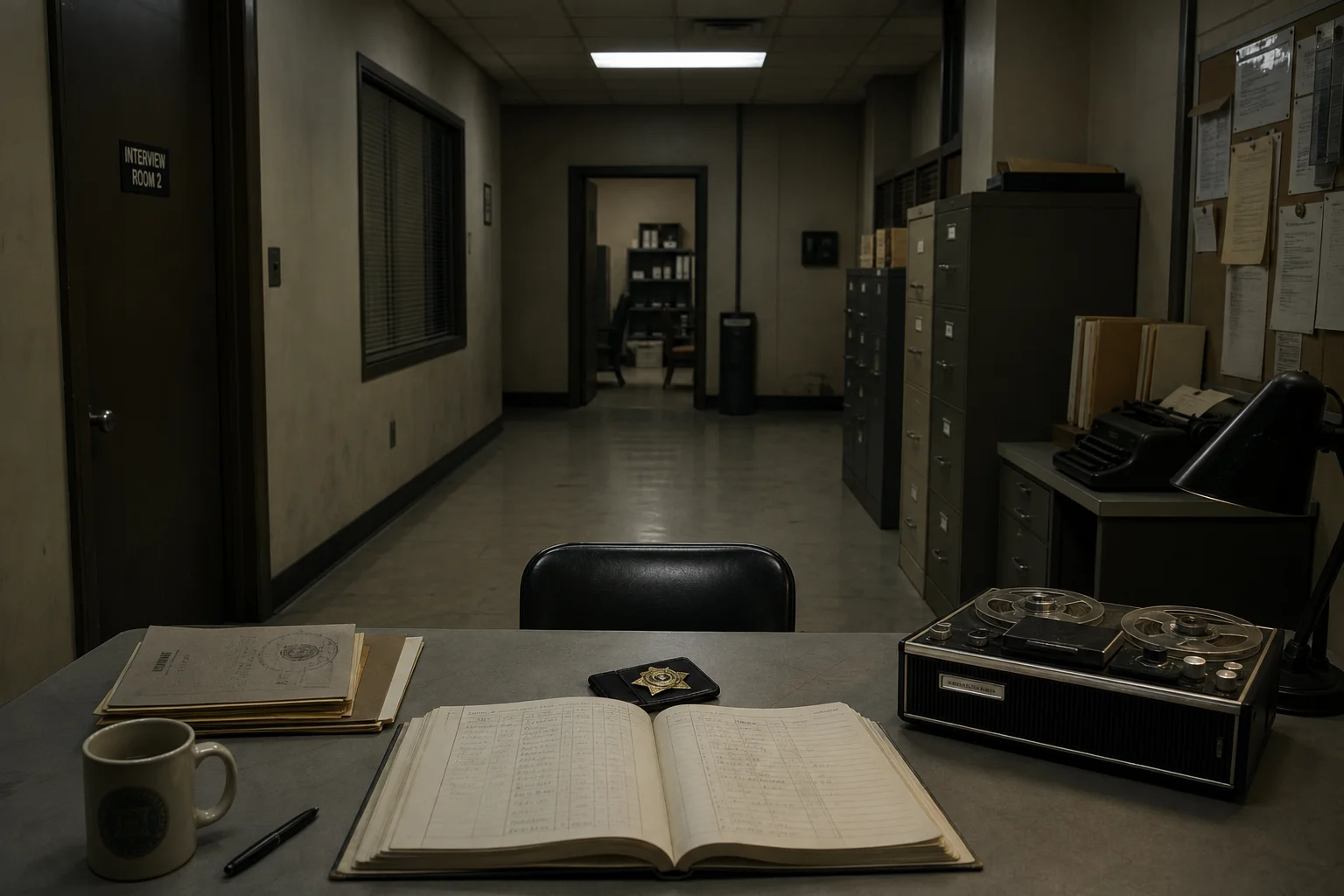
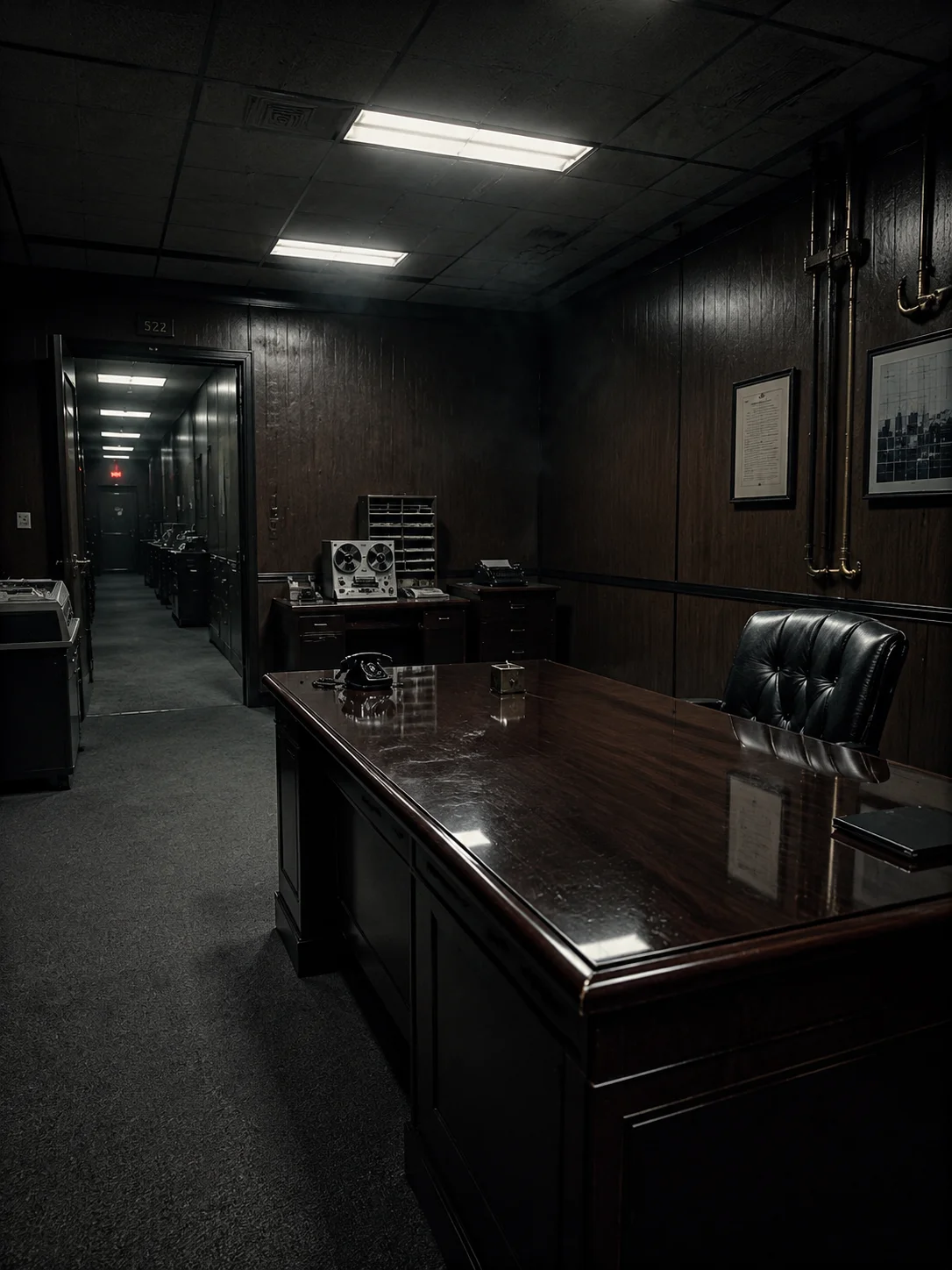
The fluorescent lights of the Sterling-Vance executive floor cast a cold, sterile glare across the thick carpet, broken only by the flicker of a tube in the corridor. The air carries the stale scent of old cigarette smoke and the sharp tang of ozone from the photo developer. From the mainframe server room, the low, constant hum of cooling fans underscores the silence. A grandfather clock in the victim's office ticks with a heavy, metallic cadence. The polished surface of the mahogany desk reflects a distorted, empty room.
 Crime Scene Environment
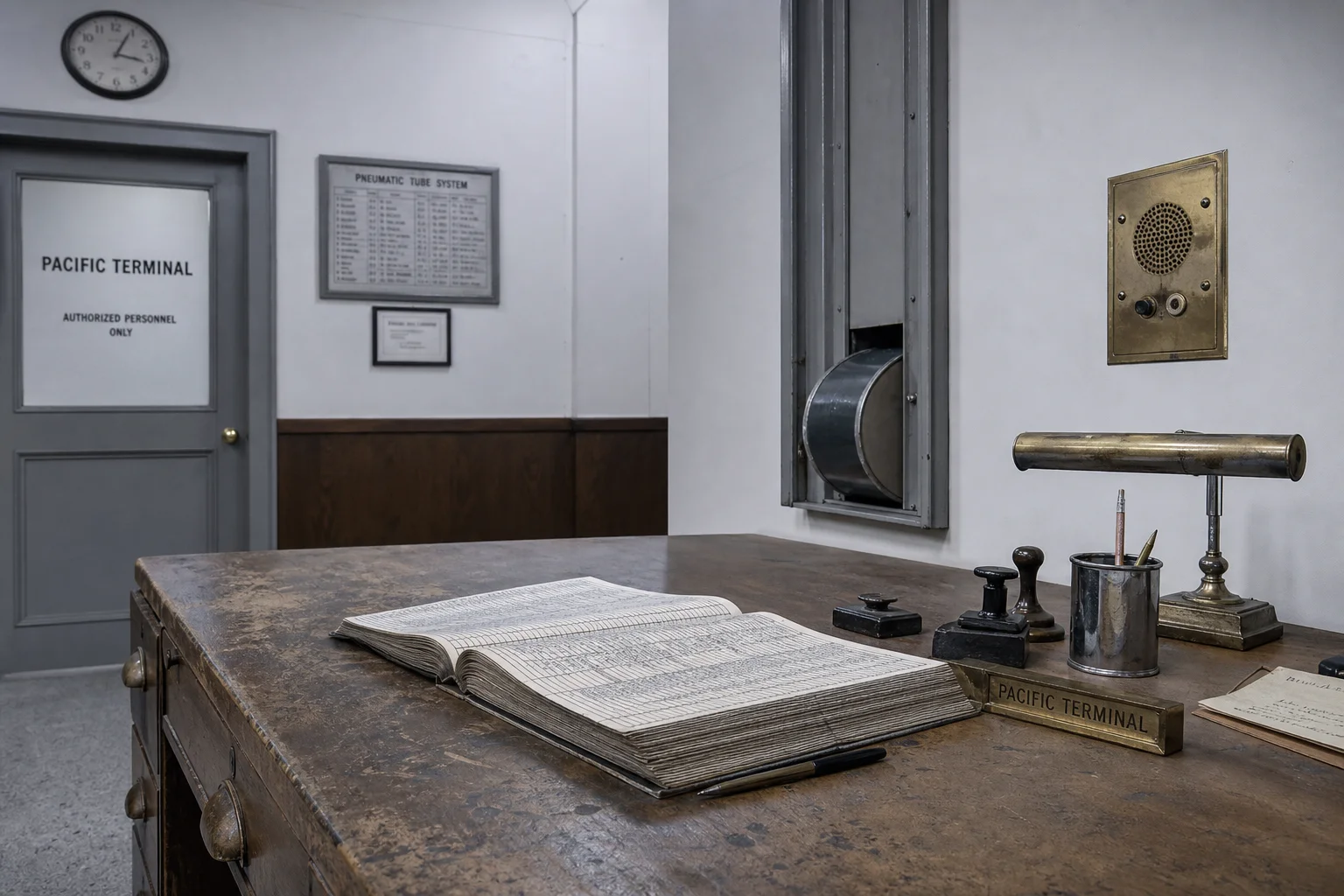
The corporate environment is defined by cold, clinical, fluorescent-lit interiors with uniform, humming illumination. The humidity is low, the air dry and conditioned, carrying faint chemical and ozone traces. Acoustic density is characterized by persistent, low-level mechanical hums from mainframe cooling, the whir of reel-to-reel tape transports, and the distant, rhythmic click-clack of IBM typewriters. Structural elements include wood-paneled offices, climate-controlled archive rooms, and cramped sorting hubs lined with brass pneumatic tubes.
 Investigation Constraints
1970s-80s analog corporate infrastructure. Key systems include mainframe computers with punch-card/early magnetic tape storage, pneumatic tube message systems, mechanical combination locks on filing cabinets, early electronic key-card access with magnetic strip logging, rotary and touch-tone telephones, carbon-copy paperwork, and film-based photography. No mobile devices, internet, or advanced biometrics.
✦ Related Cases ✦