The Studio Paradox
A closed-set reshoot for a star-driven thriller yields a prop blood formula mismatch during a fatal scene. The investigation navigates overlapping timelines, contractual arrangements, and personal scandals within the studio apparatus.
 Initial Crime Scene
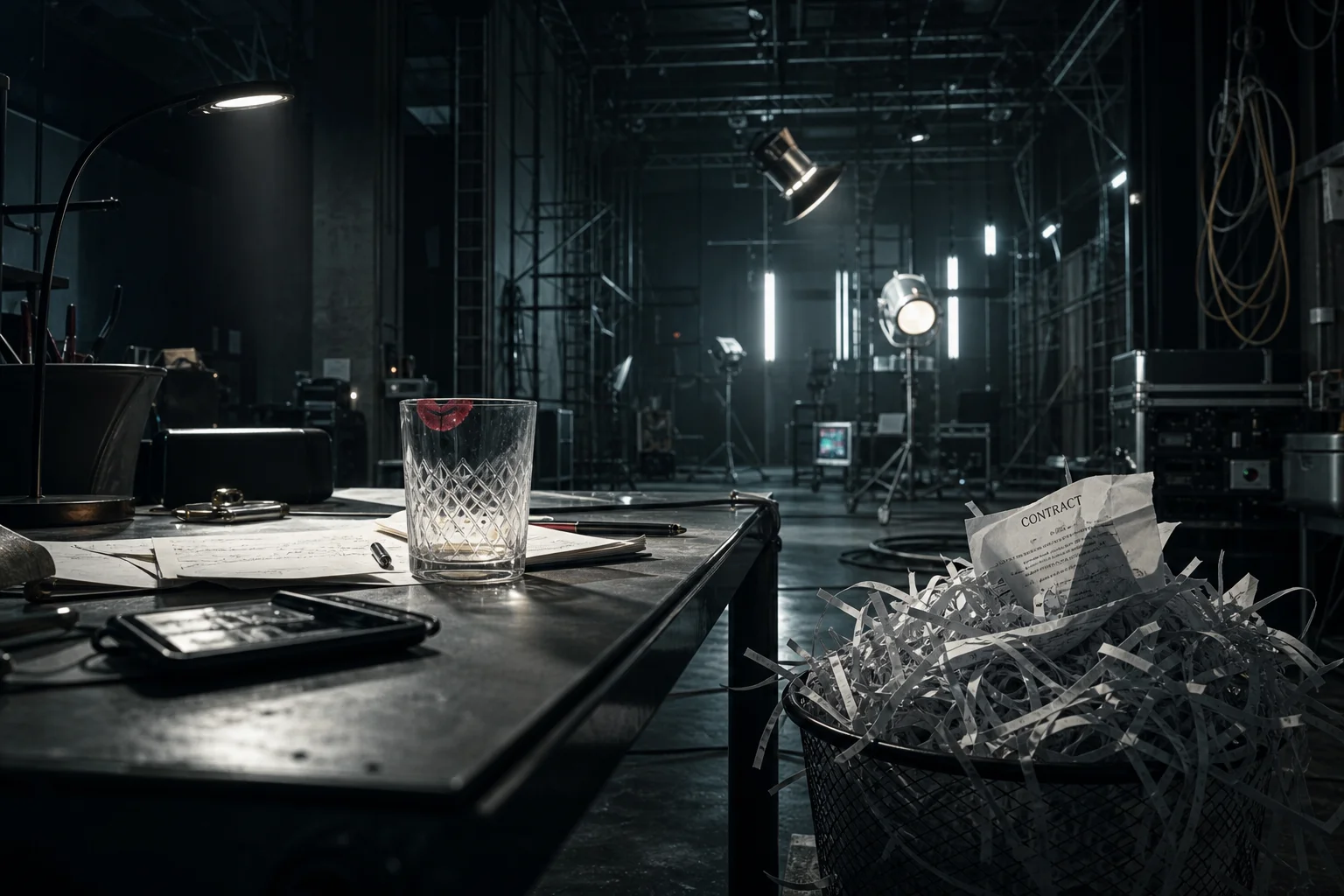
The heavy studio door closes behind you, sealing you in. The first thing that hits is the thick, cloying scent of 'saccharine vanilla' perfume, layered over the sterile bite of chemical solvents. From somewhere deeper in the set comes the low, intermittent hum of a vintage air conditioning unit. Your eyes adjust, taking in the glaring overhead work lights reflecting off a smeared lipstick print on a crystal glass, the chaotic topography of shredded contract paper spilling from a wastebasket, and the dark, distant geometry of lighting rigs and coiled cables.
 Crime Scene Environment
The lighting profile is harsh, utilitarian overhead work lights creating stark, high-contrast shadows. The humidity is low, maintained by a climate-control system that leaves the air sterile and slightly chilled, with a faint, persistent chemical undertone. The acoustic density is a layered mix of pervasive, low-frequency electrical hum from the equipment, intermittent sharp clicks from cooling lights, and the absolute absence of human vocalization, creating a dense, pressurized silence.
 Investigation Constraints
Analog telephones, handwritten call sheets, leather-bound script binders, mechanical film slate clappers, vintage walkie-talkies, film canisters, studio property lockboxes (key or combination), paper trail memos, handwritten contract addendums.
✦ Related Cases ✦