The Studio's Reflection
An independent investigator is summoned to a Hollywood studio lot following an incident in a star's private trailer. The studio environment is defined by contractual obligations, encrypted communications, and a dense network of professional and personal relationships. The investigation requires navigating the static of personal panics, missing data logs, and high-stakes public relations maneuvers to isolate a singular sequence of physical events.
 Initial Crime Scene
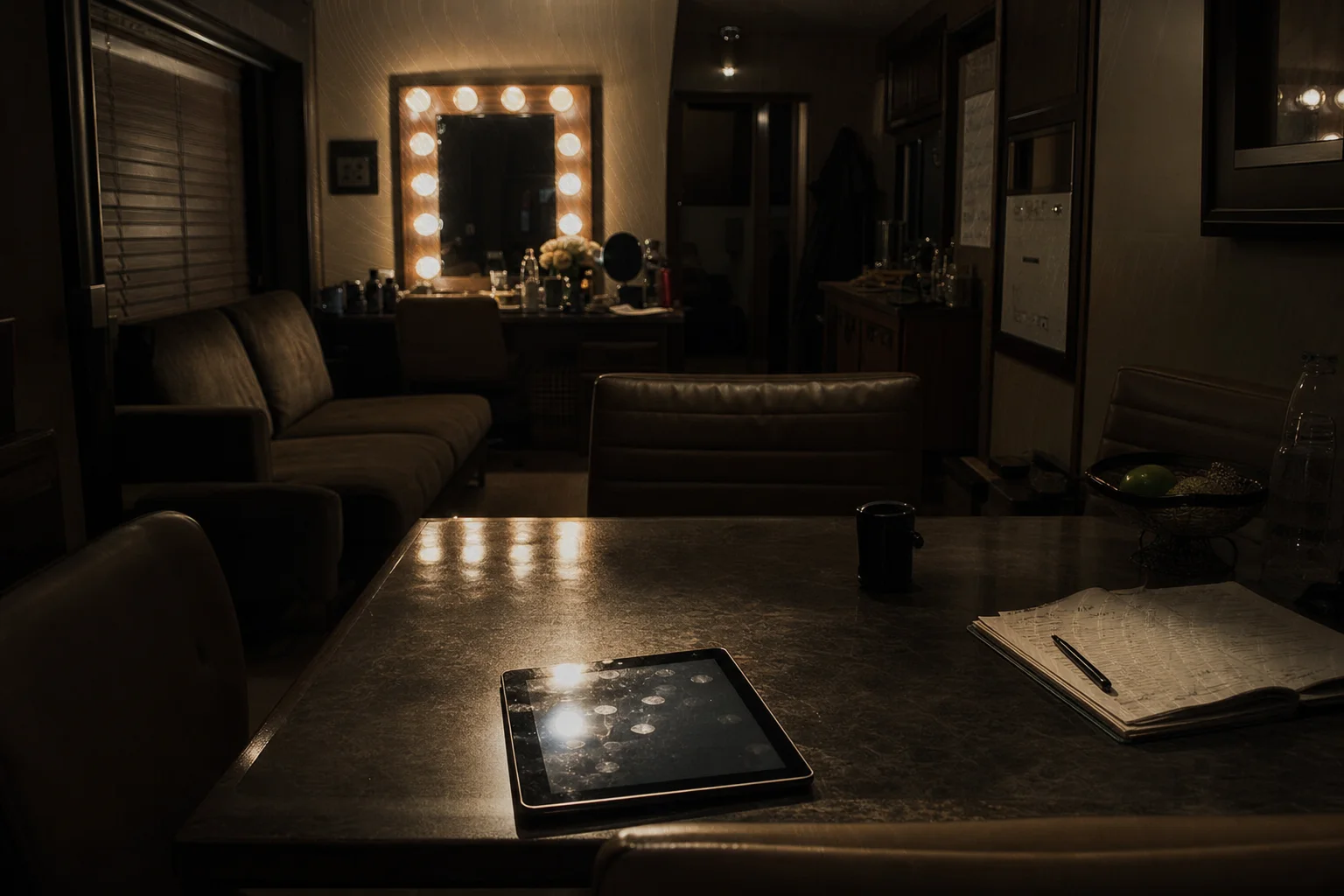
The first breath inside the trailer is a layered assault: the cloying, lingering scent of expensive perfume attempts, and fails, to mask a sharper, chemical odor beneath. A single, harsh overhead bulb in the vanity mirror casts long shadows across the daybed, its light glinting off the glossy, fingerprint-laden screen of a studio-issued tablet on the dining table. The only sound is the low, electrical hum from the tablet's charging port, a persistent counterpoint to the absolute stillness of the air.
 Crime Scene Environment
The sandbox envelope is a controlled, artificial climate. Lighting profiles shift from the harsh, unflattering glare of trailer vanity bulbs to the dim, cool glow of editing suite monitors and the institutional fluorescent wash of security checkpoints. The humidity is low, manufactured, with air carrying the faint, metallic tang of electronics and the pervasive, image-obsessed scent of varied colognes and perfumes. Acoustic density is layered: the muffled roar of a distant wrap party, the press-junket modulated voices in offices, and the oppressive, concrete silence of the soundstage prop storage.
 Investigation Constraints
Modern smartphones with encrypted messaging apps (WhatsApp, Signal), social media platforms (Instagram, Twitter), studio-issued tablets with production management software, digital call sheets, biometric keycard access to soundstages, DVR security cameras with limited 72-hour overwrite cycles, voice memos on phones, and physical printed contracts.
✦ Related Cases ✦