The Systemic Anomaly
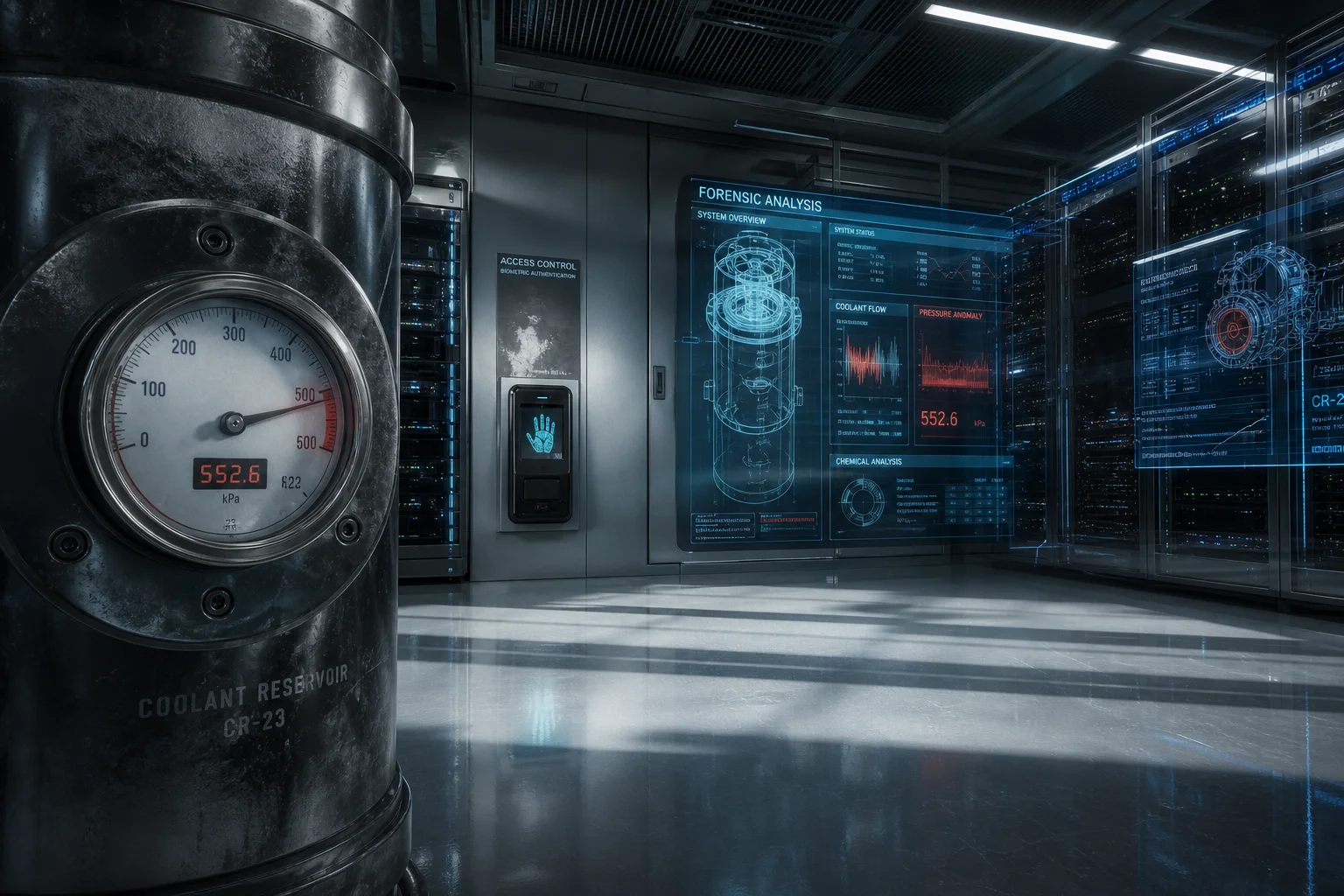
A forensic investigation into the death of a corporate physicist within a high-security xenotech research facility. The case involves a network of colleagues whose professional protocols and personal pressures have created a complex, interlocking series of procedural inconsistencies and environmental traces.
 Initial Crime Scene
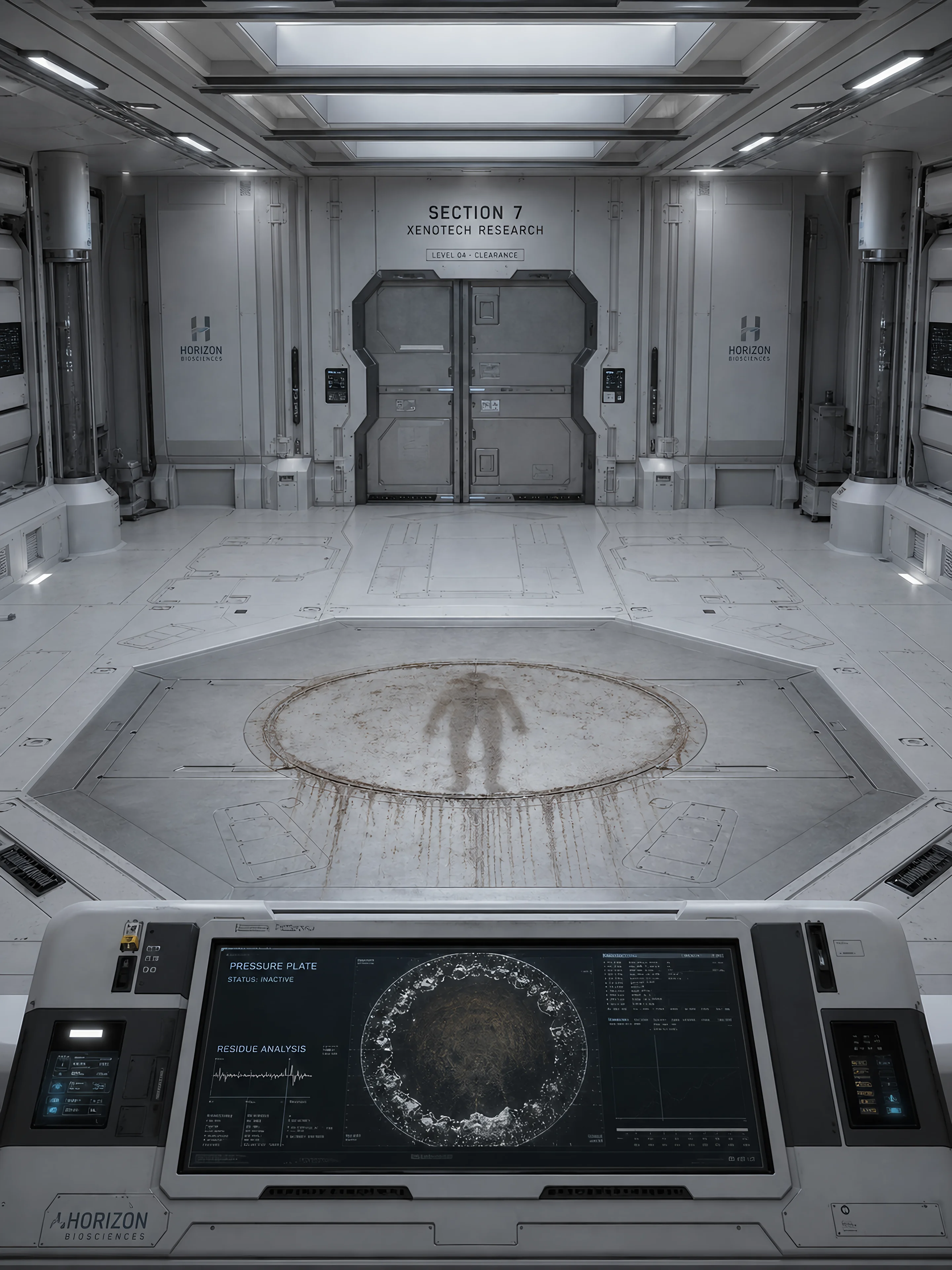
The first thing that hits you is the smell—sterile polymer and the faint, electric tang of ozone, clinging to the air like a memory of containment. Your boot steps are muffled, the only sound the low, pervasive hum of energy converters deep in the facility's bones. Before you, the chamber's central platform dominates the space, its surface bearing a stark, human-silhouette discoloration. To the left, faint, permanent floor outlines map the ghosts of heavy equipment, while on the console to the right, a circular pressure mark and a faint metallic residue catch the light.
 Crime Scene Environment
The environment is a monolithic, protocol-driven envelope under constant clinical scrutiny. Lighting is a uniform, sterile glare from recessed panels, eliminating shadow. The air is dry, temperature-controlled to a neutral coolness, and acoustic density is low, defined by the omnipresent, low-frequency hum of active containment and power systems.
 Investigation Constraints
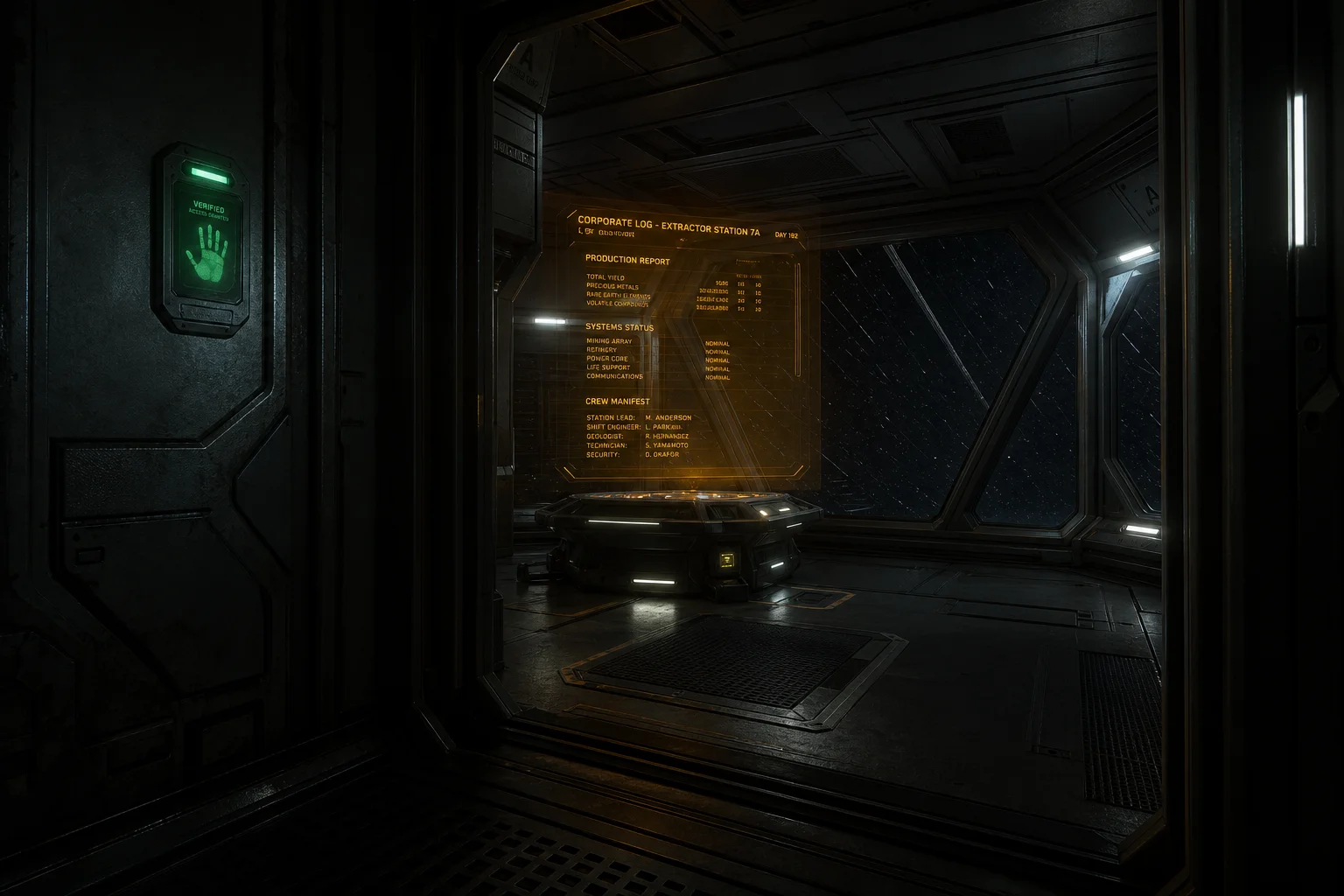
Fusion-powered micro-reactors, biometric palm-locks on all interior doors, centralized neural-net facility logging (audio/visual, door access, energy consumption), holographic display terminals, portable bio-scanner wands, encrypted private data-slates, hardline communication tubes between sections, anti-radiation polymer suits with integrated dosimeters, forensic gamma-spectrometers.
✦ Related Cases ✦