The Thornfield Affair
The annual St. Patrick's Day Gala at the exclusive Thornfield Club concludes with the death of a guest. An independent investigator enters the silent, stale scene to parse the physical evidence and the contradictory social testimonies left behind.
 Initial Crime Scene
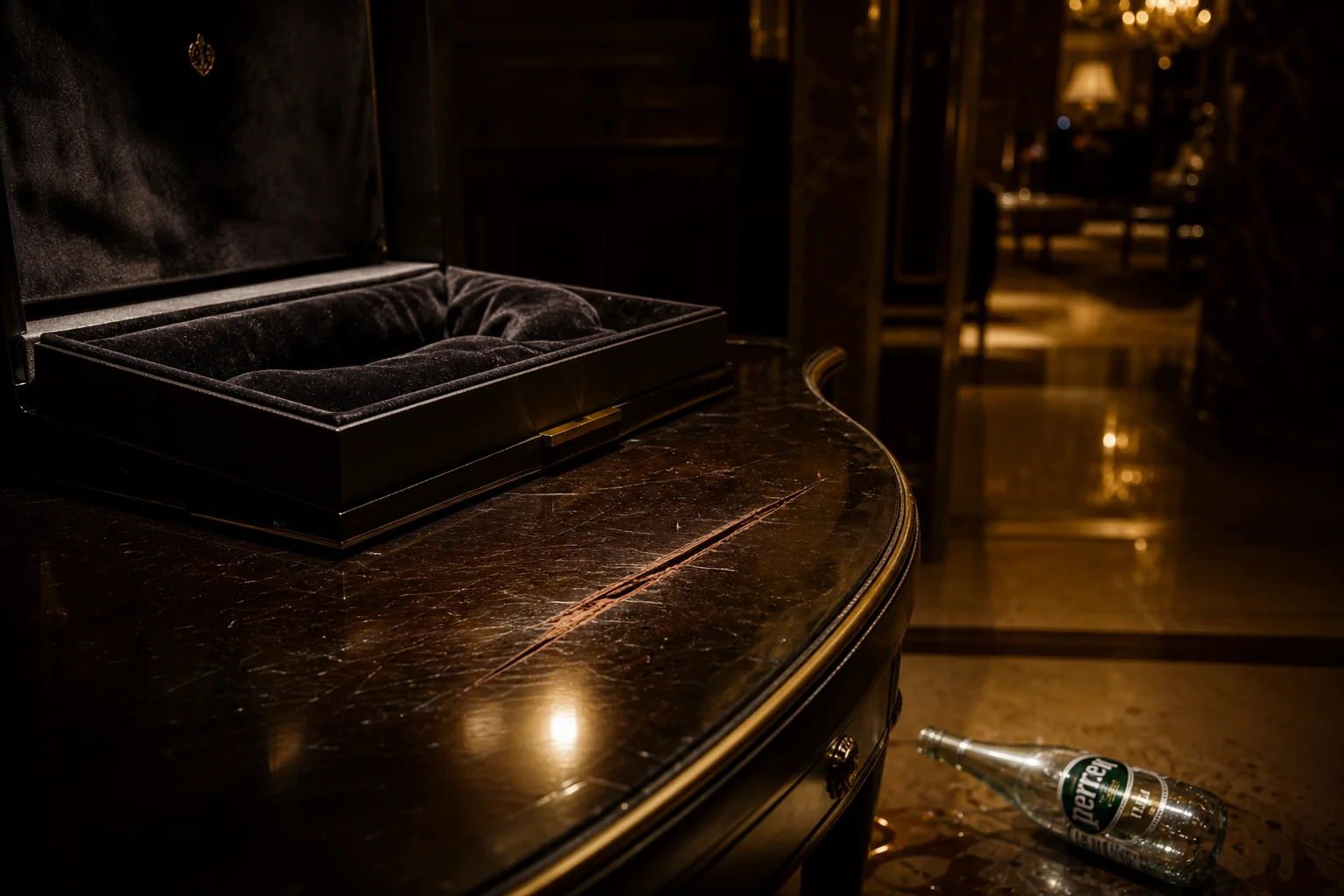
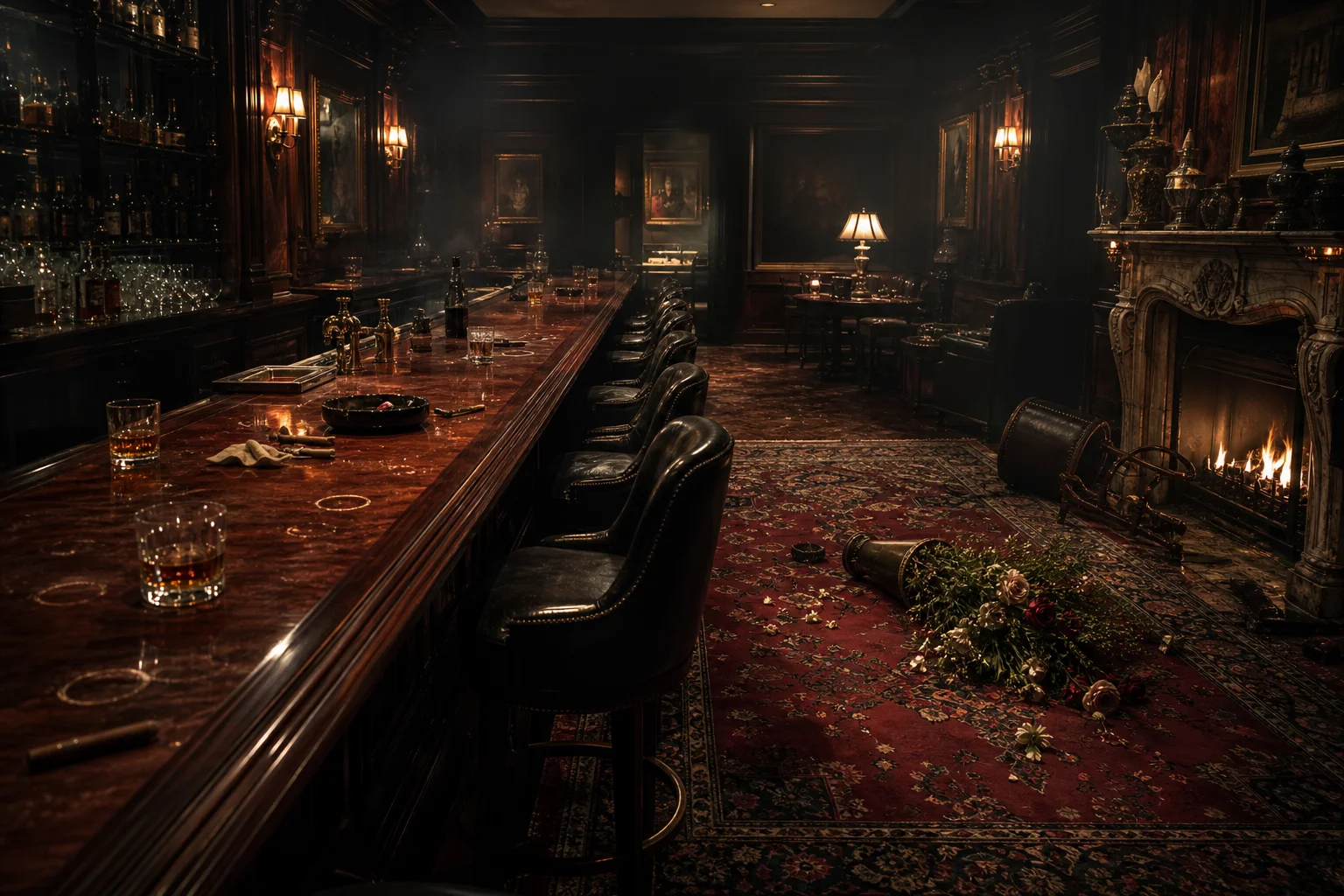
The heavy scent of spilled whiskey and stale cigar smoke hangs thick in the air, undercut by the cloying sweetness of wilting floral arrangements. The only sound is the steady, mechanical tick of a distant analog clock tower. Your eyes adjust to the dim gaslight, fixing on the long, polished expanse of the mahogany bar, its surface marred by rings of condensation. A large, ornate mirror reflects the empty room, and near a toppled floral arrangement, the deep crimson pile of a Persian rug is visibly disturbed.
 Crime Scene Environment
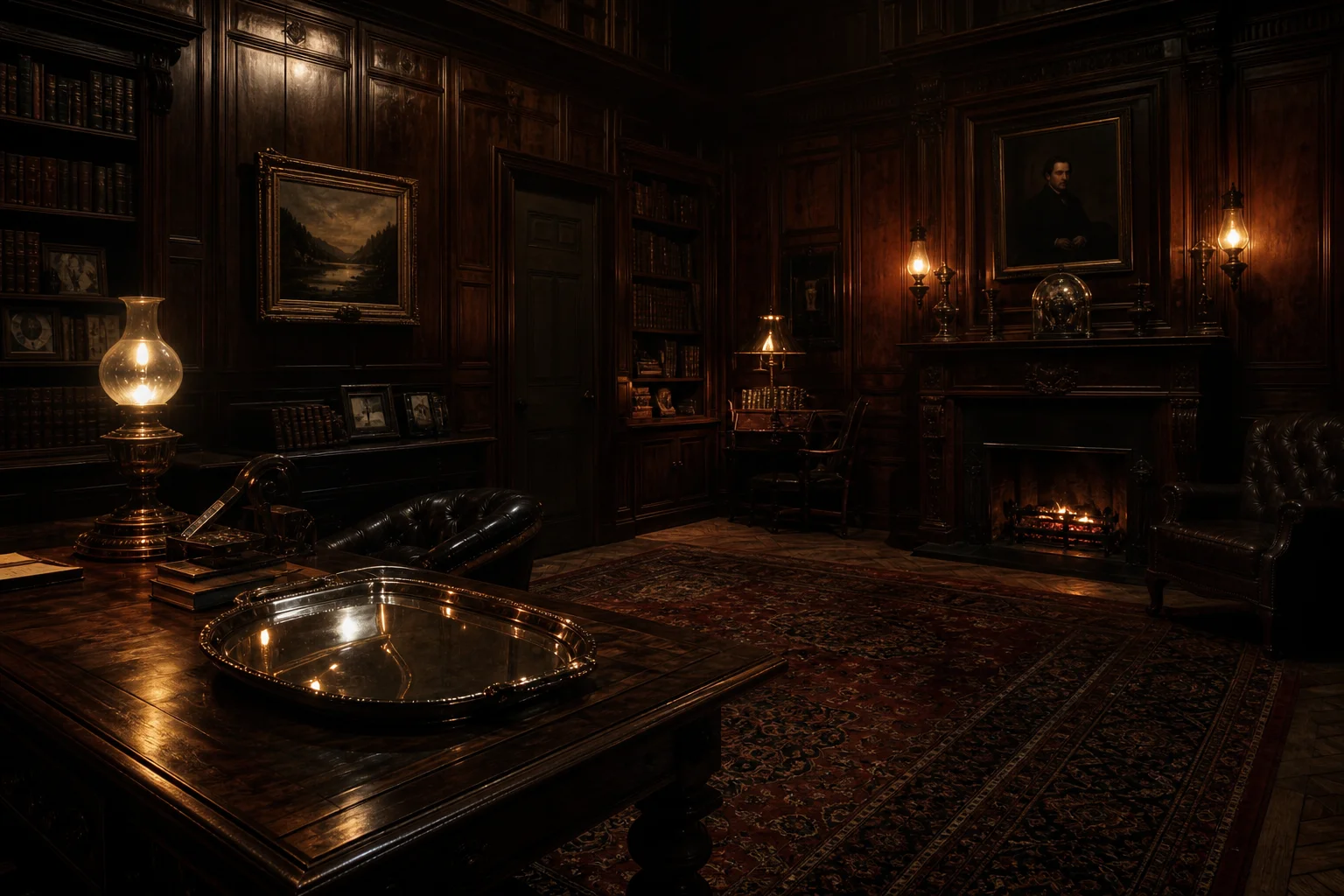
The lighting profile is low and warm, cast by gas sconces and the flickering glow from a fireplace. The atmosphere is humid with residual body heat and breath, carrying the acrid scent of extinguished candles and the mineral tang of spilled beer. The acoustic density is heavy, dominated by the profound silence that absorbs the faintest rustle or the distant, muffled tick of the clock tower.
 Investigation Constraints
Landline telephones, rotary dials, handwritten guest ledgers, physical invitations, paper receipts, mechanical cash registers, monogrammed cigarette cases, engraved hip flasks, analog clock towers, and hand-wound pocket watches.
✦ Related Cases ✦