The Unreliable Messenger
A telegram arrives late at a country estate, its recipient already deceased. The investigation examines a series of personal schedules, household records, and the varied statements of the estate's residents, each recounting their own perspective on the evening's events.
 Initial Crime Scene
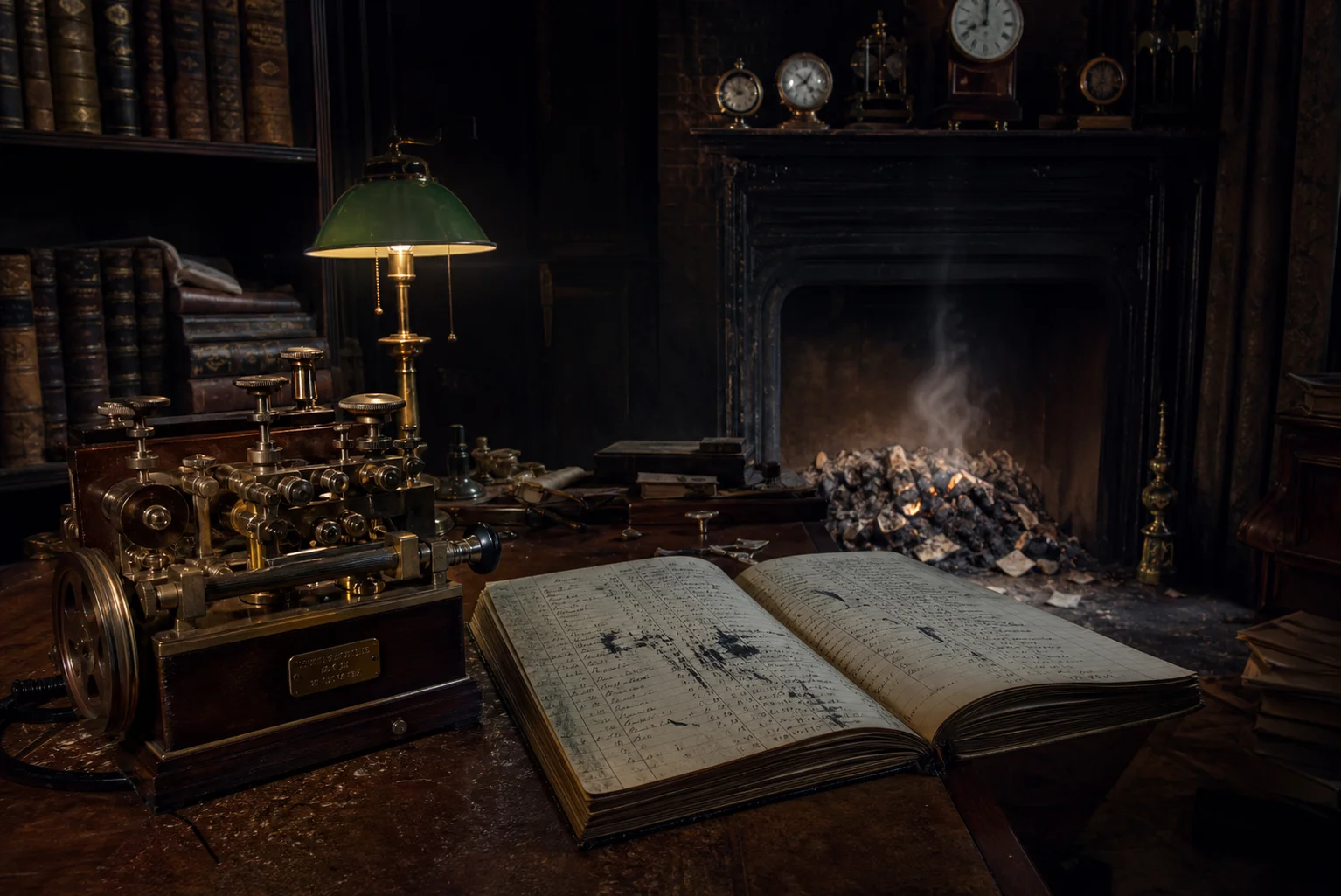
The first thing you register is the faint, acrid smell of burnt paper, distinct from the old tobacco scent clinging to the leather-bound volumes. A mechanical clock on the mantel ticks and tocks in a rhythm slightly out of sync with another down the hall, filling the study with a restless, layered pulse. Your eyes trace the deep scratch on the brass valve of the telegraph machine, the warped page of the open ledger with its smeared ink, and the mound of warm ash in the fireplace grate where fragments of paper curl at the edges.
 Crime Scene Environment
Lighting is low and directional, cast by a single green-shaded lamp on a desk, leaving the room's corners in deep shadow. The air is cool and carries a specific dryness, with a lingering humidity near the grate. Acoustic density is high, dominated by the persistent, unsynchronized ticking of multiple mechanical clocks and the faint rustle of paper.
 Investigation Constraints
Manual typewriters, carbon copy paper, mechanical wall clocks, rotary dial telephones (limited availability), handwritten ledgers and appointment books, mechanical locks with physical keys, postal and telegram delivery systems (operating on strict, unreliable schedules), personal diaries with locks, mechanical alarm clocks.
✦ Related Cases ✦