The Unsecured Lock
In the quiet mountain hamlet of Pinehaven, a single brass key to a private cabin has gone missing. The investigation into its whereabouts reveals the daily routines and minor anxieties of a closed community, where everyone seems occupied with their own small affairs.
 Initial Crime Scene
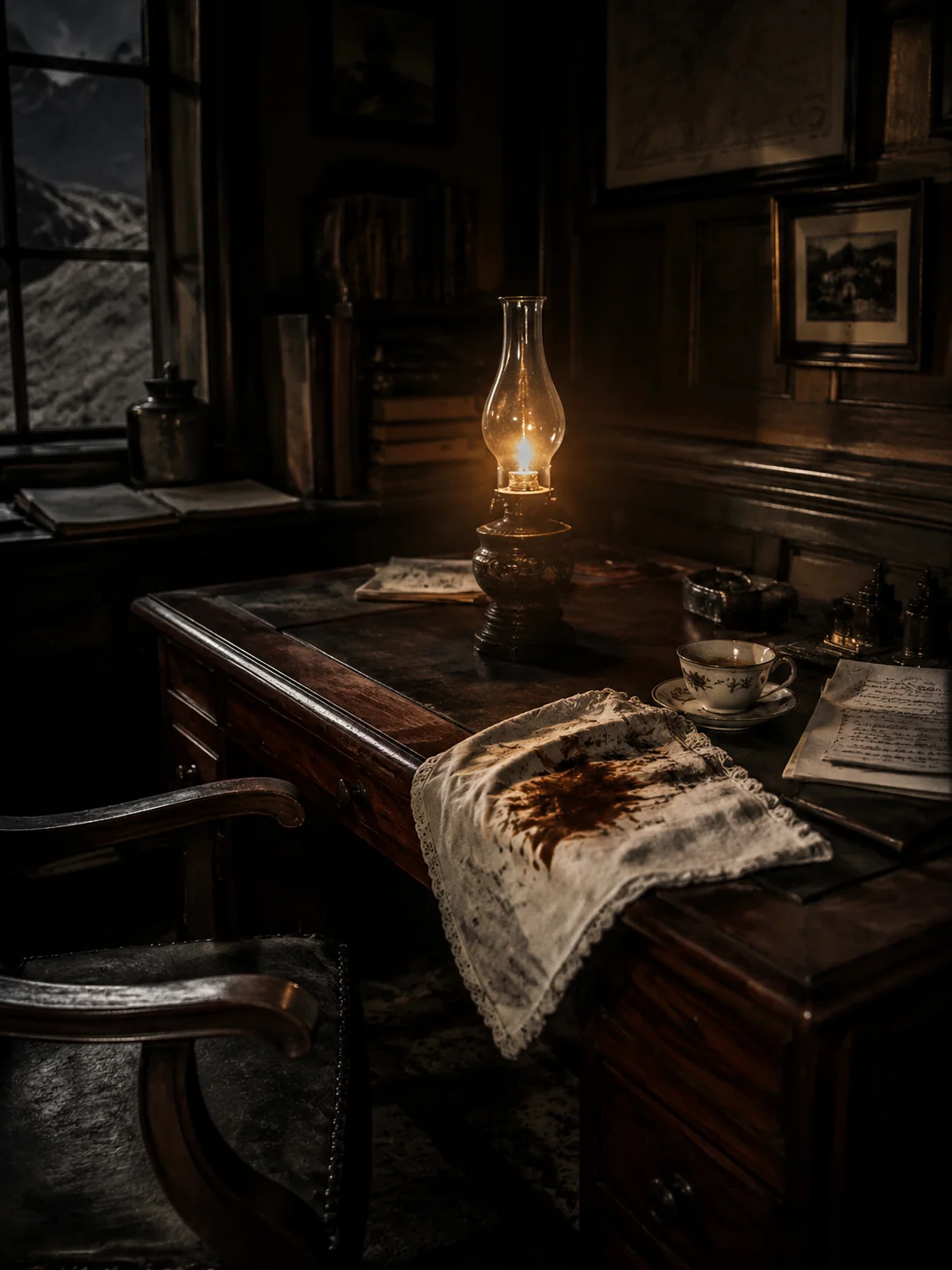
The scent of old leather and dust hangs heavy as you step across the threshold. A single oil lamp on the mahogany desk throws wavering shadows against the dark, varnished oak paneling. Your gaze catches on a white linen napkin, soaked with a large brown stain, lying crumpled beside an empty teacup. The air is still, carrying only the faint scratch of your own boots on the floorboards.
 Crime Scene Environment
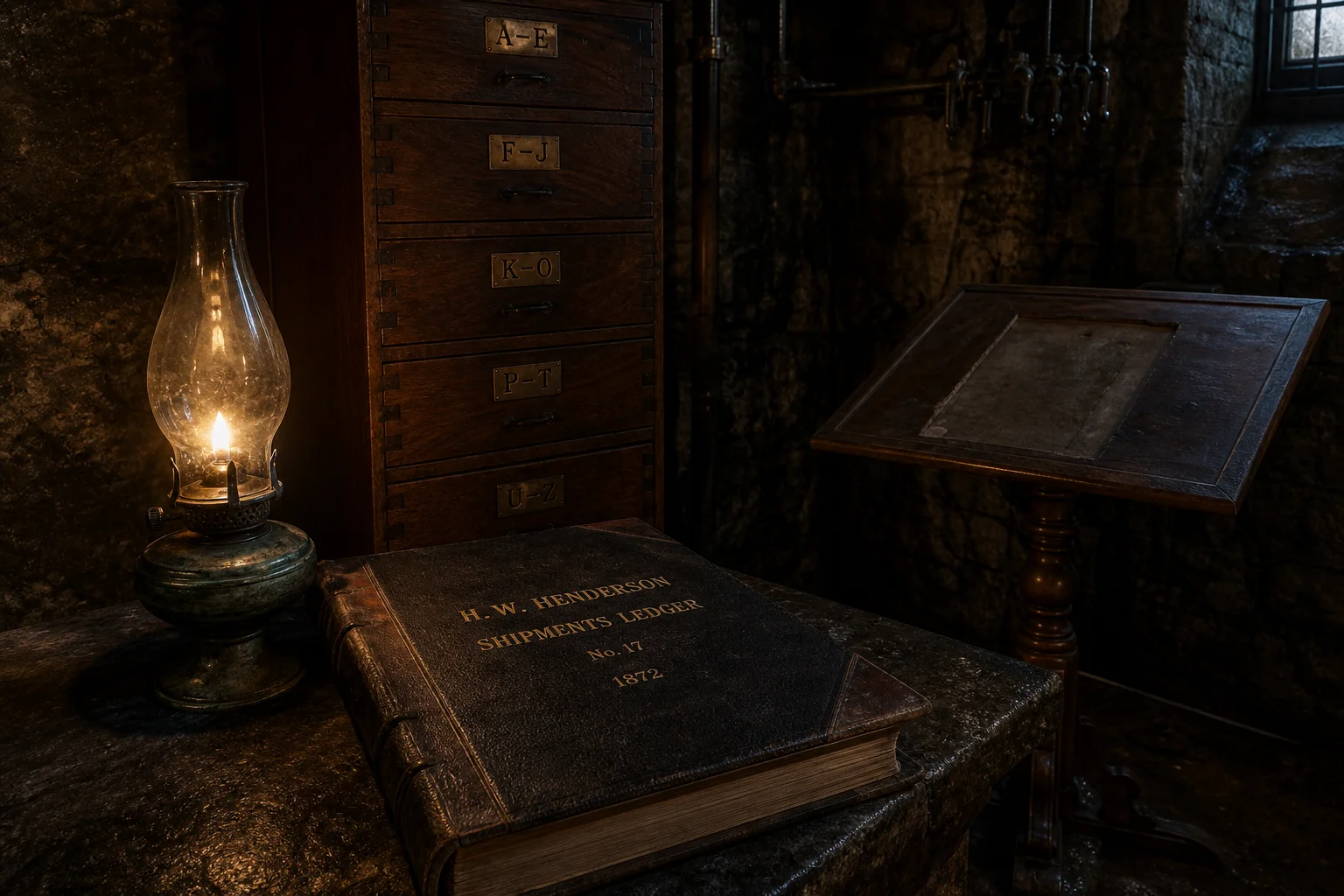
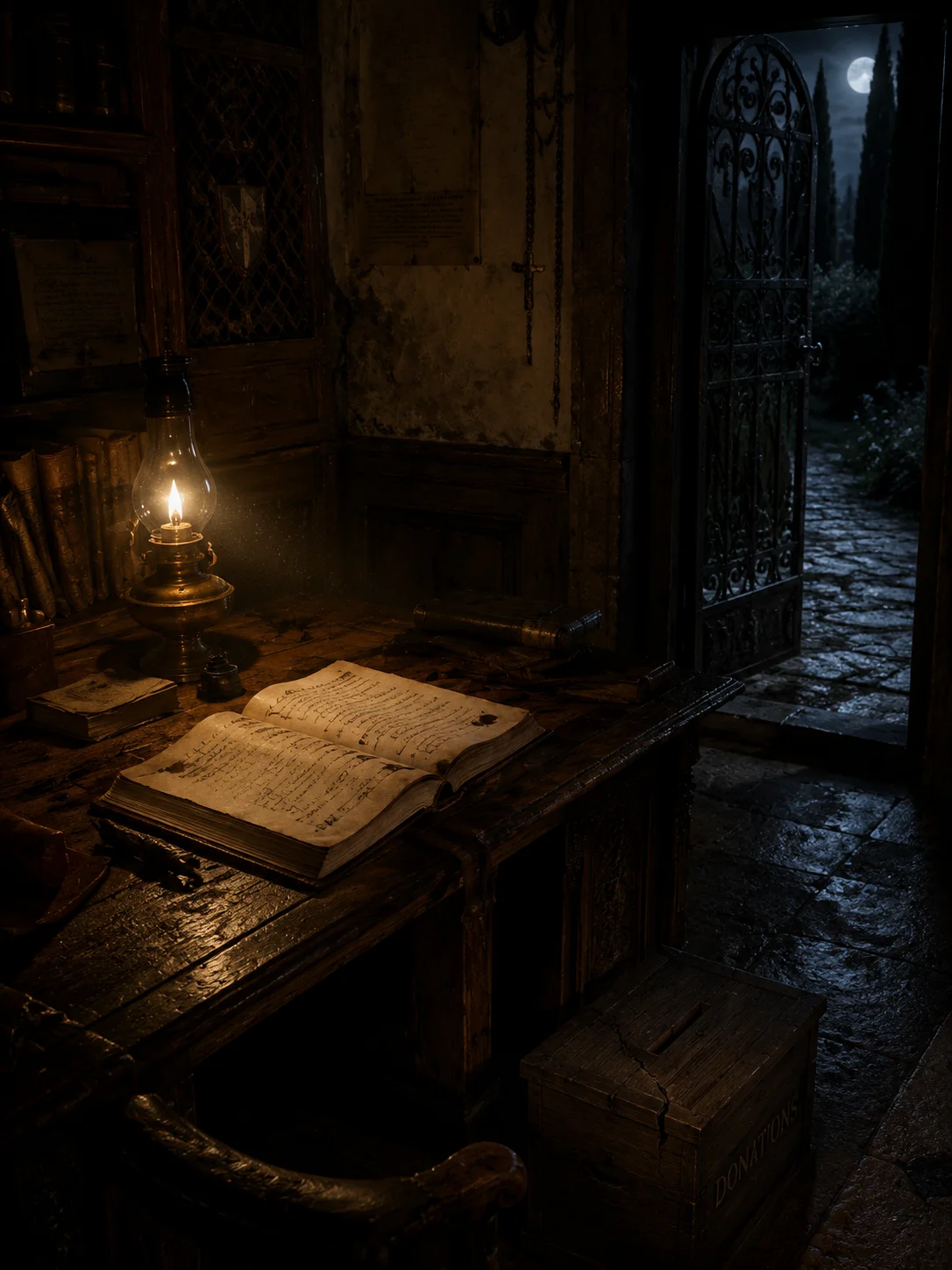
Lighting is provided by individual oil lamps, casting long, moving shadows and creating pockets of deep darkness. The air is dry and cool, with a pervasive scent of aging paper and wood polish. Sound does not carry far; conversations are muffled, and the dominant noise is the creak of old wood underfoot or the distant, solitary tick of a mantel clock.
 Investigation Constraints
Early 1900s technology: manual typewriters, rotary telephones with party lines, hand-cranked logging equipment, brass skeleton keys, oil lamps, hand-written ledgers, and basic photography developing in darkrooms. No electricity in remote cabins; communication is by written note, shouted conversation, or the single town post office.
✦ Related Cases ✦