The Unseen Residue
An independent forensic specialist is summoned to a high-rise corporate penthouse. A senior executive has been found deceased. The investigation focuses on a cluster of individuals whose professional and personal entanglements with the deceased create a complex web of access, opportunity, and concealed private transactions.
 Initial Crime Scene
The first breath is stale, recycled air carrying the faint, chemical tang of industrial disinfectant. A single, low hum emanates from the climate control vent above. Before you, a sterile marble floor reflects the flat, recessed ceiling lights. To the left, an executive filing cabinet stands with one drawer ajar by three centimeters. Ahead, a white ceramic cup sits precisely centered on a leather coaster atop a polished desk.
 Crime Scene Environment
The primary lighting profile is flat, recessed, and shadowless, creating a sterile, hypothermic ambiance. The humidity is climate-controlled to a static, dry state, with a temperature several degrees below ambient comfort. The acoustic density is low, characterized by a constant, low-frequency hum from the HVAC system and the distant, rhythmic tick of a precision clock.
 Investigation Constraints
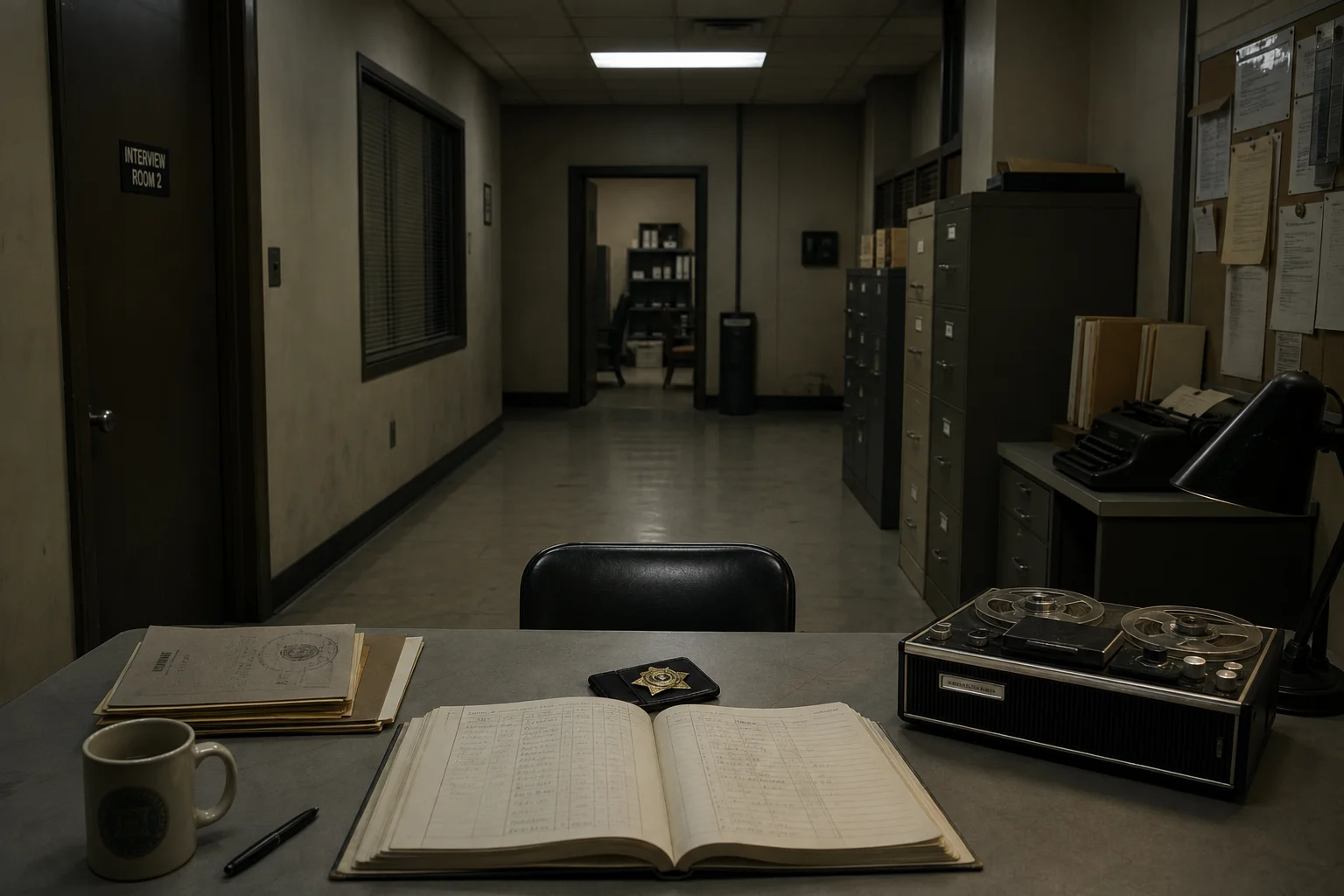
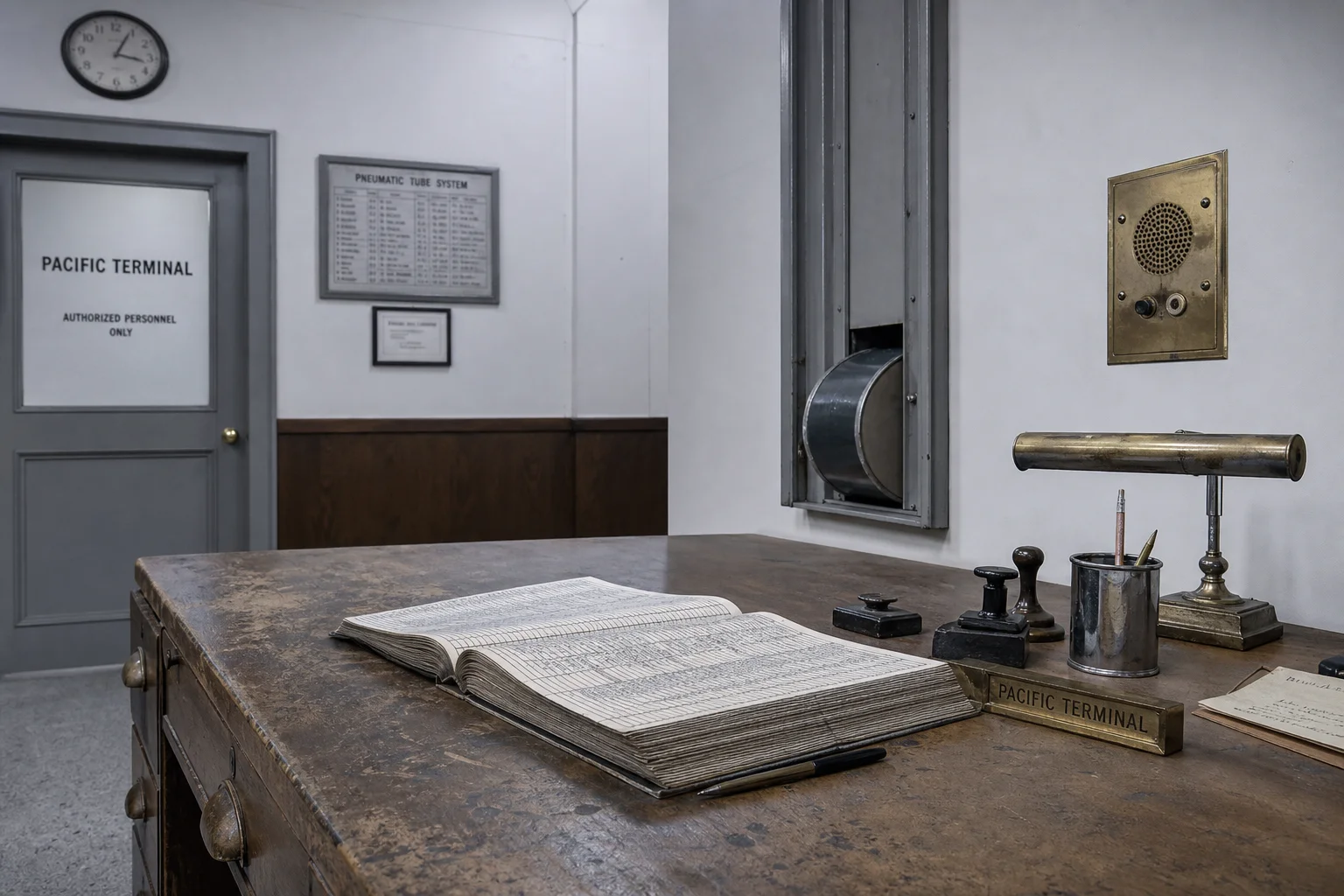
Centralized corporate biometric entry logs; analog security camera feeds (VHS tapes, grainy footage); landline telephones with rotary dials; pneumatic tube delivery systems for inter-office documents; early-stage encrypted email (proprietary, corporate-intranet only); physical keycards for secure zones; forensic analysis of typewriter ribbon impressions and paper fibers; traditional lock-and-key mechanisms.
✦ Related Cases ✦