The Vanity Trailer
The suspicious death of actor Julian Croft in his locked vanity trailer on a major film studio lot triggers an investigation. The inquiry navigates competing professional interests, encrypted digital trails, and a series of actions taken by various parties to conceal personal or financial indiscretions.
 Initial Crime Scene
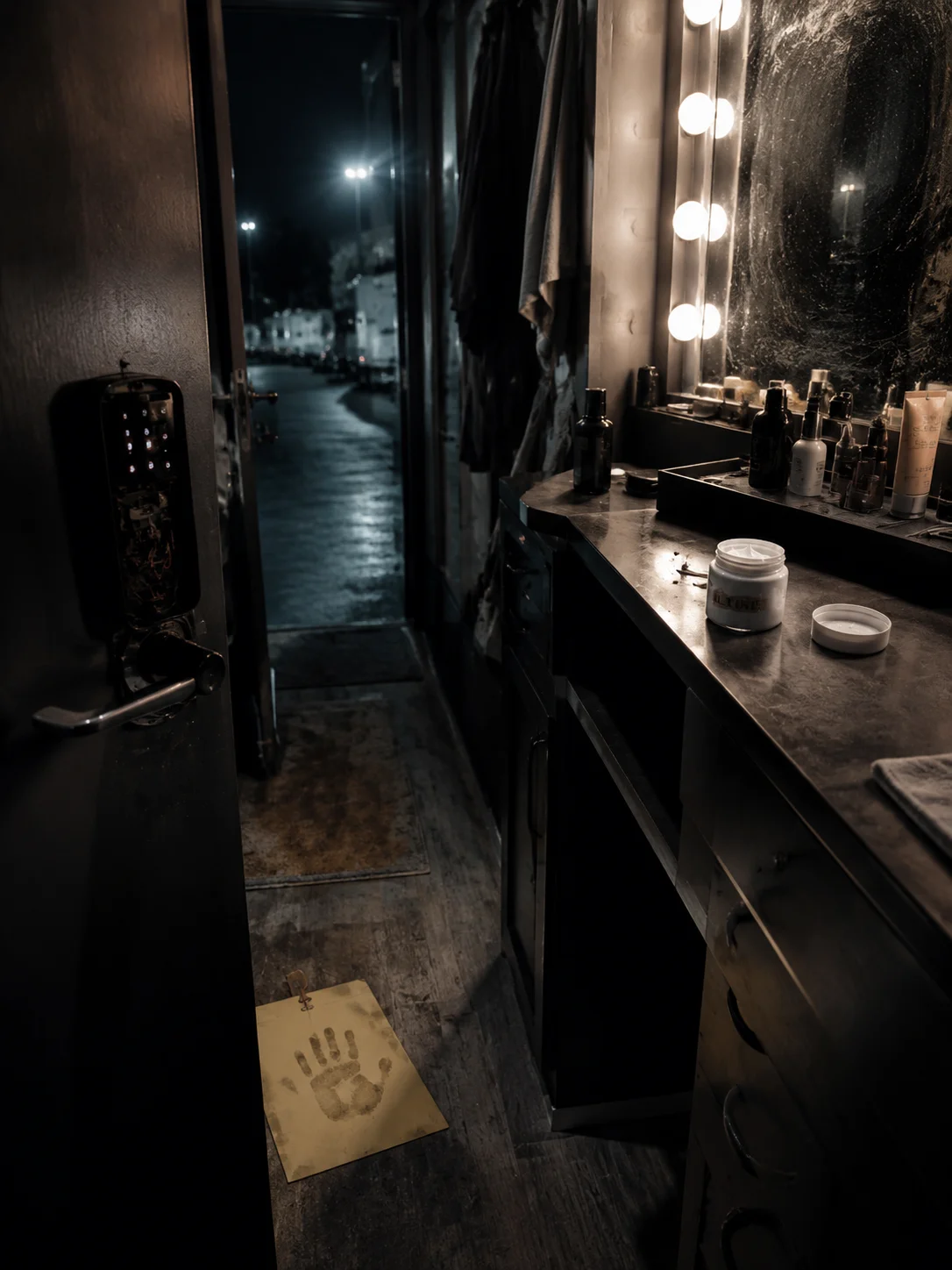
The vanity trailer door stands ajar, its electronic lock disengaged. A sharp chemical tang of expensive deodorant mixes with a faint, corrosive odor. The overhead Hollywood lights cast a harsh glare on the etched, abraded surface of the vanity mirror. A high-end face cream jar sits open on the counter, its lid discarded. A manila envelope lies on the floor near the door, its surface marked by a damp, warped palm print.
 Crime Scene Environment
The lighting profile is a mix of harsh, direct Hollywood vanity lights and the dim, stale ambient glow from the parking lot outside. The humidity is low, the air dehydrated and cool, carrying the faint, cloying scents of floral perfume, antiseptic wipes, and stale leather. The acoustic density is defined by the distant, muffled hum of studio generators and the occasional, sharp echo of a dropped object in the adjacent trailer lot.
 Investigation Constraints
Modern Hollywood studio lot infrastructure: electronic keycard access logs for trailers and soundstages, encrypted studio network drives, smartphone cloud backups, biometric safes in trailers, CCTV with limited coverage zones, social media DMs, and high-end personal assistant scheduling apps. No futuristic cybernetics or AI.
✦ Related Cases ✦