The Weight of Silo Dust
An independent investigator is called to the rural settlement of Briar's End following the discovery of a deceased individual inside an abandoned grain silo. The inquiry involves examining the final interactions of a prominent local figure, the financial records of various parish accounts, and the observed behaviors of several community members in the hours surrounding the event.
 Initial Crime Scene
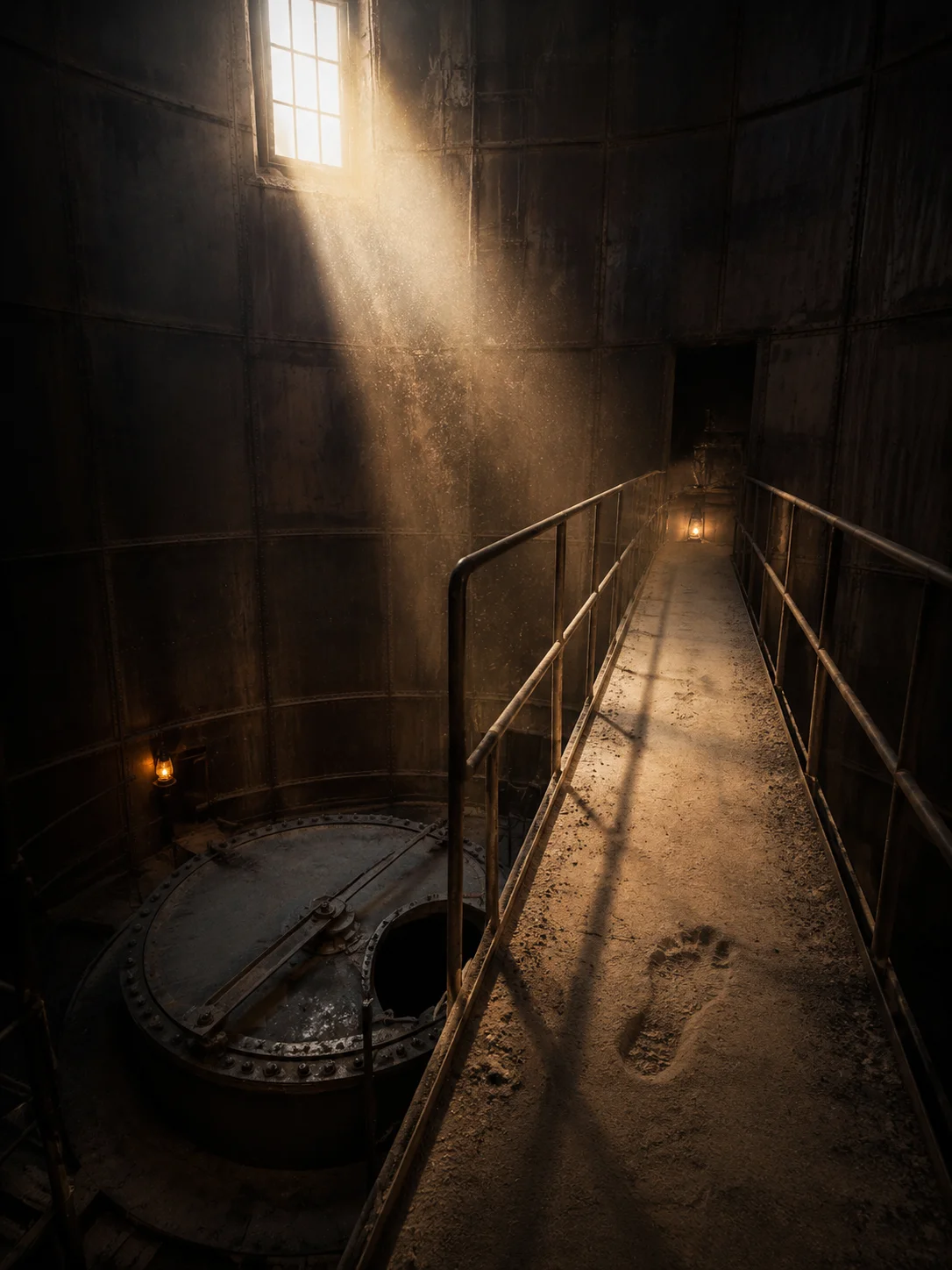
The first breath inside the silo is thick with the sweet, dusty perfume of stored grain, undercut by a cold, metallic tang. A single shaft of late-afternoon light cuts through a high window, illuminating a universe of suspended dust motes. Your boots ring on the metal catwalk, where a single, fresh footprint disrupts a layer of undisturbed dust. Below, the heavy steel main access hatch stands slightly ajar, its locking lever askew.
 Crime Scene Environment
The environment is defined by the low, uneven light of oil lanterns and slanting sunbeams, creating deep pools of shadow. The air is cool and carries a damp, dusty humidity that settles on the skin. Acoustic density is low, dominated by the hollow echo of footsteps on metal and the occasional, distant creak of the structure itself.
 Investigation Constraints
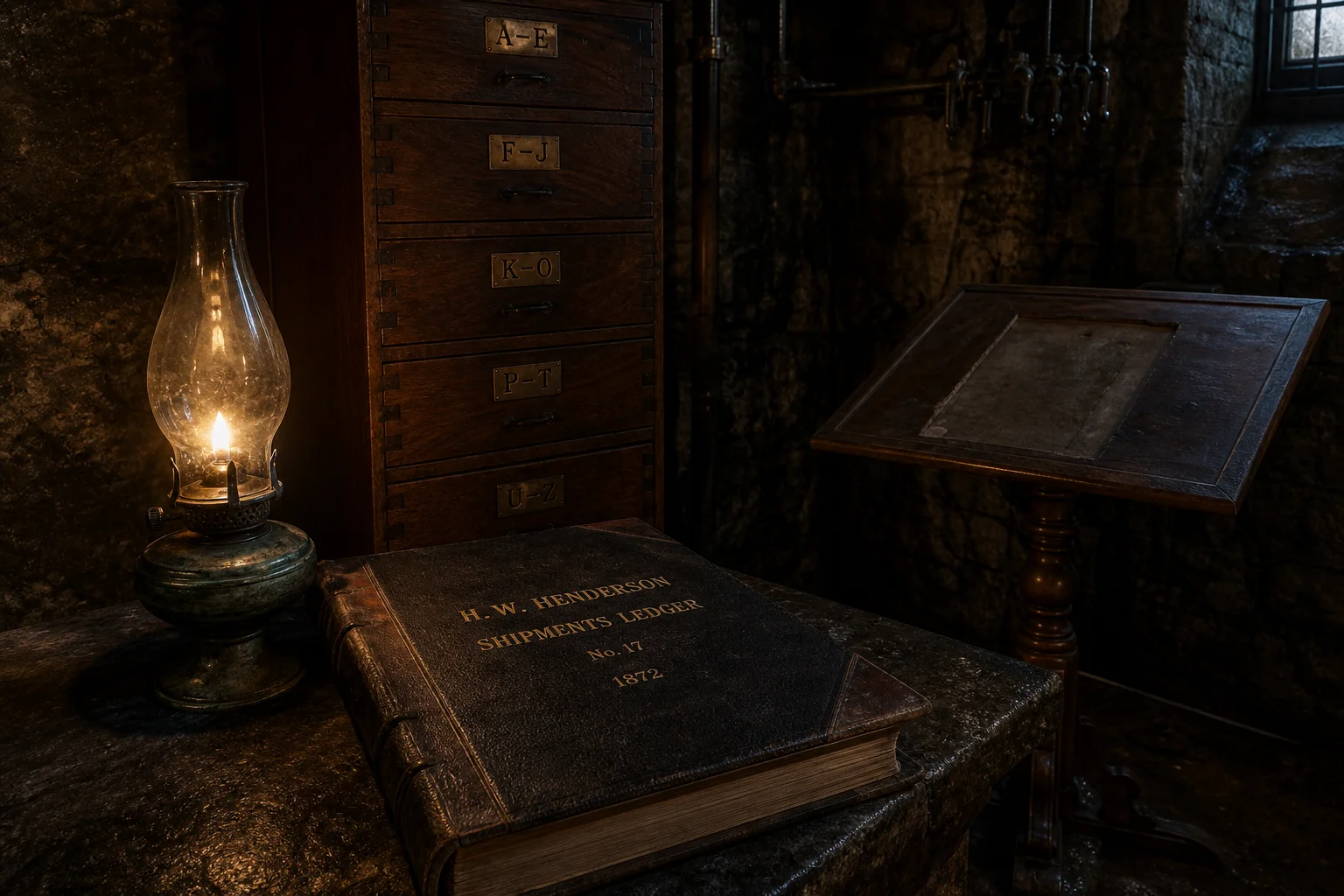
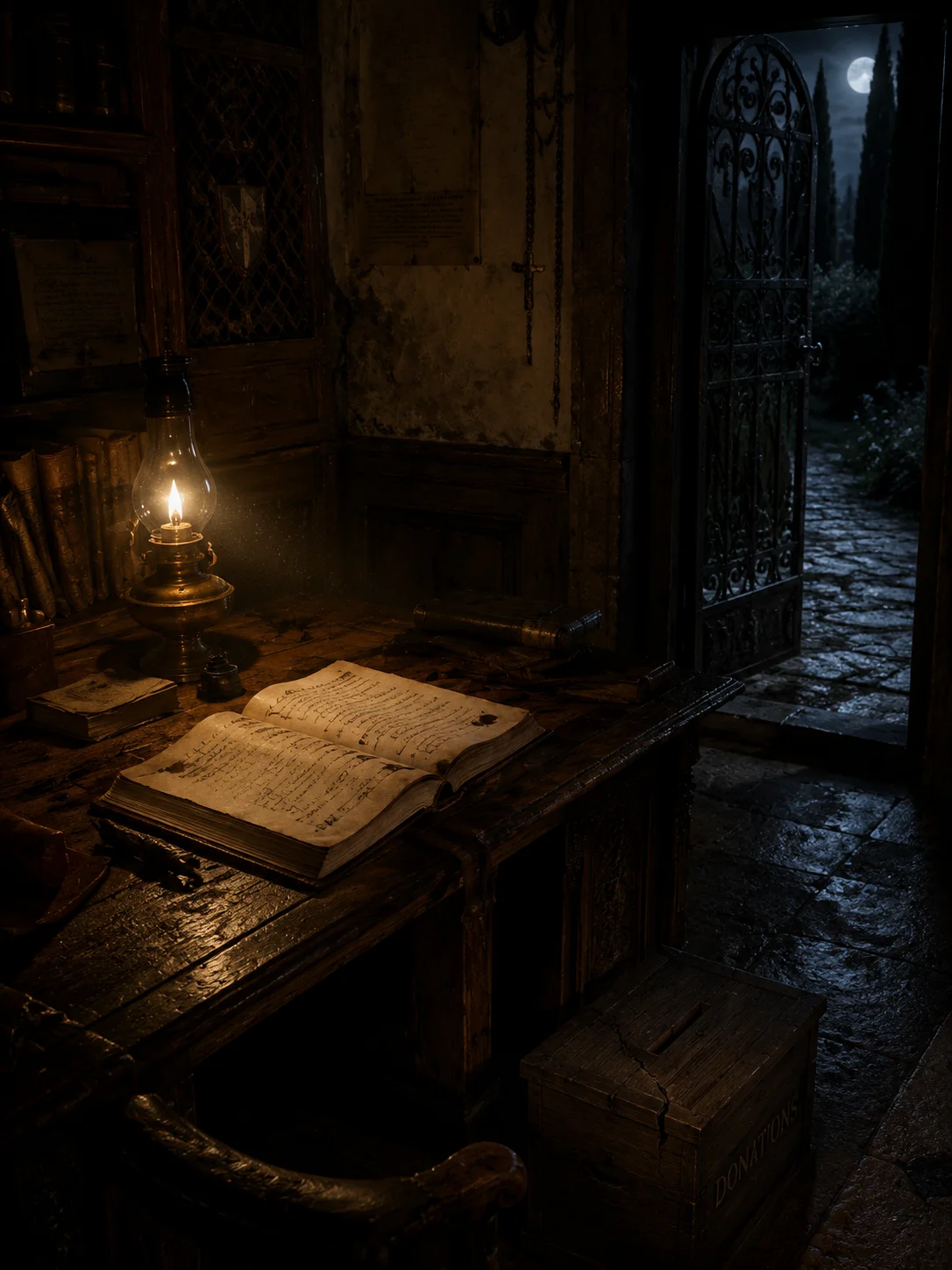
Early 20th century rural setting. Tools include manual grain augers, heavy padlocks, oil lanterns, hand-cranked telephones in the post office, handwritten ledgers, and horse-drawn transport. No electricity in the silo. Communication is by word-of-mouth, handwritten notes, or the town's single telephone line.
✦ Related Cases ✦