The Westfield Friction
A forensic specialist is called to a corporate headquarters following the death of a department head. Digital records and physical evidence present conflicting narratives, requiring the untangling of multiple independent timelines and personal agendas to isolate the primary sequence of events.
 Initial Crime Scene
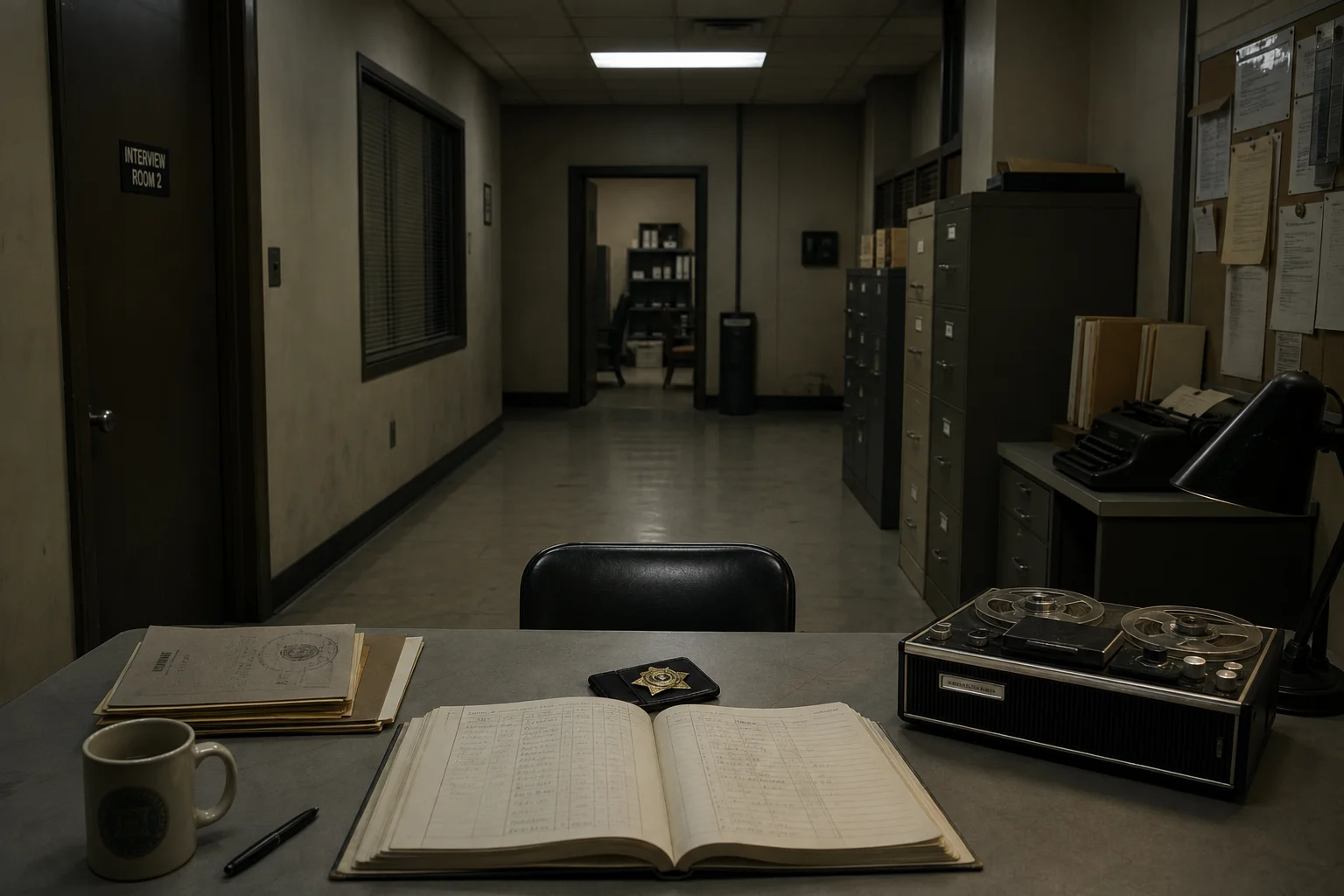
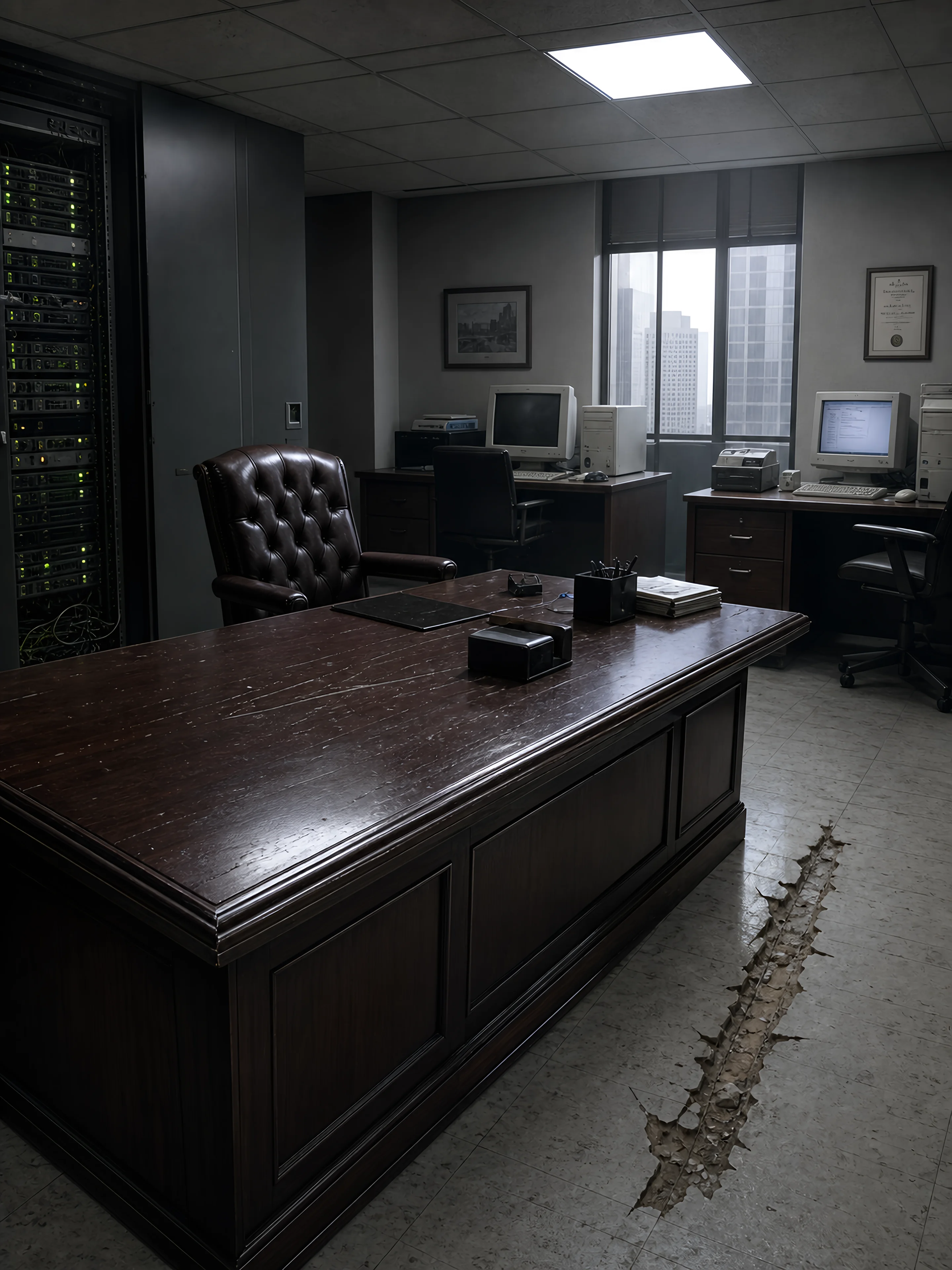
The first thing you notice is the smell: a sharp, acrid tang of ammonia-based industrial cleaner that cuts through the stale, recycled air of the executive suite. Underneath it, the low, constant hum of fluorescent light fixtures vibrates through the ceiling. Your eyes adjust to the harsh overhead glare, catching on the dull, scratched surface of a large mahogany desk, the rhythmic green blink of status lights from a massive server rack in the corner, and the visible, jagged gouge carved into the linoleum floor tiles.
 Crime Scene Environment
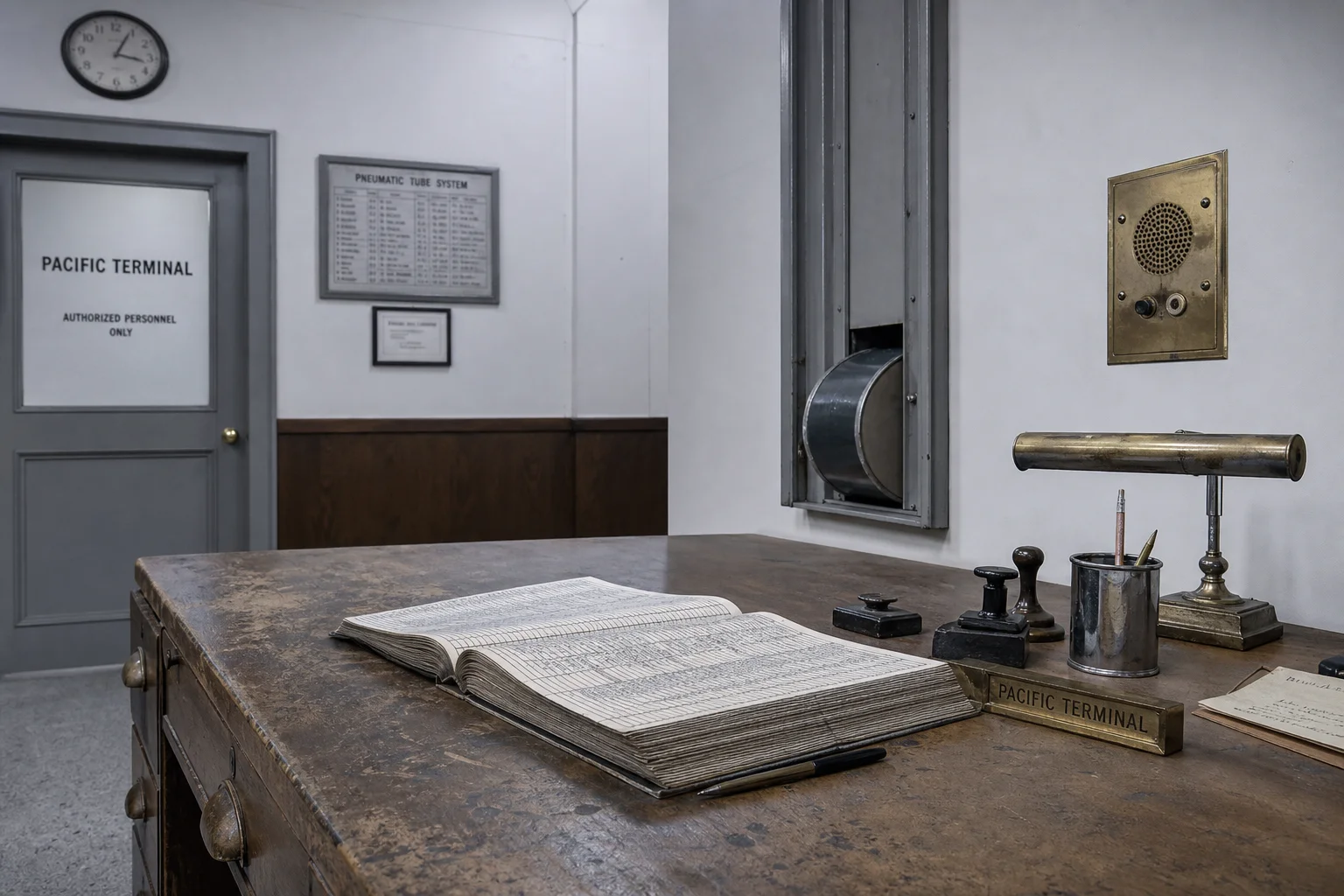
The environment is defined by cold fluorescent illumination, constant, low-frequency acoustic hum from electronics and HVAC systems, and a climate-controlled air that is dry and chilled, particularly in the basement server room. The allowed technologies—CRT monitors, VHS tapes, magnetic stripe keycards, and networked desktops—impose a tactile reality of physical media and wired connectivity. The tonal vocabulary dictates an atmosphere of volatile corporate data, systemic rot, and professional detachment.
 Investigation Constraints
Late 1990s/Early 2000s corporate tech: Networked Windows NT workstations, early corporate intranets, physical keycard access systems with magnetic stripes, analog CCTV with VHS tapes, basic email clients (Lotus Notes, Outlook), standalone forensic software, landline office phones with call logs, rudimentary building-wide security system logs, microcassette recorders.
✦ Related Cases ✦