The Whispering Hollow Ledger
A town clerk is found deceased within the sealed basement archive of the Whispering Hollow town hall. The locked-room puzzle presents a series of forged land deeds, buried scandals, and the quiet desperation of a community where reputation is the only currency.
 Initial Crime Scene
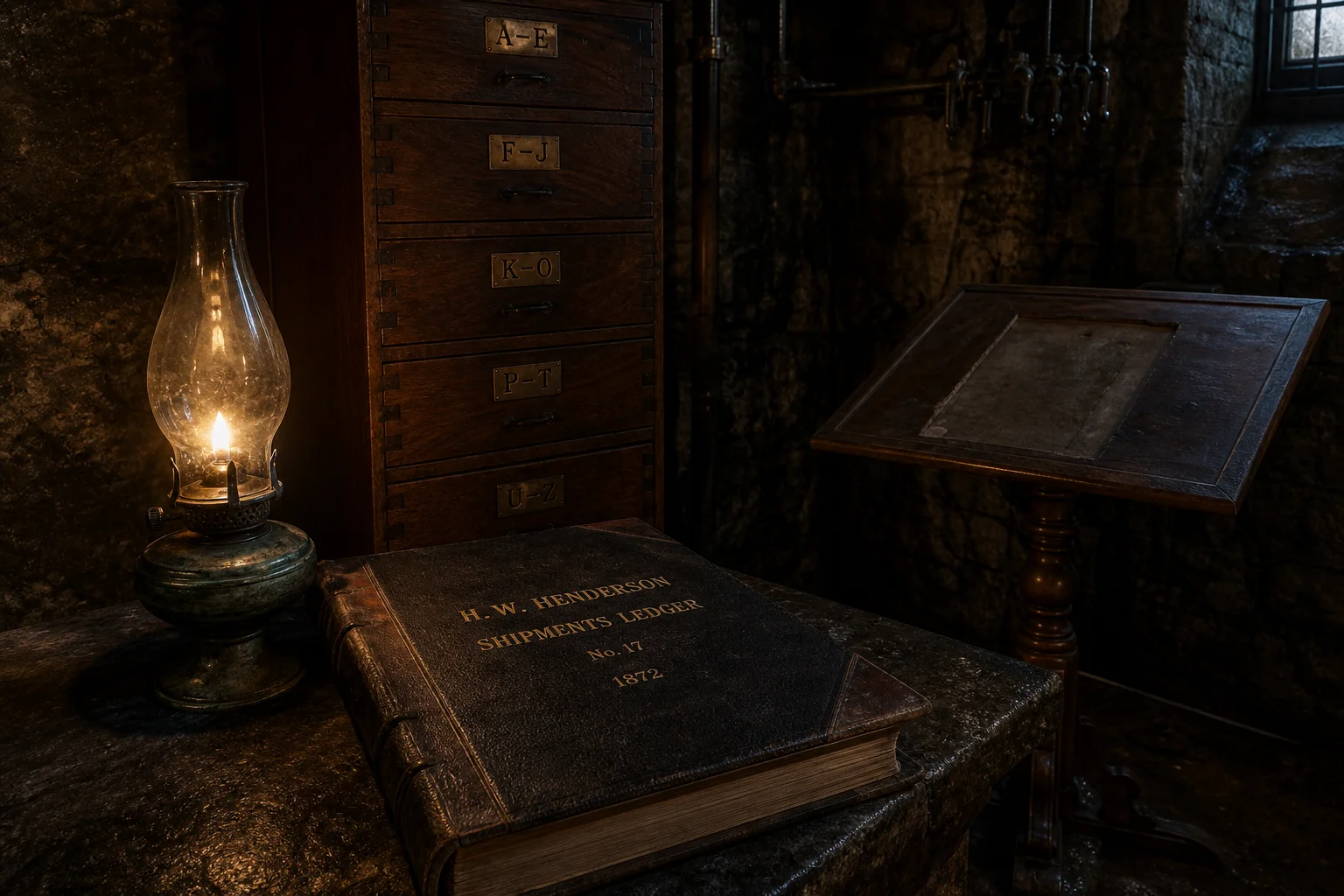
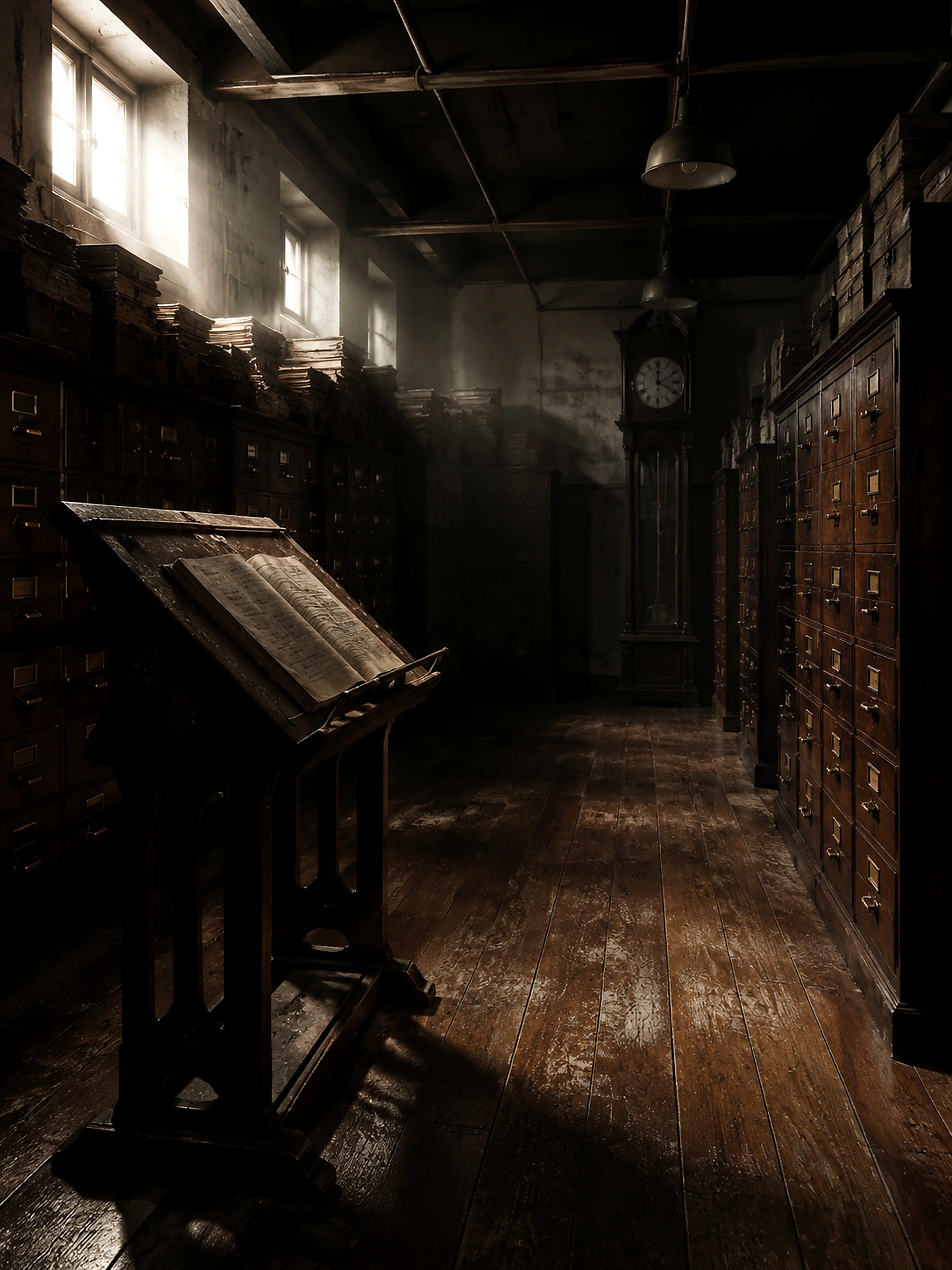
The oily scent of old paper and leather bindings immediately invades the nostrils as you cross the threshold. From the far wall, the consistent, deep tick of a grandfather clock provides the room's only rhythm. Your gaze sweeps across the high-ceilinged space, noting the dark oak filing cabinets lining the walls, the scuff marks on the polished oak floorboards near the most sensitive ones, and the thin, undisturbed layer of dust on the surface of a rosewood reading stand.
 Crime Scene Environment
The lighting is a dim, diffused glow from high, armed windows, casting long shadows. The air is cool and carries a heavy, stifling humidity, thick with the scent of aged documents. The acoustic density is low, dominated by the metronomic tick of the clock and the faint, papery rustle of your own movements, emphasizing the hushed, oppressive stillness of the space.
 Investigation Constraints
Late 19th-century small-town America. Communication is via handwritten notes, local telegraph, and gossip. Security is mechanical locks (pin-tumbler, ward locks), wax seals, and filing cabinets. Data is stored in physical ledgers, bound volumes, and handwritten scrolls. The town hall clock tower bell is a passive, audible public timepiece.
✦ Related Cases ✦