The Willowbrook Archive
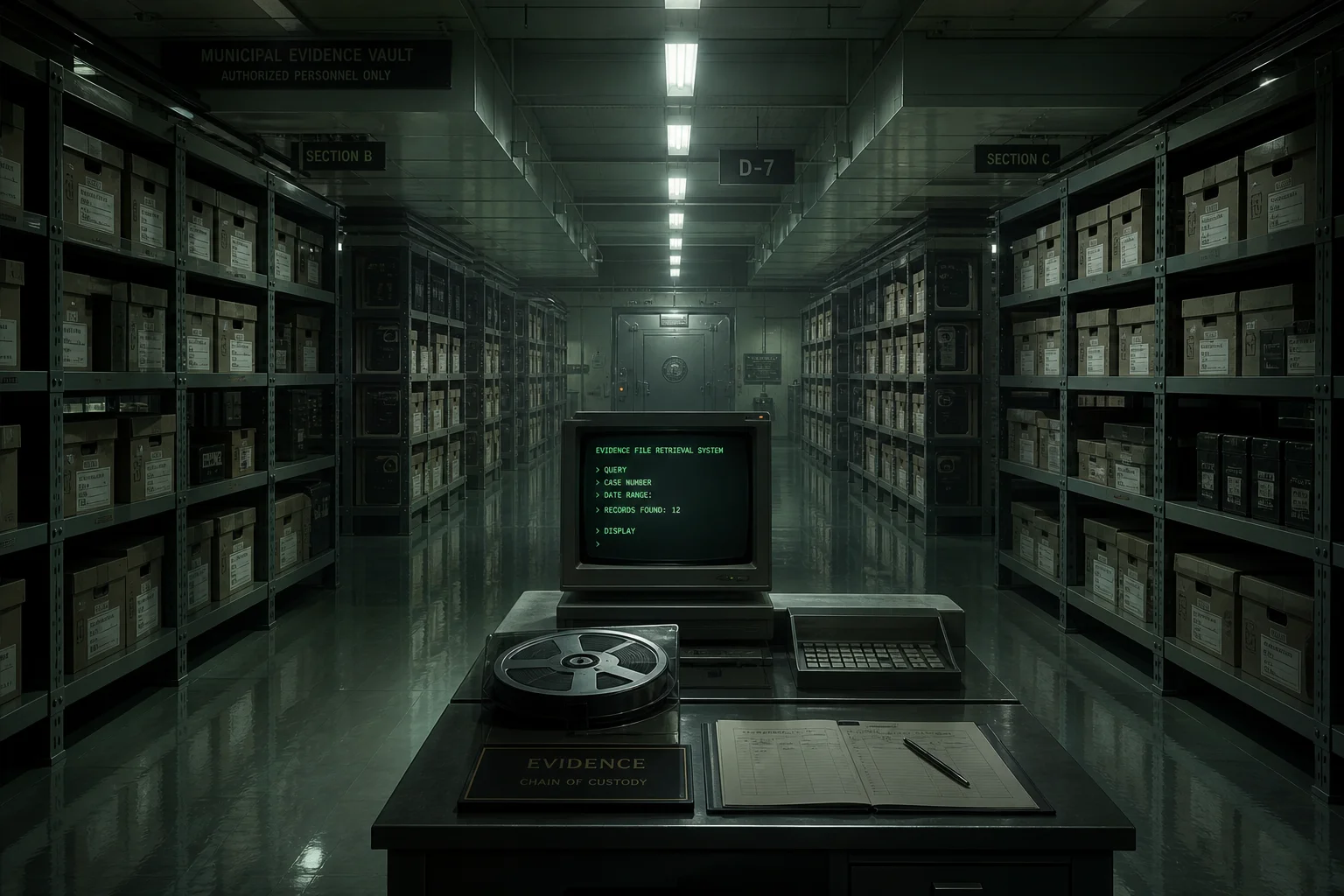
A meticulous county archivist is discovered deceased in the municipal records vault. His absence and the state of his final workspace have set in motion a series of quiet, individual actions among the town's residents, each seeking to secure their own private records before a formal investigation begins.
 Initial Crime Scene
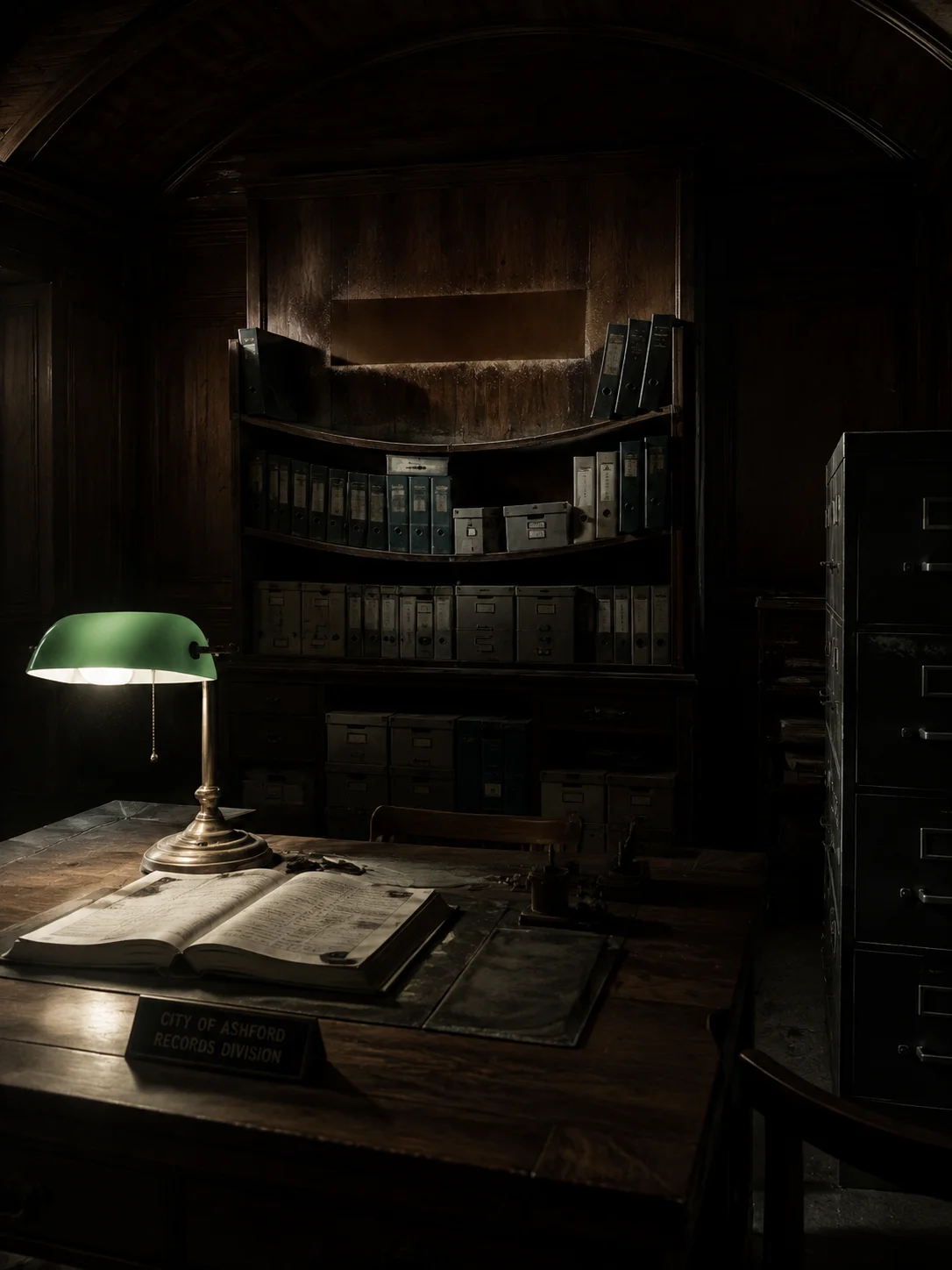
The scent of old paper and furniture wax hangs thick in the still air of the archive office. A single green-shaded lamp casts a stark circle of light on a heavy oak desk, illuminating an open leather-bound log book. The delicate, creaking sound of the building settling is the only sound. Three localized visual markers dominate: a deep, pronounced sag in a heavy oak shelf, a clean rectangle of undisturbed dust around that sag, and the sharp, carved corner of a filing cabinet standing in shadow.
 Crime Scene Environment
The environment is one of forced stillness and accumulated history. Lighting is localized and artificial, primarily from desk lamps and bare bulbs, creating deep pools of shadow in vaulted spaces and wood-paneled rooms. The air is cool, dry, and dense with the particulate scent of aging paper, wood polish, and lamp oil. Acoustic density is low; sounds are muffled by shelves of books and thick wooden panels, making any sudden noise—a creak, a scratch—feel pronounced and isolated.
 Investigation Constraints
Mechanical typewriters, carbon copy paper, rotary dial telephones, manual ledger books with fountain pens, physical filing cabinets with combination locks, hand-cranked microfilm readers, wax-sealed envelopes, and handwritten correspondence. Communication is via landline, postal mail, or in-person conversation at social gatherings.
✦ Related Cases ✦