Veridian Station Protocol
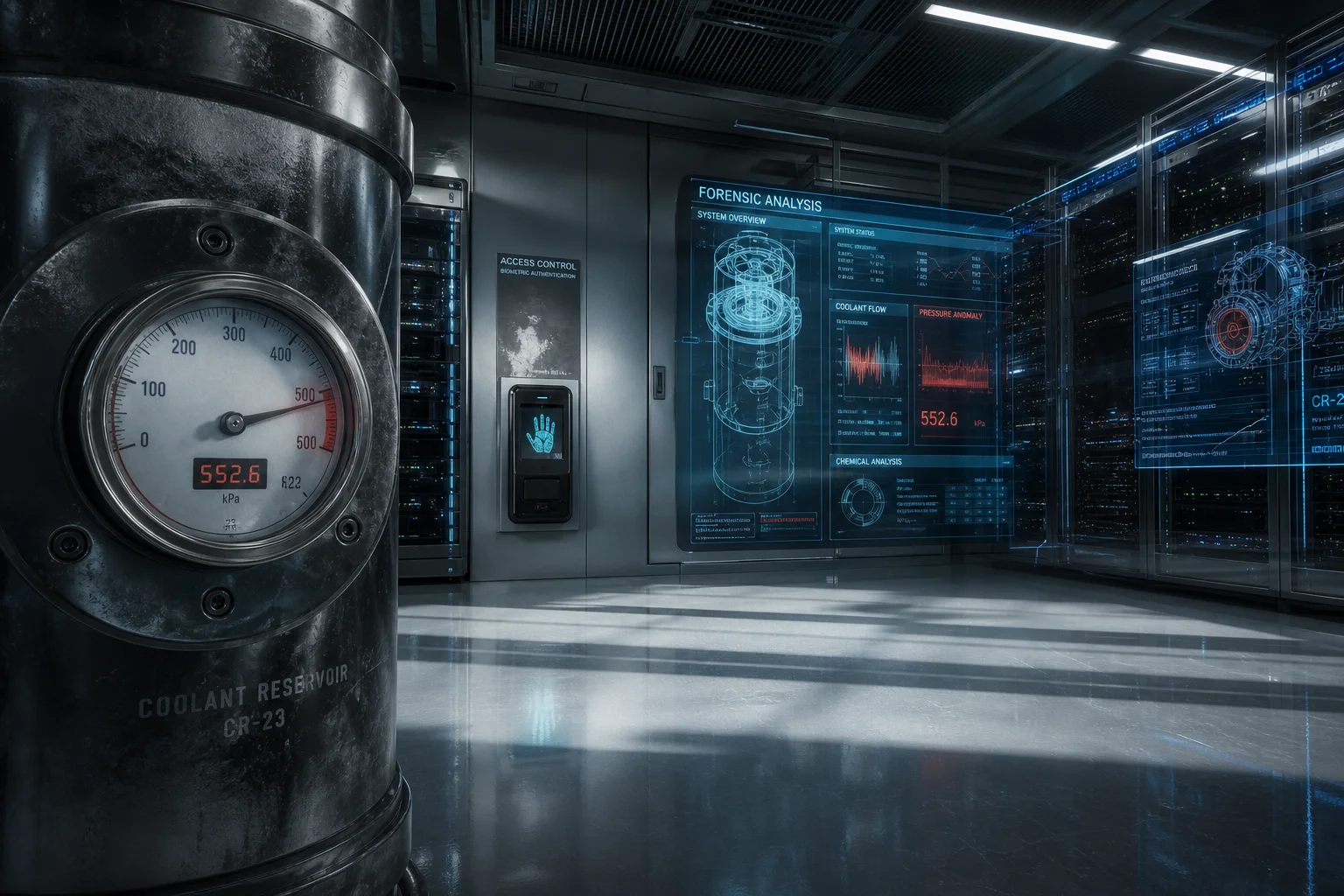
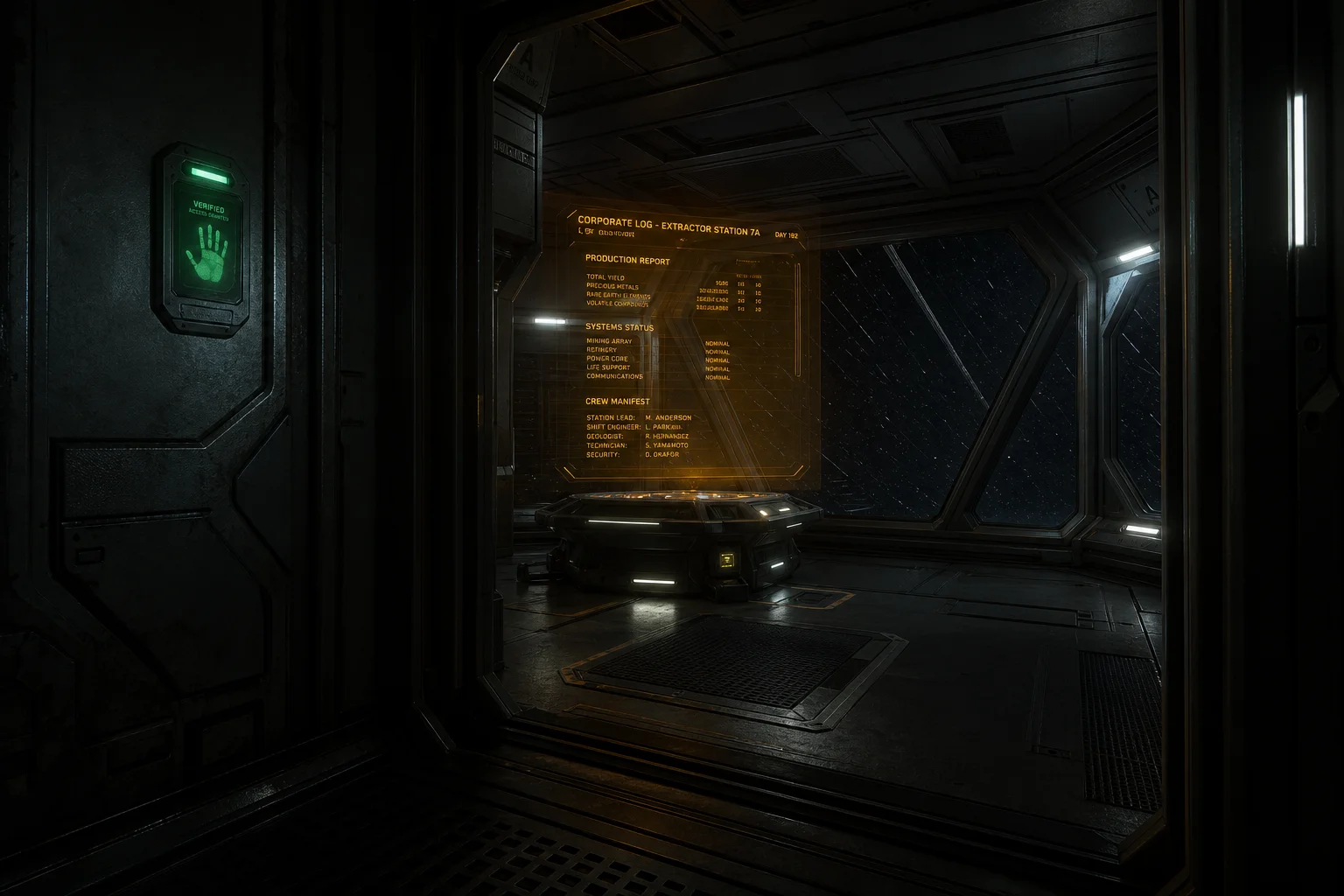
Inside the orbital research station 'Veridian,' a forensic specialist is dispatched to investigate a localized environmental failure in Cryo-Lab 3 and the subsequent loss of a station android's memory core. The sealed station presents a complex web of overlapping corporate protocols, conflicting access logs, and personnel exhibiting observable stress responses consistent with high-pressure operational environments.
 Initial Crime Scene
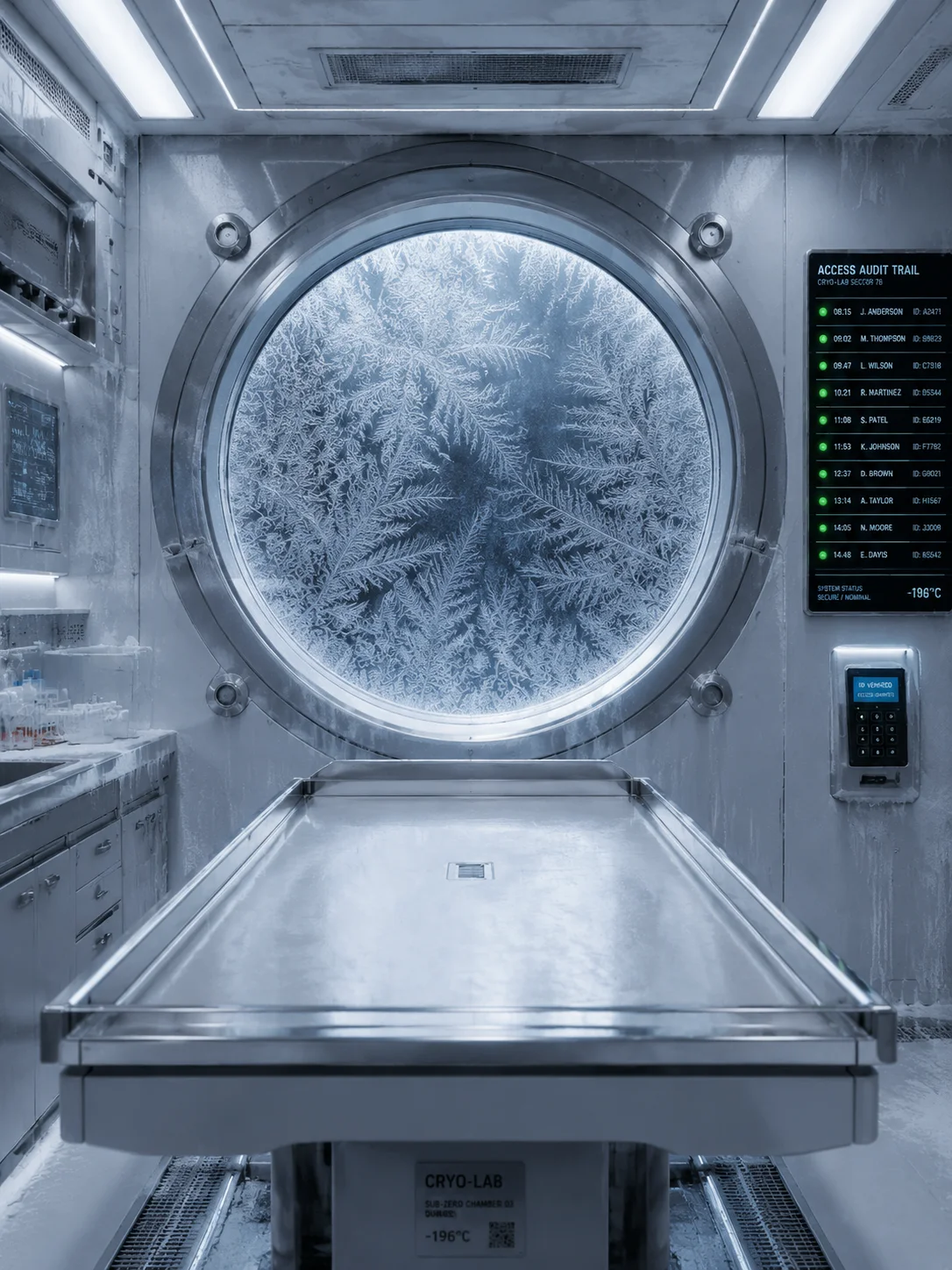
The diagnostic slate initializes. A sharp, clean scent of nitrogen coolant cuts through the recycled air. The ambient hum is a low, steady vibration from the central cryo-pod. The first visual is the faint, residual frost patterns etched on the internal viewport. The second is the clinically clean surface of the forensic examination table. The third is the wall-mounted Key-Card Audit Trail Display, its entry lights glowing with a faint, steady light.
 Crime Scene Environment
Lighting profile: uniform, clinical white. Humidity/temperature profile: sub-zero, with condensation forming frost in secondary corridors. Acoustic density: sterile, characterized by the low hum of machinery and the sharp, occasional hiss of regulated pressure systems.
 Investigation Constraints
Quantum-encrypted personal data slates, neural-interface diagnostic jacks, corporate-grade biometric scanners (retinal, vascular), station-wide environmental and access logs (airlock, lab, dormitory seals), android memory core forensic dumpers, localized hardline intercoms (no open comms), physical key-card overrides with audit trails, cryogenic storage pods with physical locking mechanisms.
✦ Related Cases ✦