The Formicid Mounds: Urns of the Collapse
The ground shudders. Above, the world speaks of a plague of giant anteaters. Below, the ancient Formicid civilization—a society of giant, intelligent ants—faces existential collapse. Their sacred tunnel network, the Mounds, is fracturing, and with it, the seals on ceramic urns holding both their ancestral memories and a terrible, world-altering plague. You descend not as heroes, but as scavengers, scholars, or zealots, drawn into a conflict where salvation for one faction means damnation for the world, and preservation for the other means a slow, inevitable death.
 Chronicle Prelude
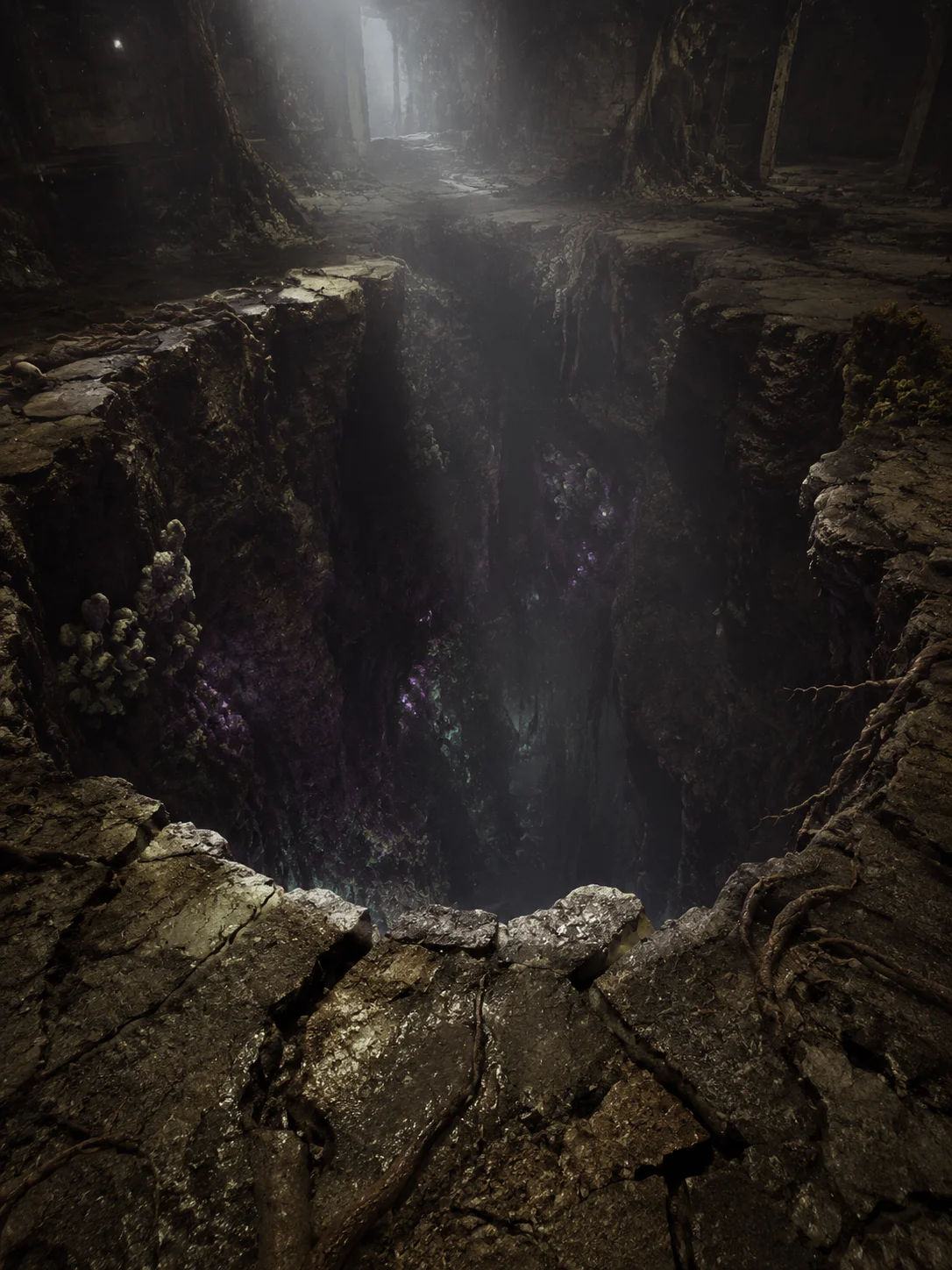
You stand at the fractured lip of the Grand Sinkhole, the only known entrance to the upper Formicid Mounds. The air smells of damp earth, ozone, and a faint, sweet decay. Around you, a tense, makeshift camp has formed: on one side, the desperate, chitin-armored Formicid Preservationists, their antennae twitching with anxiety; on the other, the pragmatic, human-led Urn Seekers, their eyes gleaming with the promise of forgotten knowledge. The ground groans beneath you—the collapse is not an event, but an ongoing, accelerating process.
 Environmental Traits
The Formicid Mounds are a vast, subterranean network of tunnels and chambers, geologically unstable due to the predatory burrowing of colossal, magically-empowered giant anteaters. The immediate crisis is the collapse, but the deeper threat lies within the sealed ceramic urns: one faction seeks to destroy them to contain a primordial plague within, while the other seeks to recover them to restore their civilization's lost knowledge and power. The players' choices will determine which catastrophe—the plague or the civilizational death—unleashes upon the surface world.
 Legendary Archetypes
Rayan
✦ Related Cases ✦