A Flicker in the Grid
An independent forensic specialist is summoned to Apex Tower following the death of an investigative journalist. Initial access reveals a scene of systemic disorder: a cluttered corporate office, compromised digital logs, and a network of professional associates with intersecting timelines. The objective is to untangle the overlapping accounts and physical evidence to isolate the primary sequence of events.
 Initial Crime Scene
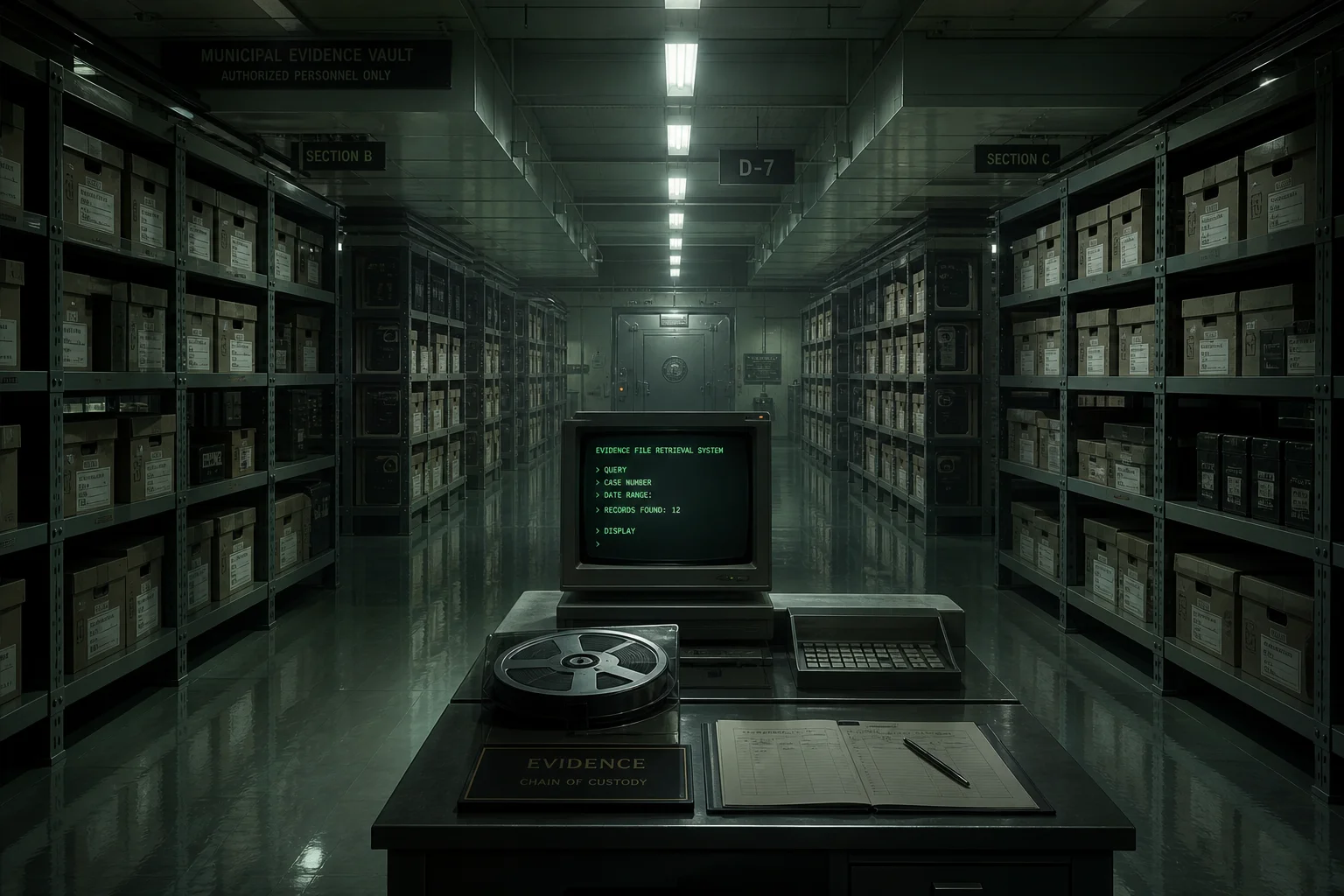
The brushed steel handle of the office door yields to your touch, cool and sterile. A sharp, chemical odor—distinct from the faint, generic scent of industrial cleaner—hangs near the baseboards. Inside, the dominant sound is the soft, rhythmic whir and click of a desktop tower's hard drive performing a forced reboot. Your eyes adjust to the flat fluorescent light, taking in the cluttered desk surface, the static-filled grain on a CRT monitor's screensaver, and the specific wear pattern on a key-card slot in the server room doorframe visible through the interior glass.
 Crime Scene Environment
Lighting is uniformly artificial, casting a flat, shadowless glare from recessed fluorescents. The air is dry and clinical, holding a stable, cool temperature. Ambient noise is a low, constant hum of electronics and HVAC systems, with occasional sharp, synthetic clicks from rebooting machines or rewinding tape decks.
 Investigation Constraints
Burner phones with removable SIM cards; encrypted email services requiring desktop clients; physical key-card access systems; analog security camera VHS tapes; micro-cassette recorders for dictation; landline telephones with voicemail; fax machines; server rooms with magnetic tape backups; no ubiquitous internet or cloud storage.
✦ Related Cases ✦