A Sealed Compartment
A passenger is found dead in a corporate airline cabin. The investigation focuses on the procedural integrity of the flight's operational record. Sealed logs, wax-stamped pouches, and timestamped data are examined for anomalies. Crew testimonies present conflicting accounts of standard procedure.
 Initial Crime Scene
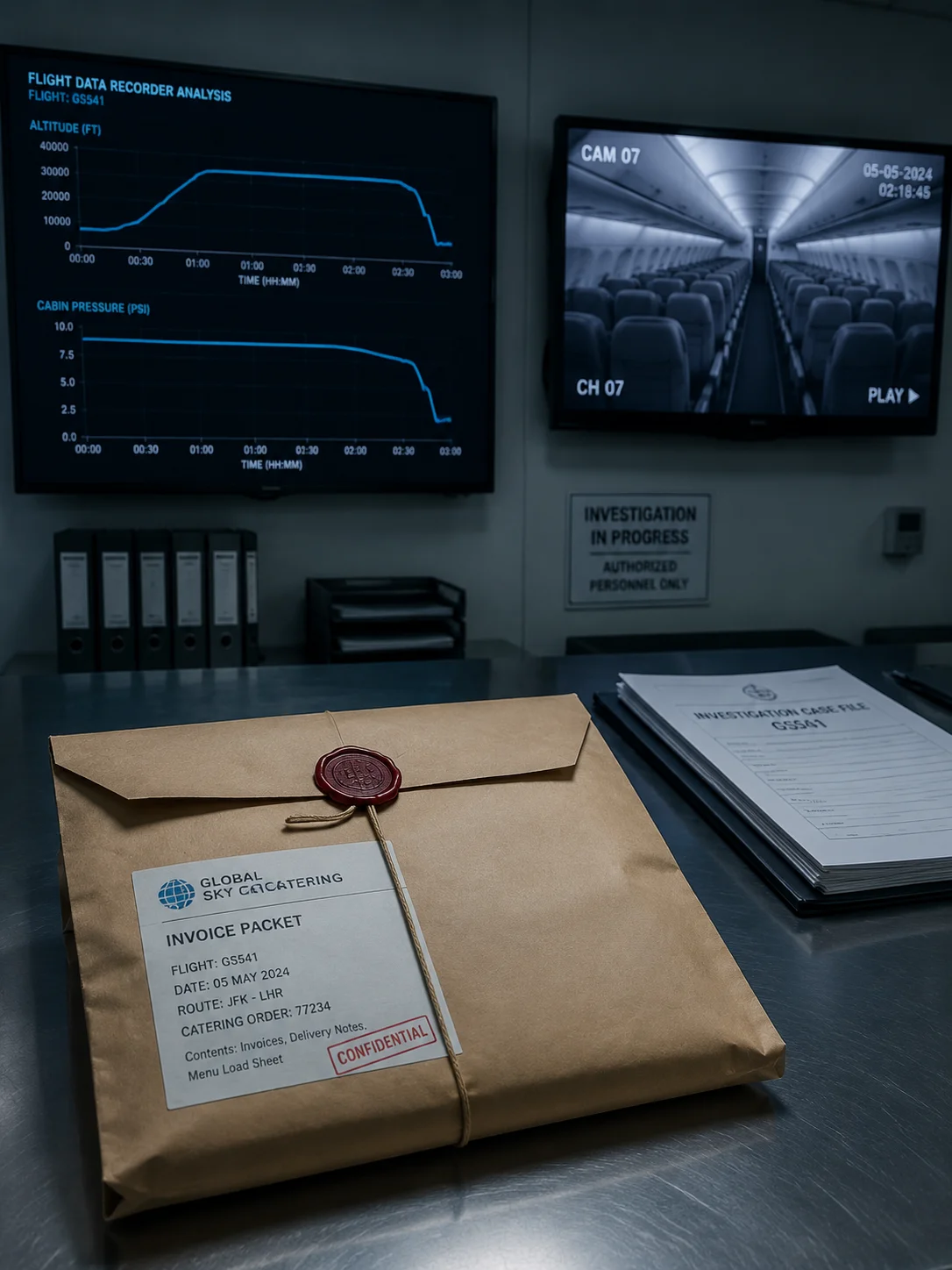
The sterile, recycled air carries the faint, chemical scent of aircraft cleaning solution. Overhead, the constant, low hum of the environmental control system is a steady acoustic presence. Three visual markers dominate the sterile space: the sealed, wax-stamped catering invoice pouch resting on the steel table, the analog FDR's altitude and cabin pressure graphs lying flat on the display, and the timestamped, low-resolution CCTV loop of the main cabin aisle playing silently on a monitor.
 Crime Scene Environment
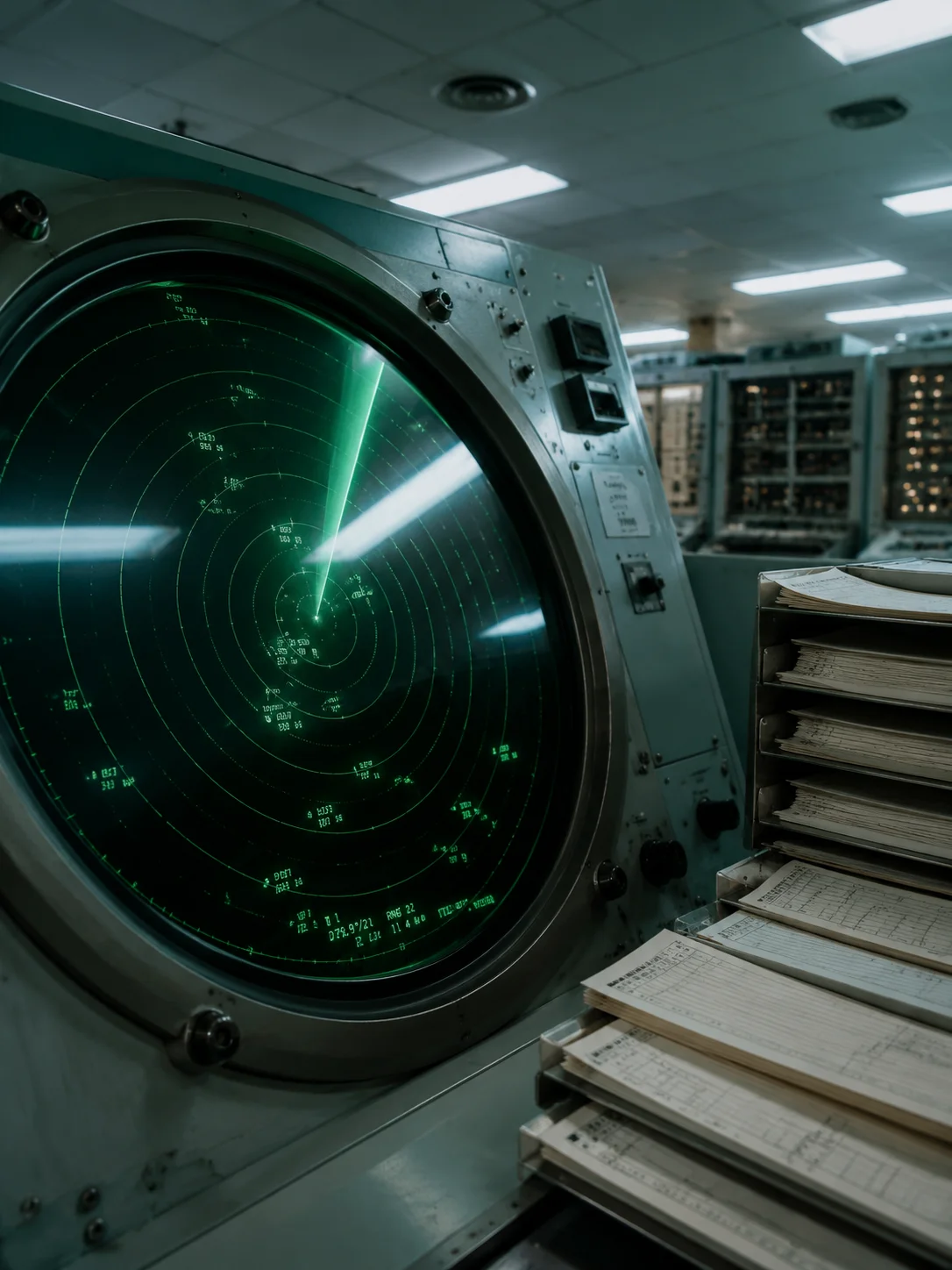
The lighting profile is a cold, fluorescent glare with minimal shadows, creating a sterile and clinical visual field. The humidity and temperature profile is strictly climate-controlled, dry and cool, with no natural airflow. The acoustic density is low, characterized by the constant, calibrated hum of machinery and the faint, periodic click of analog readouts.
 Investigation Constraints
Closed-circuit analog cabin surveillance (VHS-style, timestamped but low-resolution), sealed hardcopy flight manifests and catering logs, intercom paging system, analog flight data recorder (FDR) with limited parameters, biometric palm-locks on secure cockpit and crew rest doors, encrypted radio communication with ground control, personal digital assistants (PDAs) with local storage and basic email.
✦ Related Cases ✦