A Single Prop's Fall
During the final dress rehearsal at a prestigious London theatre, the lead actor is found dead beneath a jammed trapdoor. An independent investigator enters the scene to examine the physical evidence, testimonial statements, and the complex web of professional relationships within the cast and crew.
 Initial Crime Scene
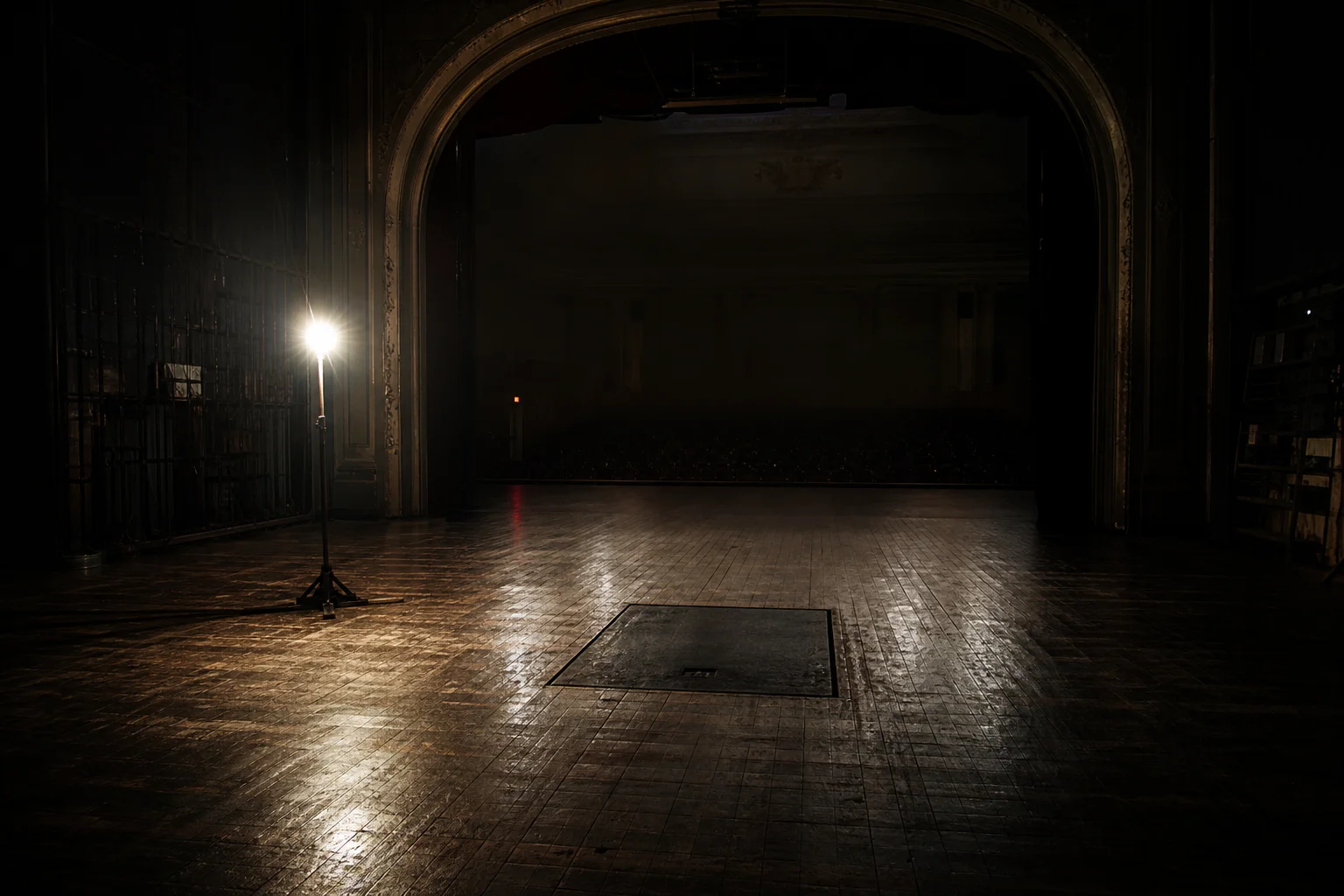
The sharp, acrid scent of burnt paper hangs in the air, mixing with the dust of old sawdust. A single, bare bulb on a stand—the theatre's ghost light—casts long, stark shadows across the polished floorboards of the vast, empty stage, illuminating the looming proscenium arch and the dark, open square of the jammed trapdoor.
 Crime Scene Environment
The initial scene is illuminated by a solitary, dim electric bulb, creating pools of deep shadow. The air is cool, dry, and still, heavy with dust and the faint, persistent smell of old grease and hemp. Acoustic density is low, dominated by the faint hum of the single light and the absolute silence of the empty space.
 Investigation Constraints
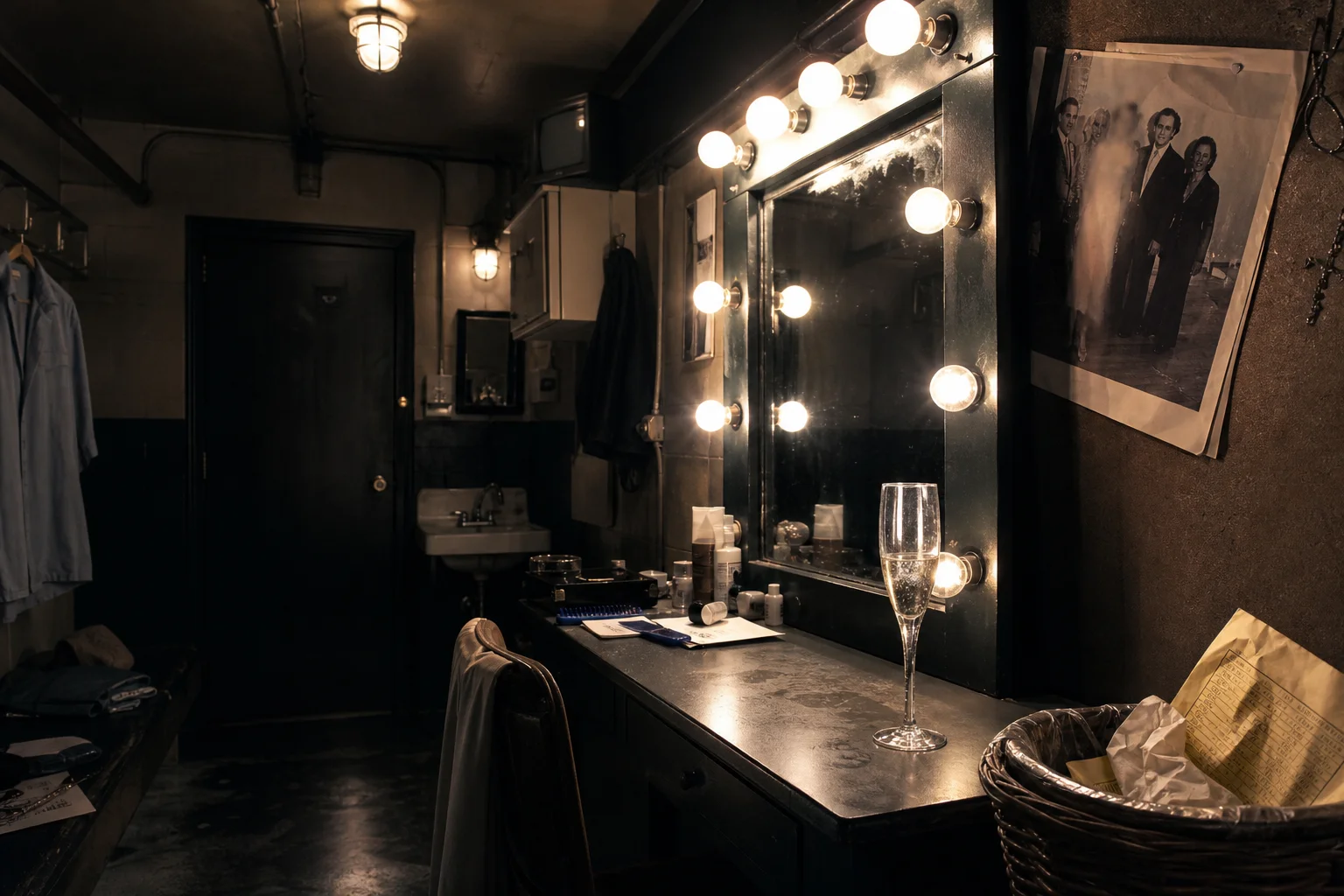
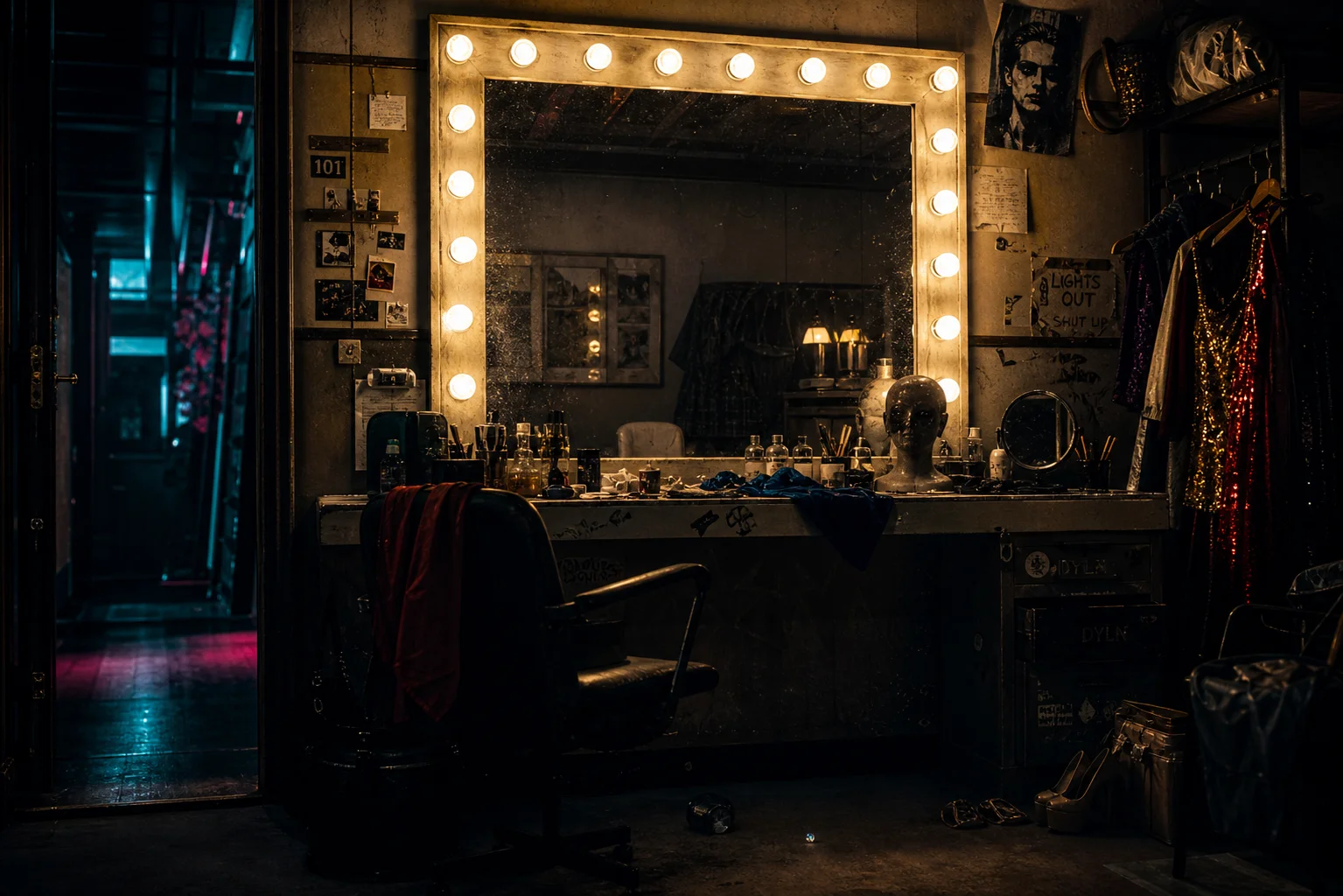
The world operates on 1920s theatrical technology: manual rigging systems, gas lamps, electrical footlights, analogue telephone switchboards, handwritten stage manager's logs, carbon-copy contracts, and early tabloid photography. Communication relies on delivered notes, phone calls via operators, and private conversations in dressing rooms.
✦ Related Cases ✦