The Grand's Final Curtain
The lead actress of a West End production is discovered deceased in her dressing room following the final performance. An investigation into the theatre's closed world begins, examining interpersonal relationships, professional pressures, and the physical evidence left behind.
 Initial Crime Scene
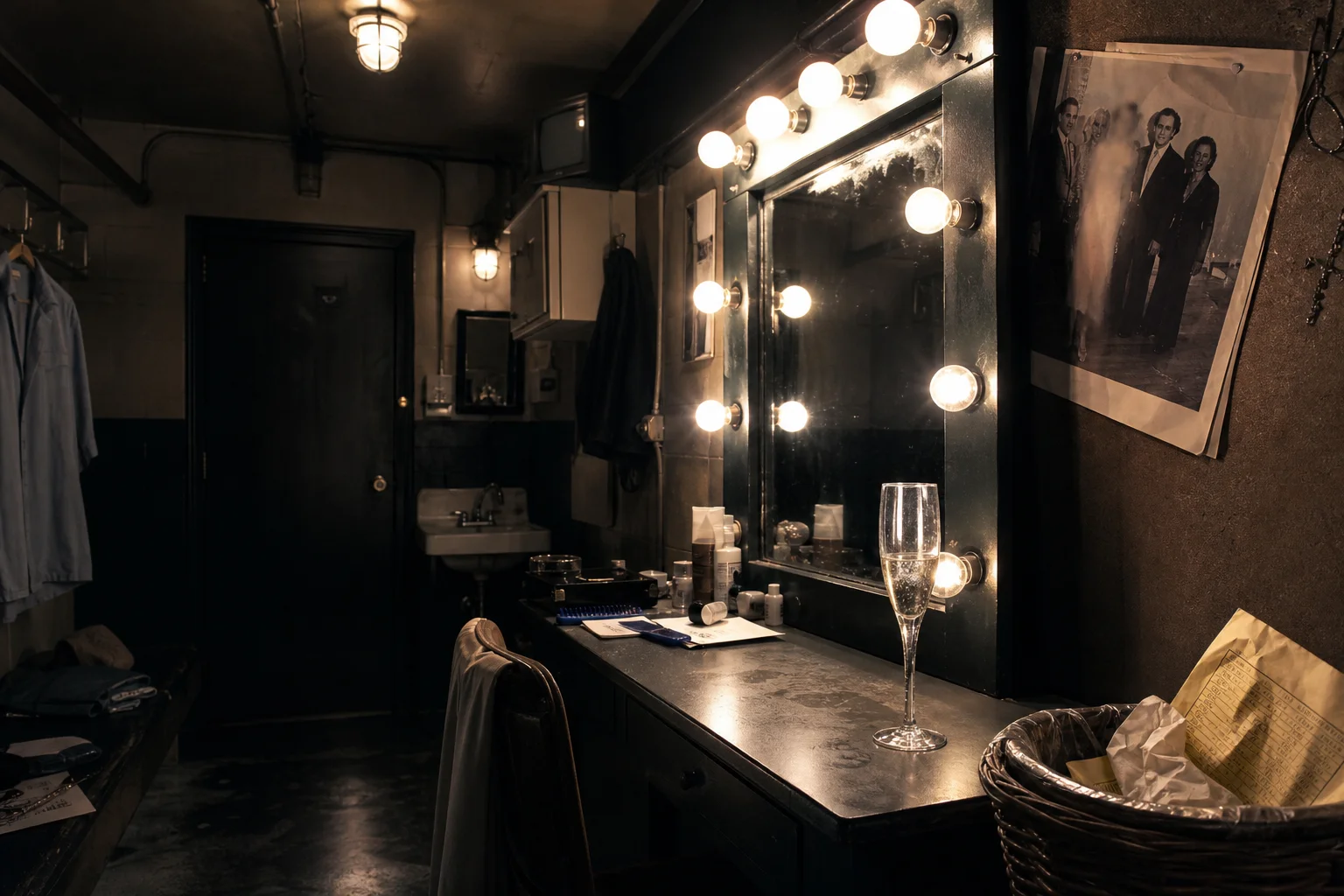
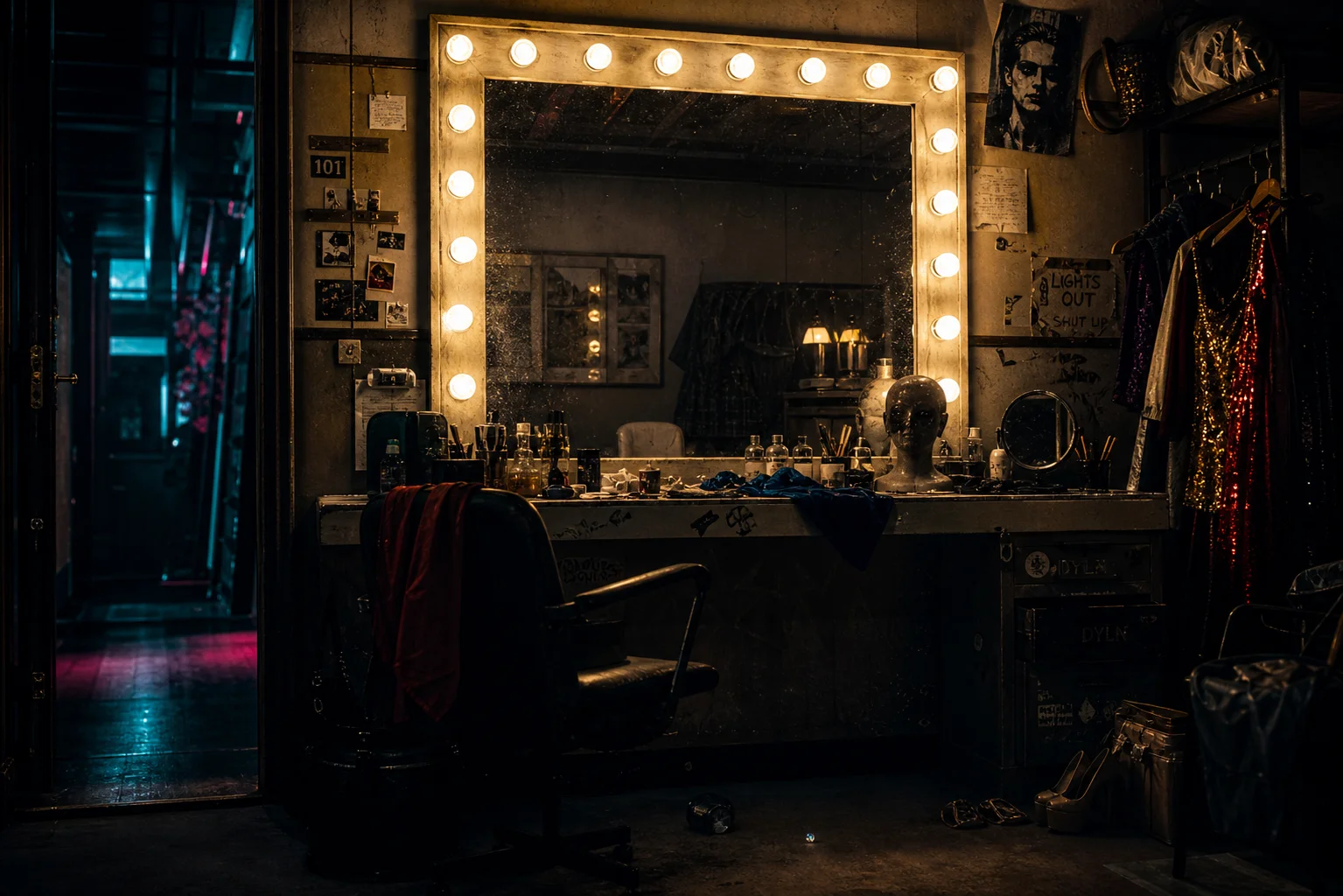
The door swings open on a wave of air thick with the sharp, chemical bite of hairspray and spirit gum. A low, persistent hum vibrates from the walls, the sound of the theatre's lighting dimmer board. Your eyes adjust to the glare from a ring of bright bulbs around a large vanity mirror. A single sequin glitters on the carpet beside a tipped-over greasepaint pot. The space is dominated by the scent of cosmetics and the faint, underlying smell of old wood.
 Crime Scene Environment
The lighting is a harsh, artificial glare from exposed bulbs, creating sharp shadows in corners. The air is dry and cool, carrying a consistent chemical tang. Acoustic density is low, dominated by the constant, low-frequency hum of electrical equipment from within the walls, with muffled, distant sounds from the theatre proper.
 Investigation Constraints
Late 1990s/early 2000s analogue-digital hybrid. Landline telephones, early mobile phones with basic SMS (text messages can be printed on dot-matrix paper via service provider), fax machines, physical appointment books, tape-based answering machines, CCTV on VHS tapes, analogue sound boards for theatre audio, pneumatic tube systems for inter-department messages within the theatre. No internet, email, or social media.
✦ Related Cases ✦