Blackgate Static
A state forensic auditor arrives at a remote, high-security penitentiary to document the circumstances surrounding the death of an inmate in solitary confinement. The institution's extensive logging systems—electro-mechanical, mainframe, and manual—present a complex set of physical data points. Staff accounts of their movements and duties during the period in question create overlapping, sometimes contradictory, narratives.
 Initial Crime Scene
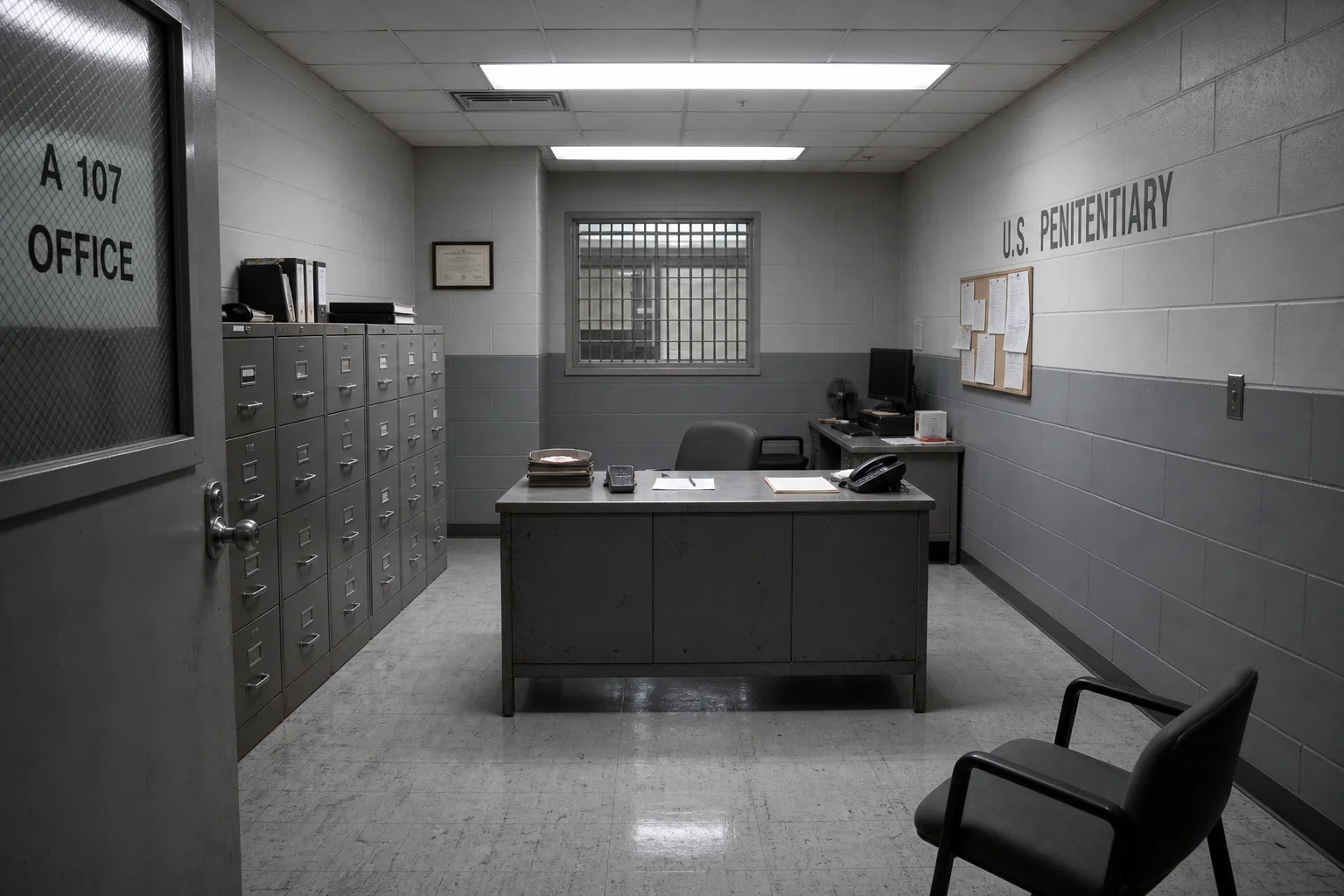
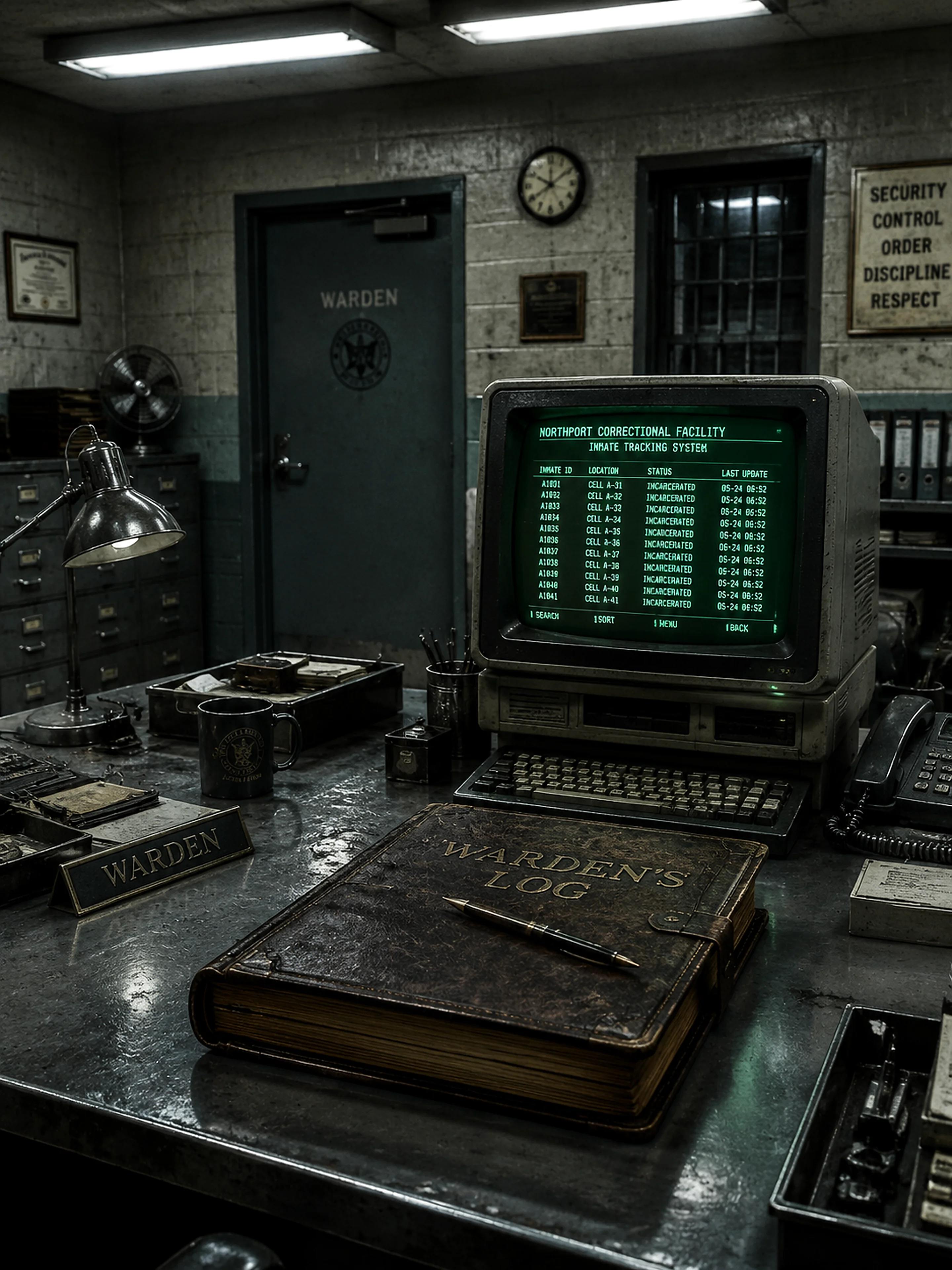
The scent of floor polish and ozone from a humming mainframe terminal hangs in the Warden's office air. A distant, rhythmic clank echoes from a pneumatic tube station. Your gaze registers the stark green of a CRT monitor, the deep impression of pen strokes on a leather-bound logbook on the steel desk, and the flat, shadowless glare of the fluorescent tubes overhead.
 Crime Scene Environment
The lighting profile is a constant, shadowless fluorescent glare. The air is sterile, cool, and carries a low, institutional acoustic density of electrical hums and distant mechanical clicks. Surfaces are coated in a fine institutional grime.
 Investigation Constraints
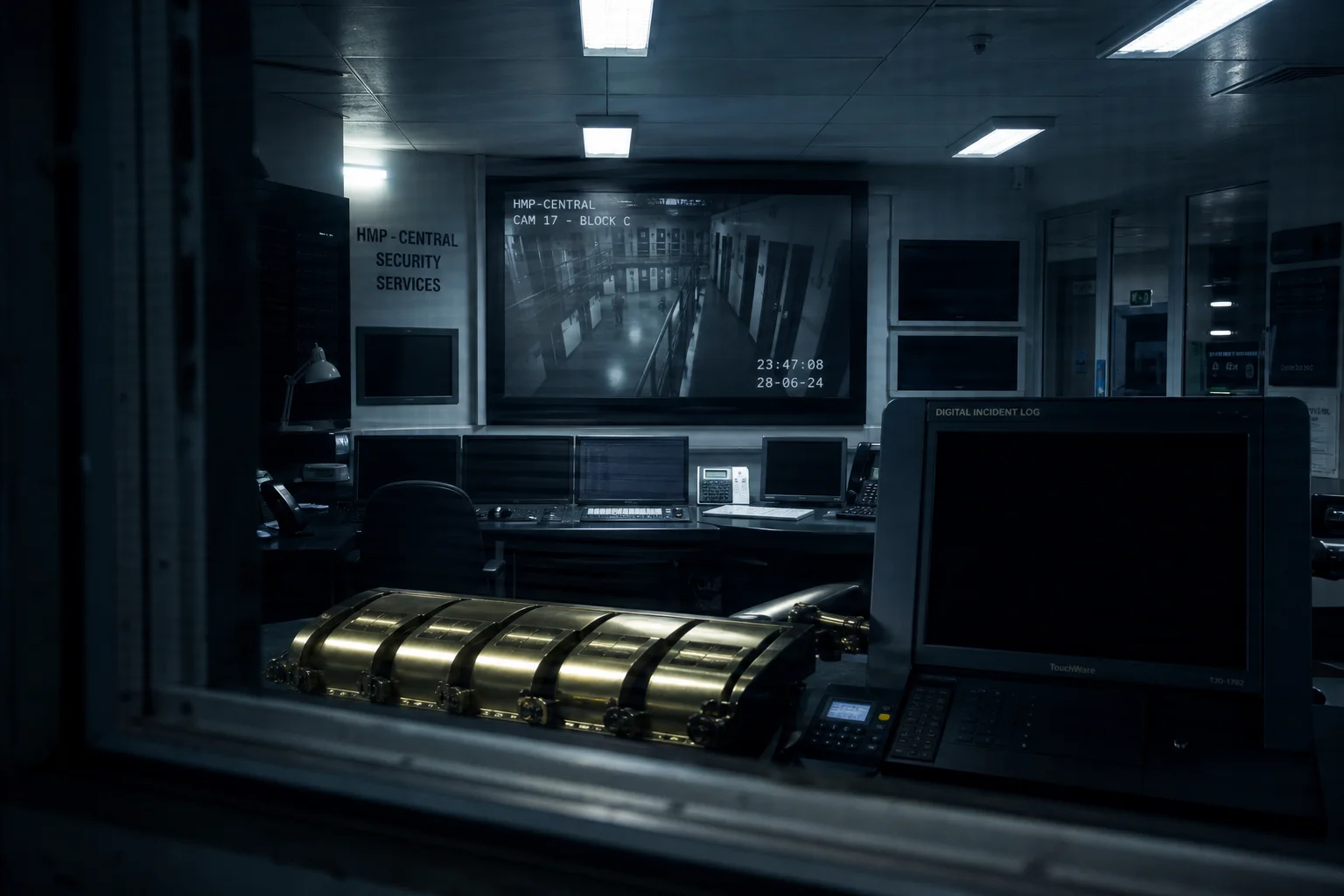
Analog and early digital hybrid systems. Landline telephones with switchboards. Pneumatic tube message carriers. Electro-mechanical door locks with physical key overrides. Basic, isolated mainframe terminals for inmate records, accessed via green-screen monitors. Punched-card time clocks for staff. Manual logbooks for cell checks and power grid status. Radio communications for perimeter security. No internet, no wireless, no personal digital devices.
✦ Related Cases ✦