Blackridge Cipher
An independent forensic specialist is contracted to investigate a death inside Blackridge Penitentiary. The inmate's body displays intricate tattoos. The investigation enters a controlled environment of high-security protocols, systemic routines, and encrypted records.
 Initial Crime Scene
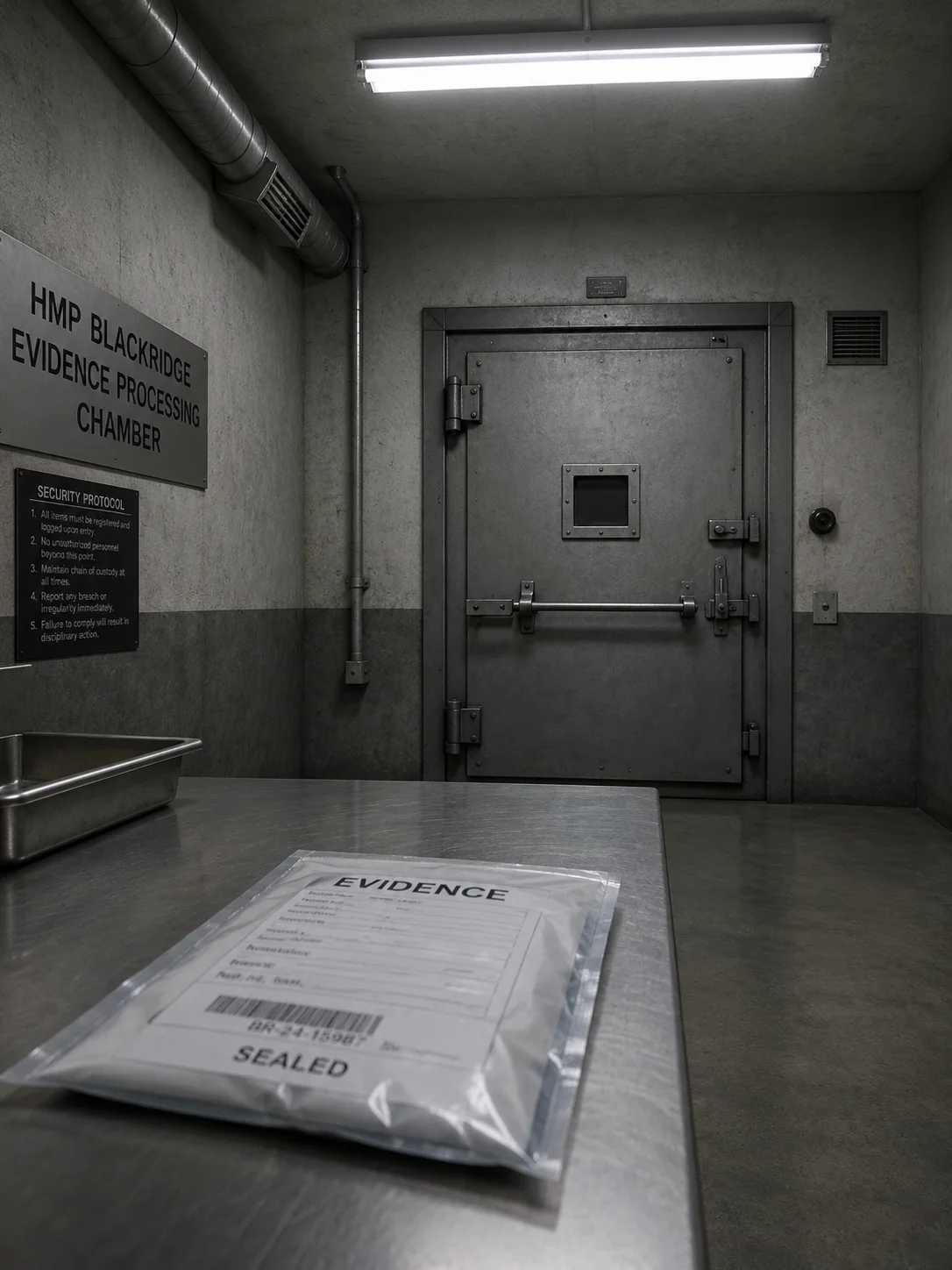
The heavy steel door of the evidence processing chamber seals behind you with a pneumatic hiss. The air tastes of ozone and stale recycled breath. A single, harsh fluorescent light hums overhead, casting a flat, shadowless glare on the stainless-steel counter. On the counter sits one sealed evidence bag, its surface matte and institutional. The distant, rhythmic thrum of the prison's ventilation system vibrates through the concrete floor.
 Crime Scene Environment
The sandbox operates under a constant, cold fluorescent lighting profile that eliminates shadows. The air is climate-controlled to a precise, cool temperature with low humidity, carrying a persistent, faint scent of ozone from the recirculation systems. Acoustic density is defined by the omnipresent low-frequency hum of fluorescent lights, the muffled drone of industrial machinery, and the intermittent, sharp beep of distant electronic scanners. Every texture and sound is institutional, systematic, and rigidly procedural.
 Investigation Constraints
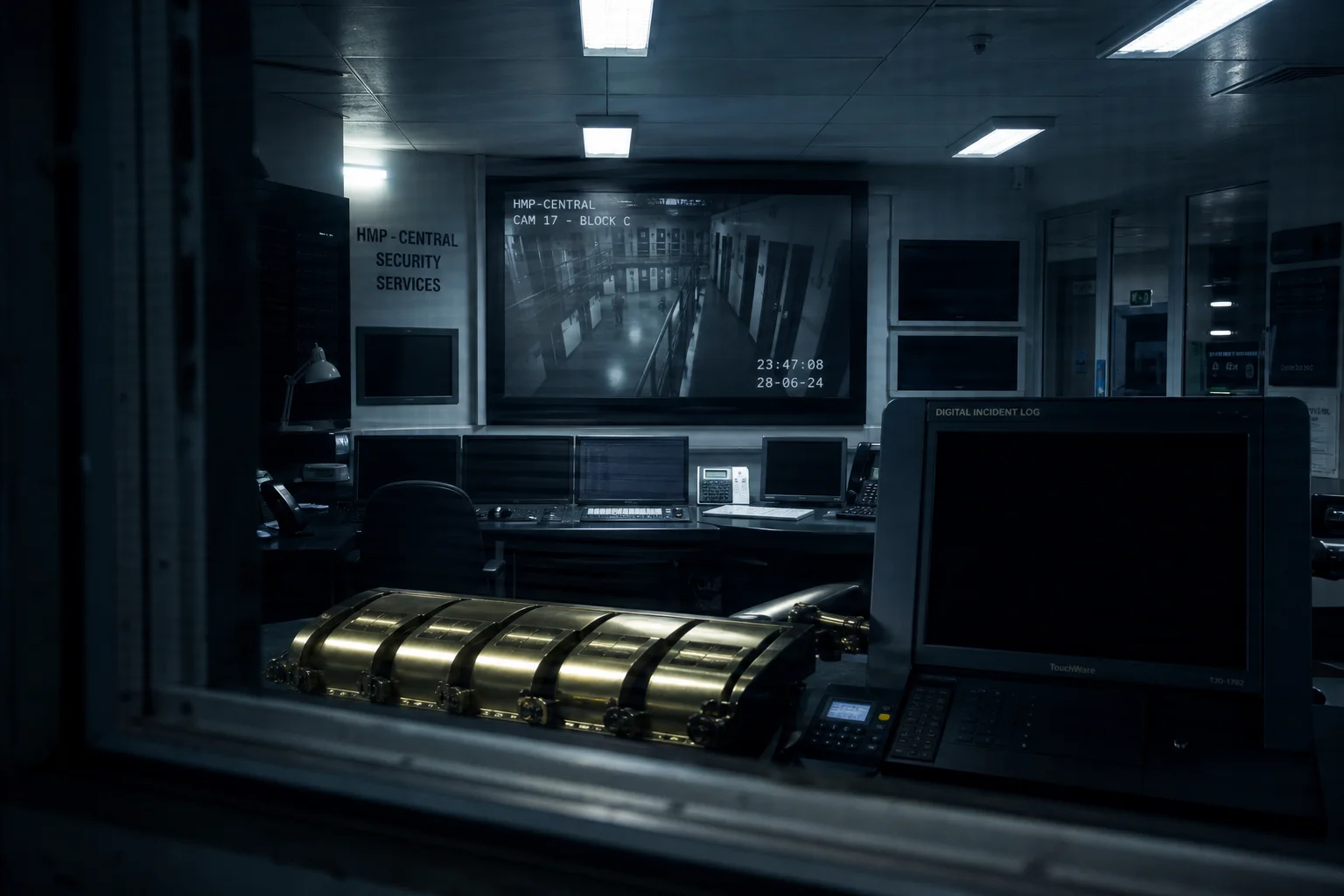
Modern, high-security prison infrastructure: biometric scanners (fingerprint/retinal), centralized electronic door-lock systems with audit logs, internal security camera networks with 90-day digital storage, inmate-tracking RFID wristbands, encrypted internal communication terminals for staff, advanced forensic toxicology (spectrometry), and tamper-evident evidence bags with digital hash seals. No personal internet or smartphone access for inmates.
✦ Related Cases ✦