Blackstone Protocol
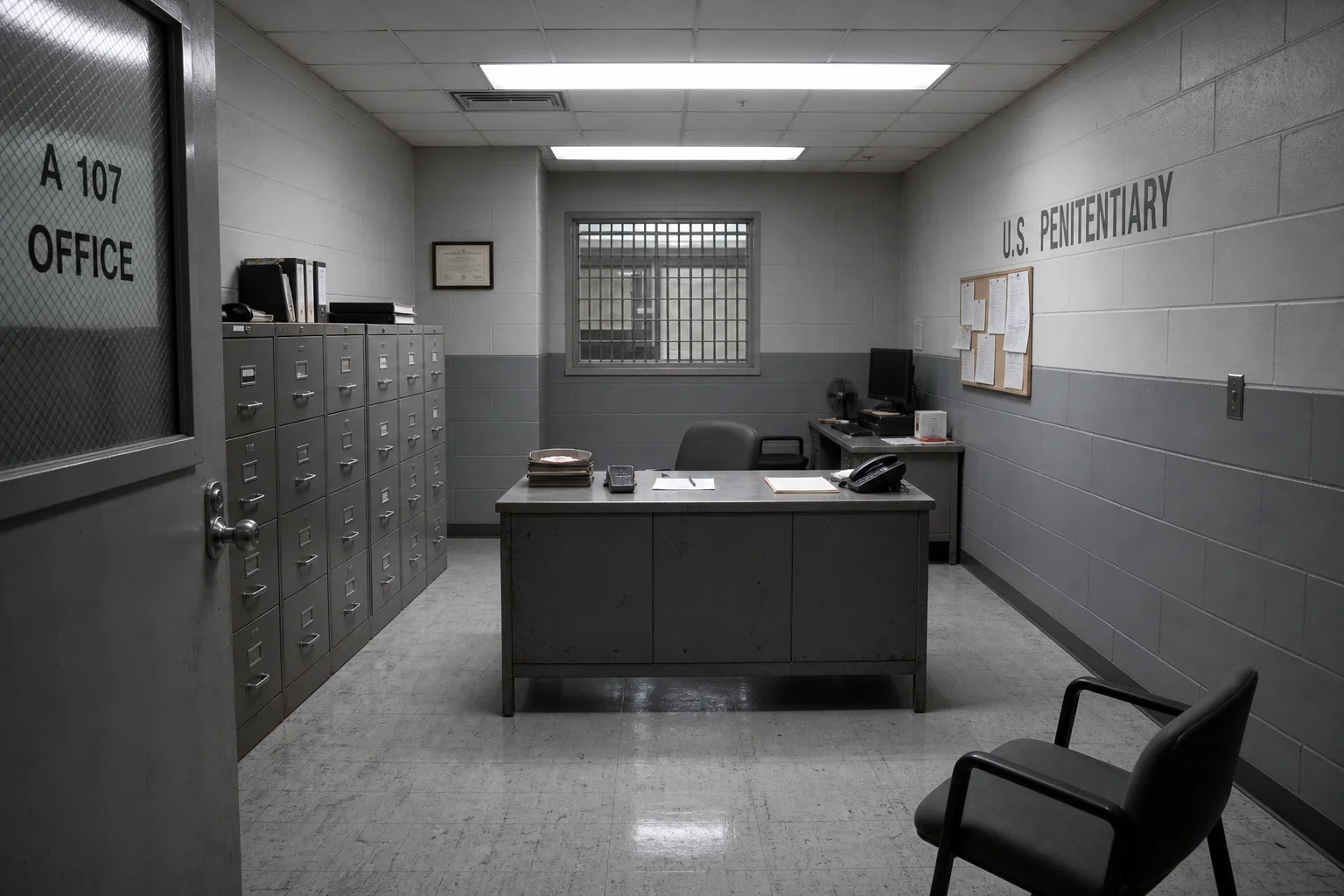
A security anomaly at Blackstone Penitentiary prompts an internal affairs investigation. The independent investigator must analyze institutional logs, forensic traces, and personnel statements to reconstruct the sequence of events surrounding a compromised intake item.
 Initial Crime Scene
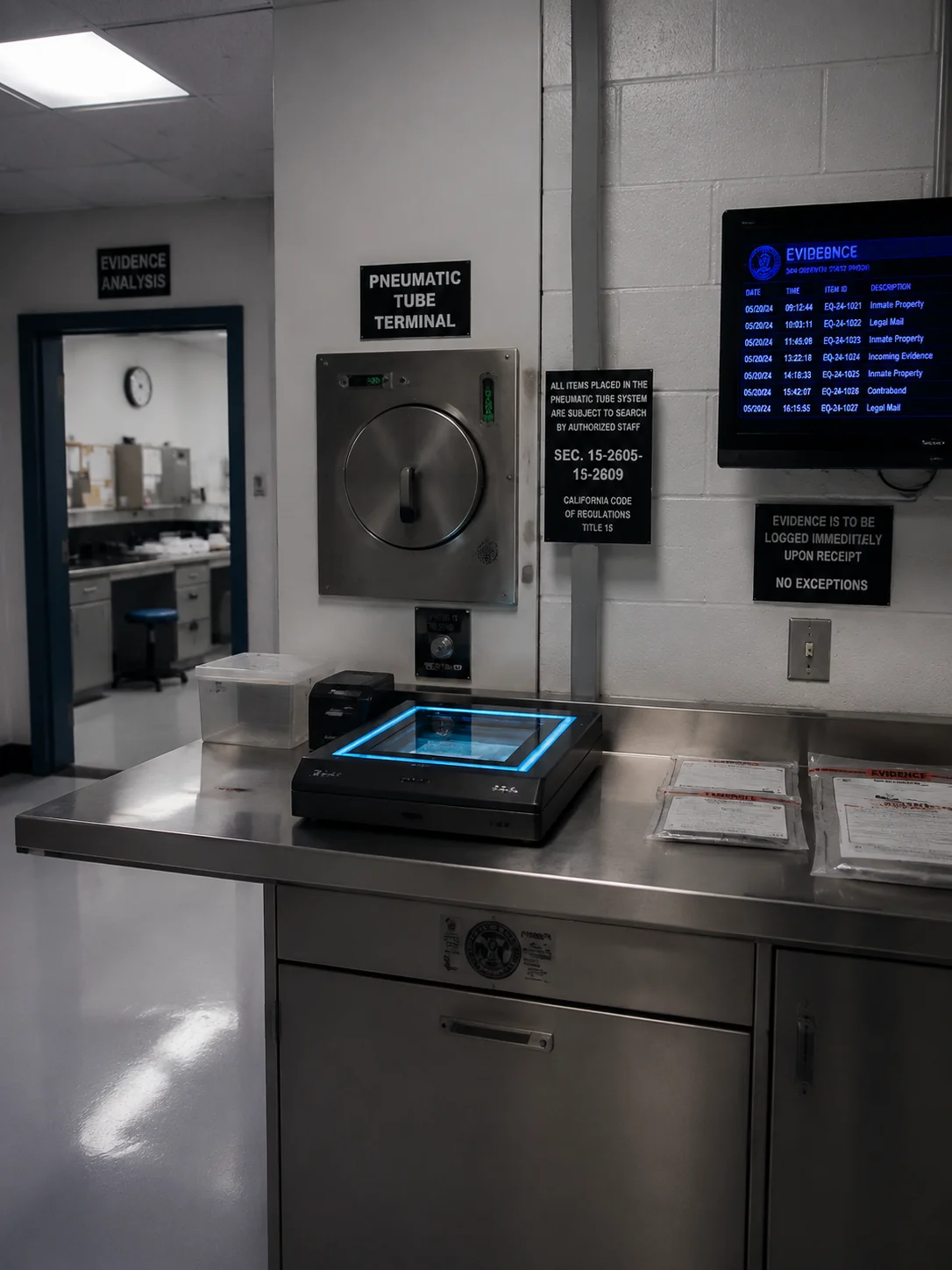
The air carries the stale scent of cardboard dust and a sharp, chemical tang of industrial cleaner. Fluorescent lights emit a low, constant hum. The floor is polished linoleum, reflecting the sterile white walls. A stainless-steel prep counter sits centered in the room, its surface empty save for a glowing blue scanner. A pneumatic tube terminal hisses softly from the wall.
 Crime Scene Environment
Lighting is artificial, uniform, and oppressive. The ambient temperature is cool and dry. Acoustic density is low, dominated by the hum of ventilation systems and the intermittent hiss of pneumatic equipment. All textures are clinical and institutional: timestamped electronic logs, sealed evidence bags, ink-on-paper manifests, and sterile scanner surfaces.
 Investigation Constraints
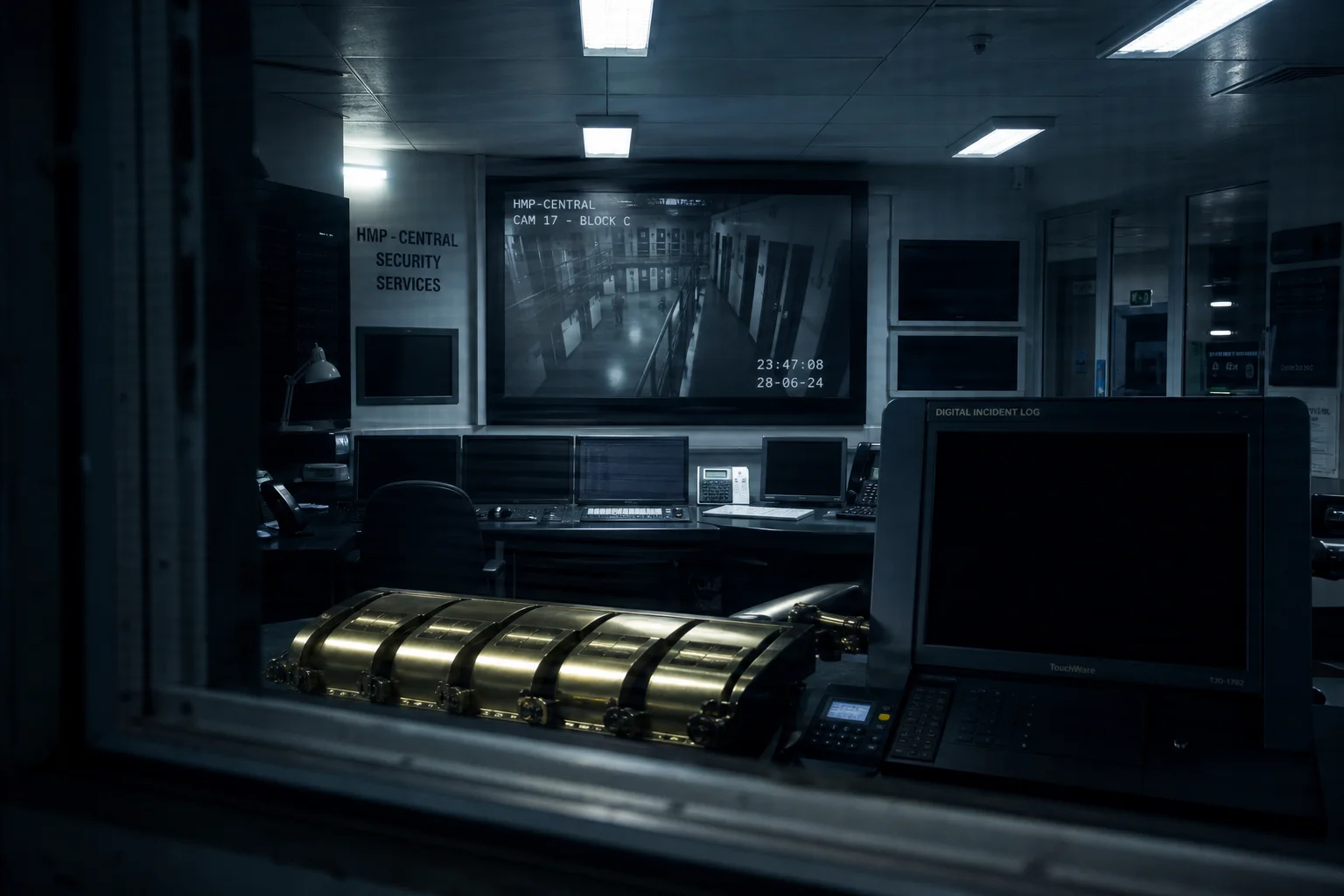
Institutional digital logging systems (door access, inmate movement, item delivery), encrypted staff communication terminals, pervasive CCTV with limited playback capacity, electronic contraband scanners (portable and at checkpoints), biometric locks on high-security zones, pneumatic tube message systems for internal memos, forensic chemical analysis of substances, and digital incident report filing. No internet; all systems are localized and archaic by modern standards.
✦ Related Cases ✦