Echoes from the Velvet Curtain
An independent investigator arrives at the Grand Theater after the opening night curtain call. A director has been found dead in his locked dressing room. The cast and crew present a web of conflicting statements, missing items, and altered documents.
 Initial Crime Scene
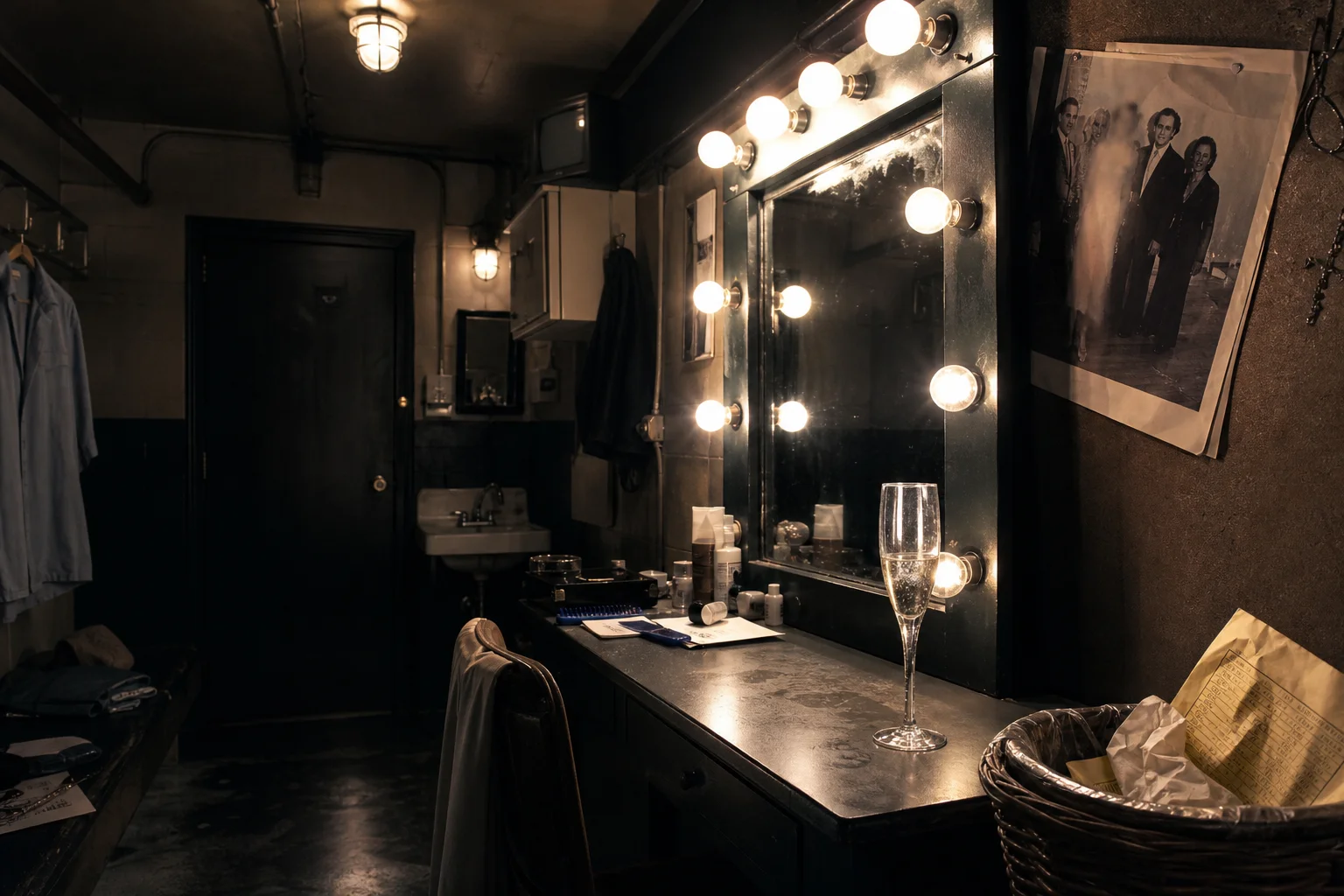
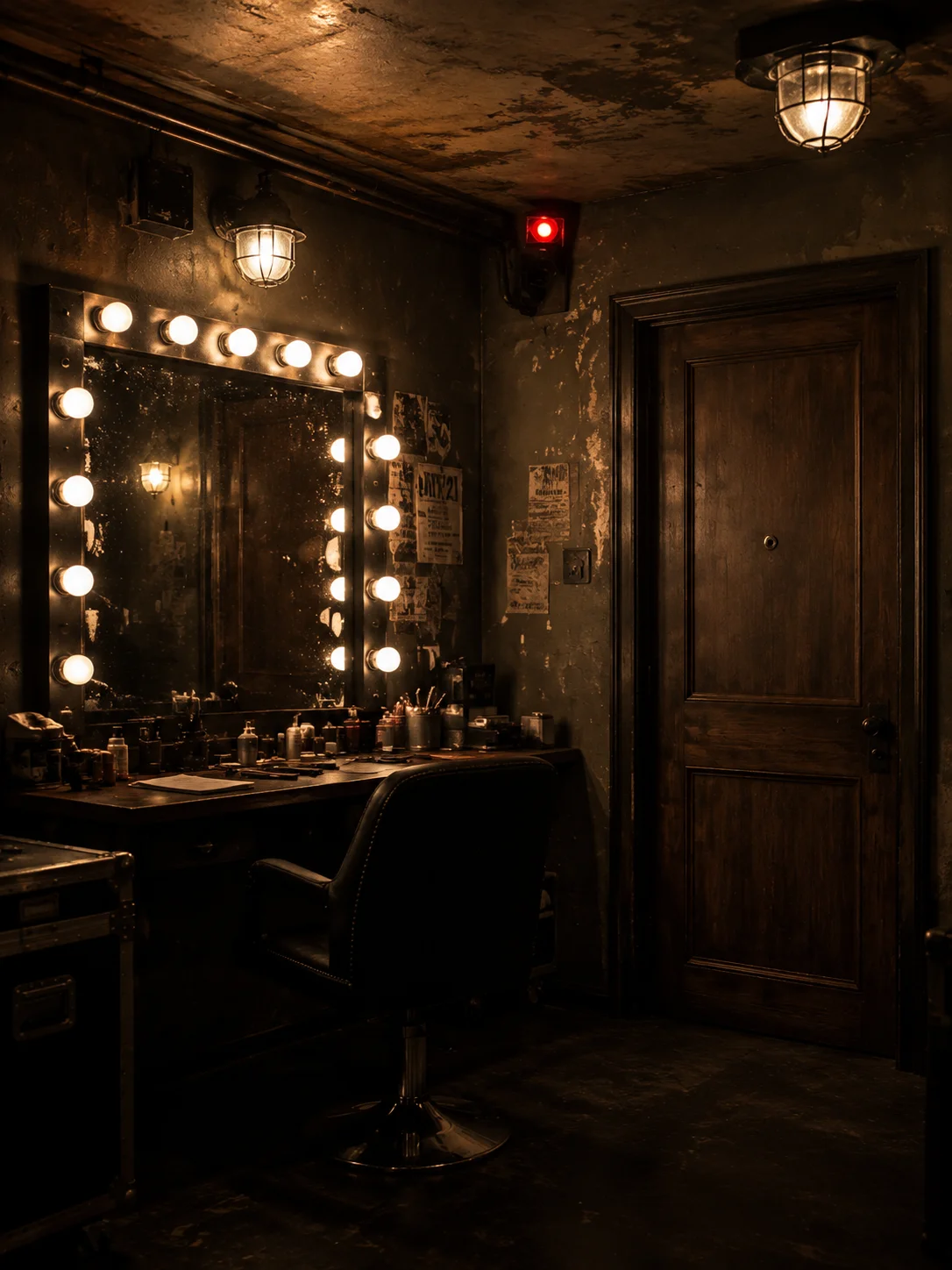
The air hits you first—a stale cocktail of old perfume, cheap whiskey, and the chalky dust of decades. Your eyes adjust to the gloom, catching the glint of bare bulbs around a large vanity mirror. A heavy wooden door stands before you, its keyhole a dark, silent eye. To your left, a security camera's unblinking red light pulses in the corner.
 Crime Scene Environment
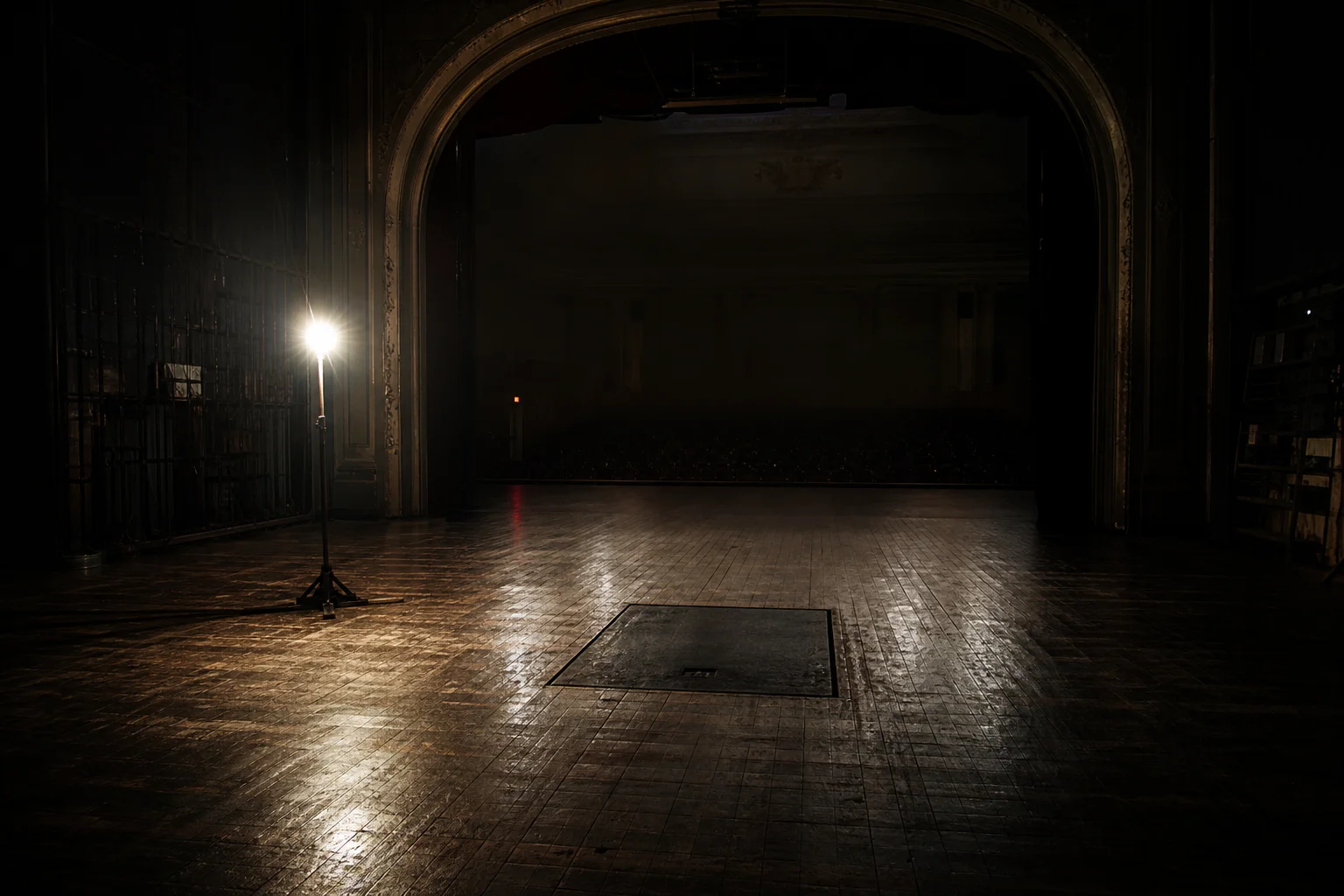
The environment is a cage of low, amber-tinted light from caged industrial bulbs, casting long, deep shadows. The air is cold, carrying a damp chill that clings to exposed skin. The acoustic density is low, dominated by the hum of distant ventilation and the profound, echoing silence of an empty stage.
 Investigation Constraints
Late 1990s/early 2000s theatrical world: analog landline phones with caller ID, fax machines, pagers, early digital answering machines, printed playbills, handwritten notes, carbon-copy receipts, physical key systems, stage management clipboards with paper logs, and basic security camera systems with tape-based recording.
✦ Related Cases ✦