Institutional Beige
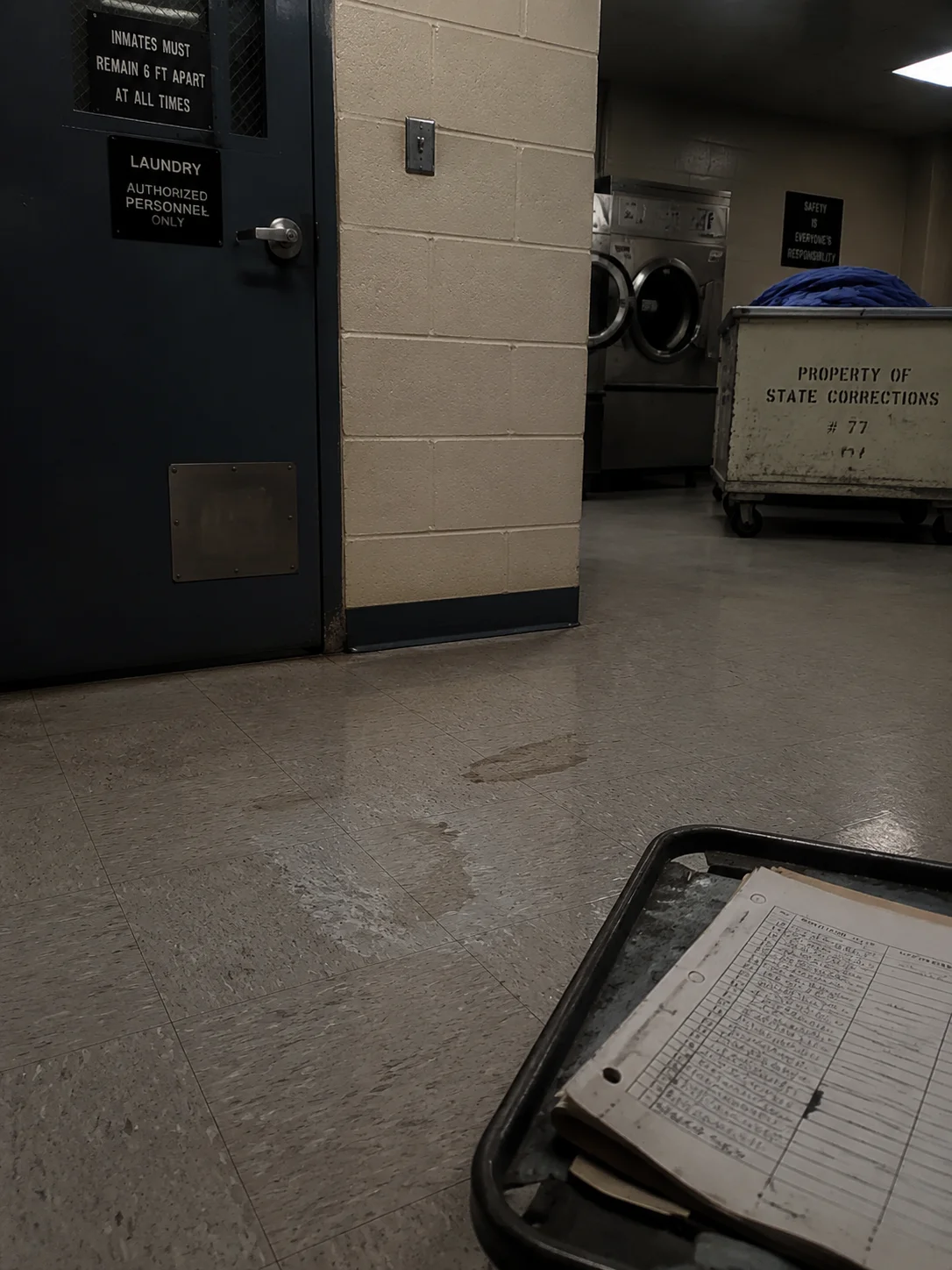
Inside Starkhaven Penitentiary, a fatal incident occurs within the laundry room. An independent investigator enters the facility to analyze physical evidence and cross-reference institutional logs, seeking to understand the sequence of events.
 Initial Crime Scene
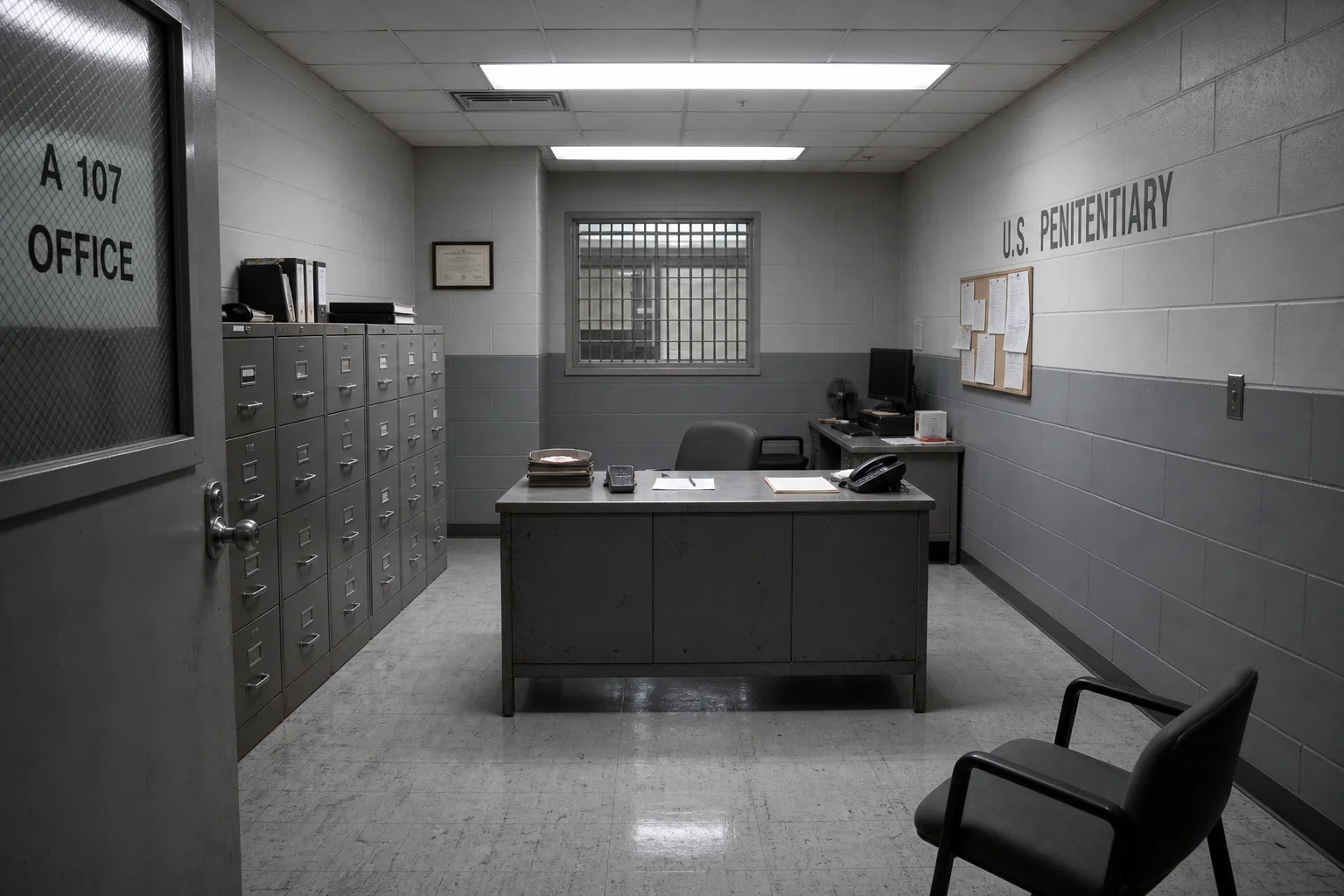
The fluorescent hum overhead pulses against the institutional beige of the cinderblock walls. You step onto the concrete floor, the metallic scent of disinfectant sharp in your nostrils. A chemical residue stain, faint but distinct, marks the industrial tile near a service door. Your gaze catches the inked imprint of a previous form on a carbon-copy log sheet abandoned on a cart. The air carries the static-laced silence of a facility holding its breath.
 Crime Scene Environment
The sandbox is enveloped in a perpetual, shadowless glare from overhead fluorescent lighting, casting a flat, unflattering light on all surfaces. The air is cool and dry, carrying a persistent low humidity and a constant, low-decibel acoustic density composed of electrical hums, distant echoes, and the muffled sounds of institutional life. The environment is defined by the 'Institutional beige' of walls, the 'Fluorescent hum' of lighting, and the 'Static-laced' quality of the air itself.
 Investigation Constraints
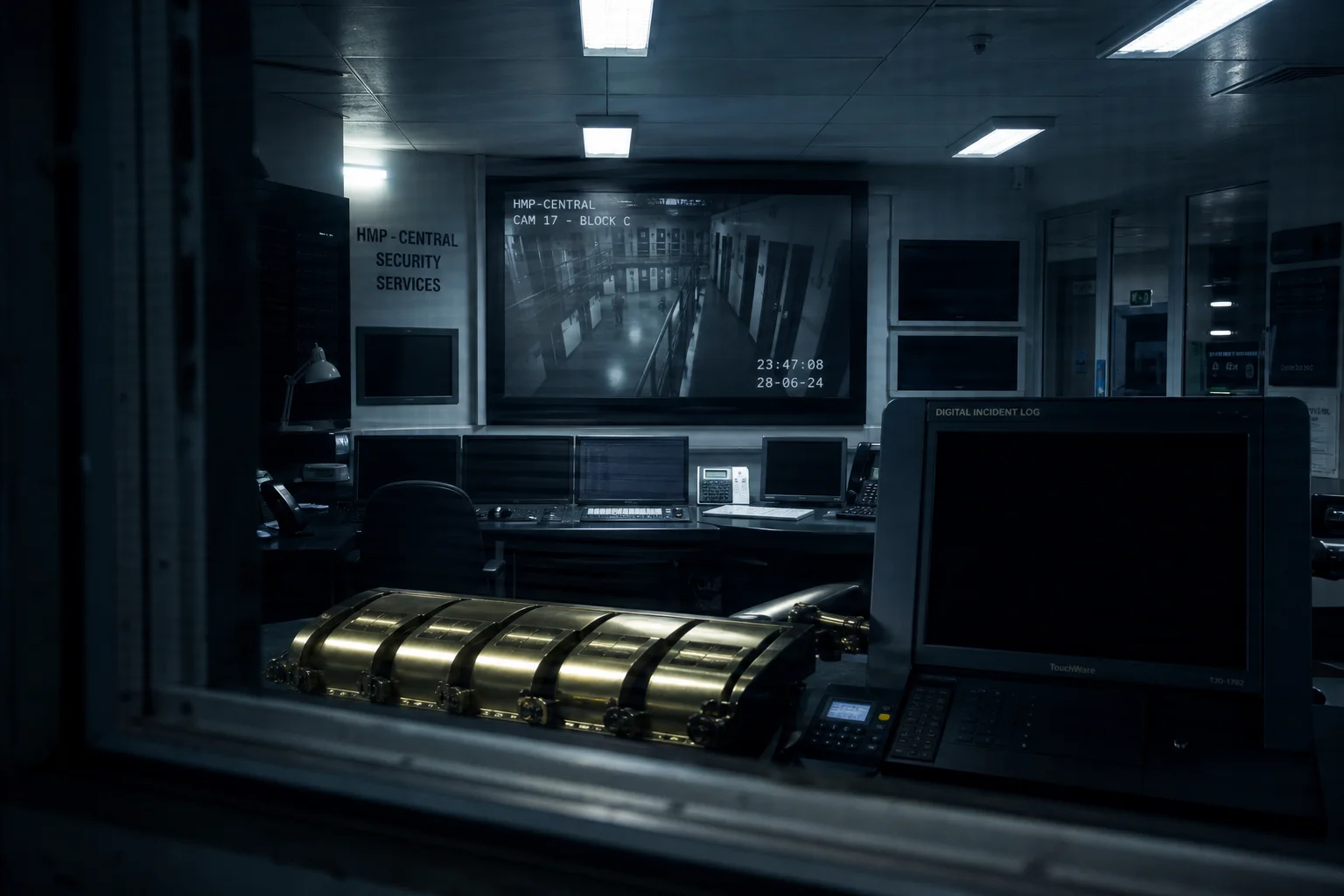
Analog security: manual sign-in logs, physical key systems, closed-circuit television with limited VHS tape retention, paper-based inmate manifests and work detail schedules. Communication is via landline telephones with monitored switchboards, handwritten memos, and typed inter-departmental reports. Forensic analysis relies on physical trace evidence (fiber, particulate), basic toxicology, and fingerprint dusting. No digital networks, mobile devices, or biometric scanners.
✦ Related Cases ✦