Latency in the Signal
An independent forensic specialist is contracted to audit the death of a media figure found in his private recording space. The investigation uncovers a network of professional dependencies, compromised digital archives, and overlapping personal and financial pressures within a closed media ecosystem.
 Initial Crime Scene
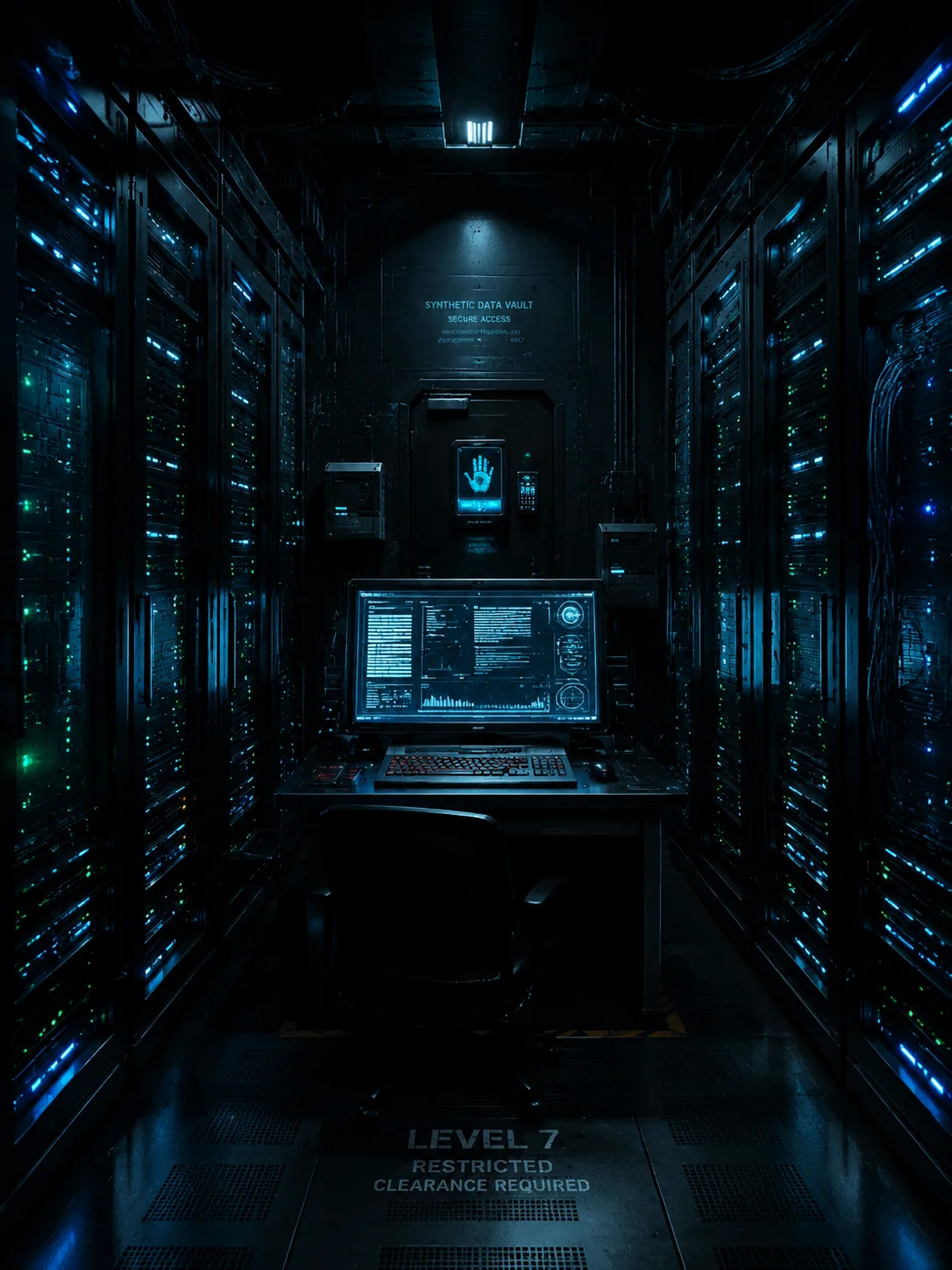
The air carries the scent of ozone and warm electronics. A constant, low-frequency hum from server racks establishes a baseline of synthetic noise. Your eyes adjust to the darkness, locating the rhythmic pulse of blue and green status lights across the rack faces, the stark glow of a single terminal screen, and the cold, metallic sheen of a biometric access panel on the far wall.
 Crime Scene Environment
The environment is a synthetic, enclosed data vault with no external light sources. The air is dry, temperature-controlled, and still. Acoustic density is high, dominated by the constant, layered hum of active cooling systems and hard drive operations, creating a persistent background frequency.
 Investigation Constraints
Digital audio workstations (DAWs), encrypted cloud storage, biometric door locks (fingerprint and retinal scan), network-attached storage (NAS) with audit logs, forensic audio analysis software, burner phones with prepaid SIM cards, social media direct messages (not public posts), encrypted email services, and basic digital forensics tools for data recovery from damaged drives.
✦ Related Cases ✦