Parish Cordite and Petals
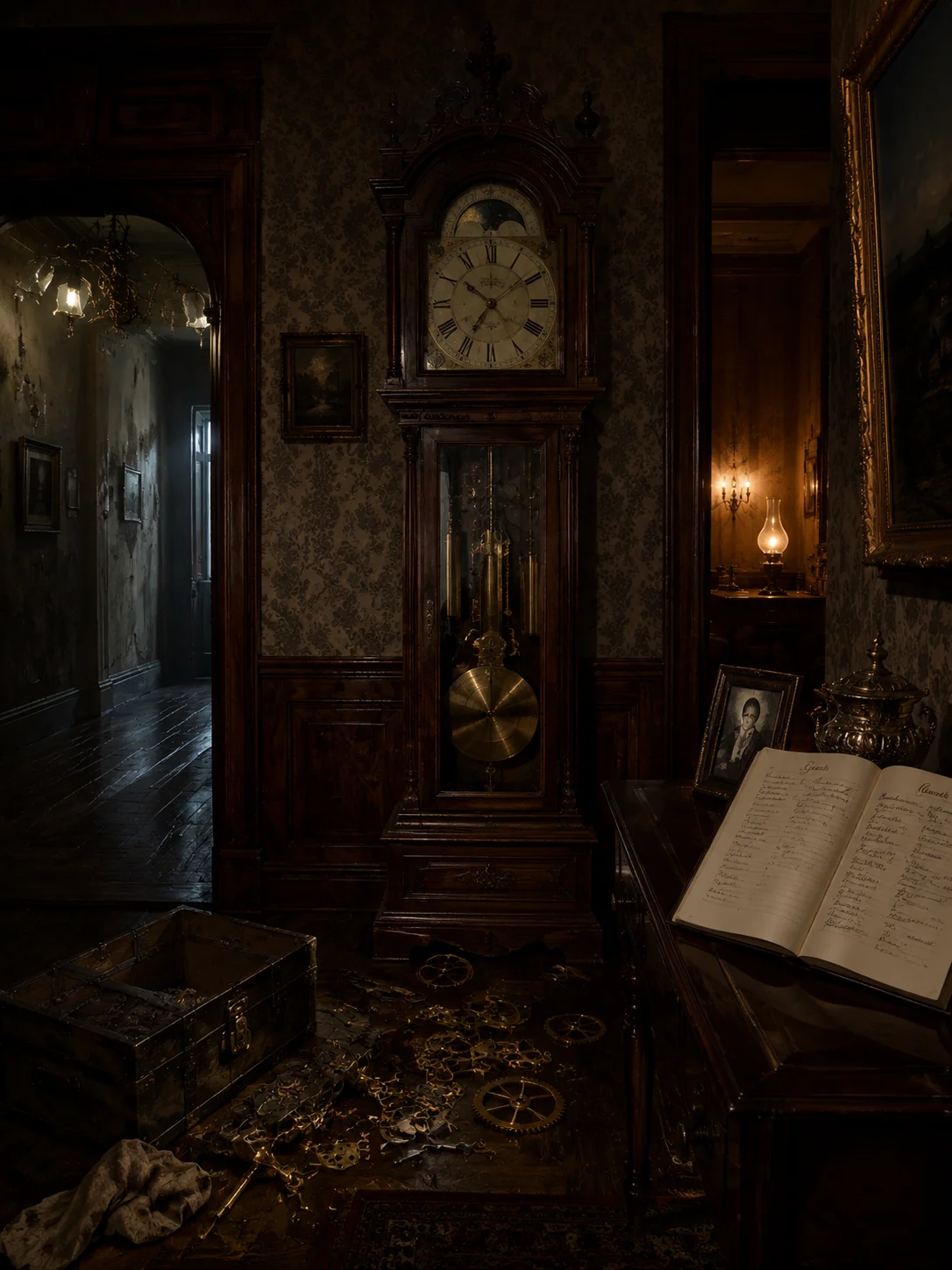
An investigation into a floral arrangement anomaly at a village church intersects with the quiet disruptions of parish administration, the pressures of local commerce, and the fragile mechanics of social standing in a closed community.
 Initial Crime Scene
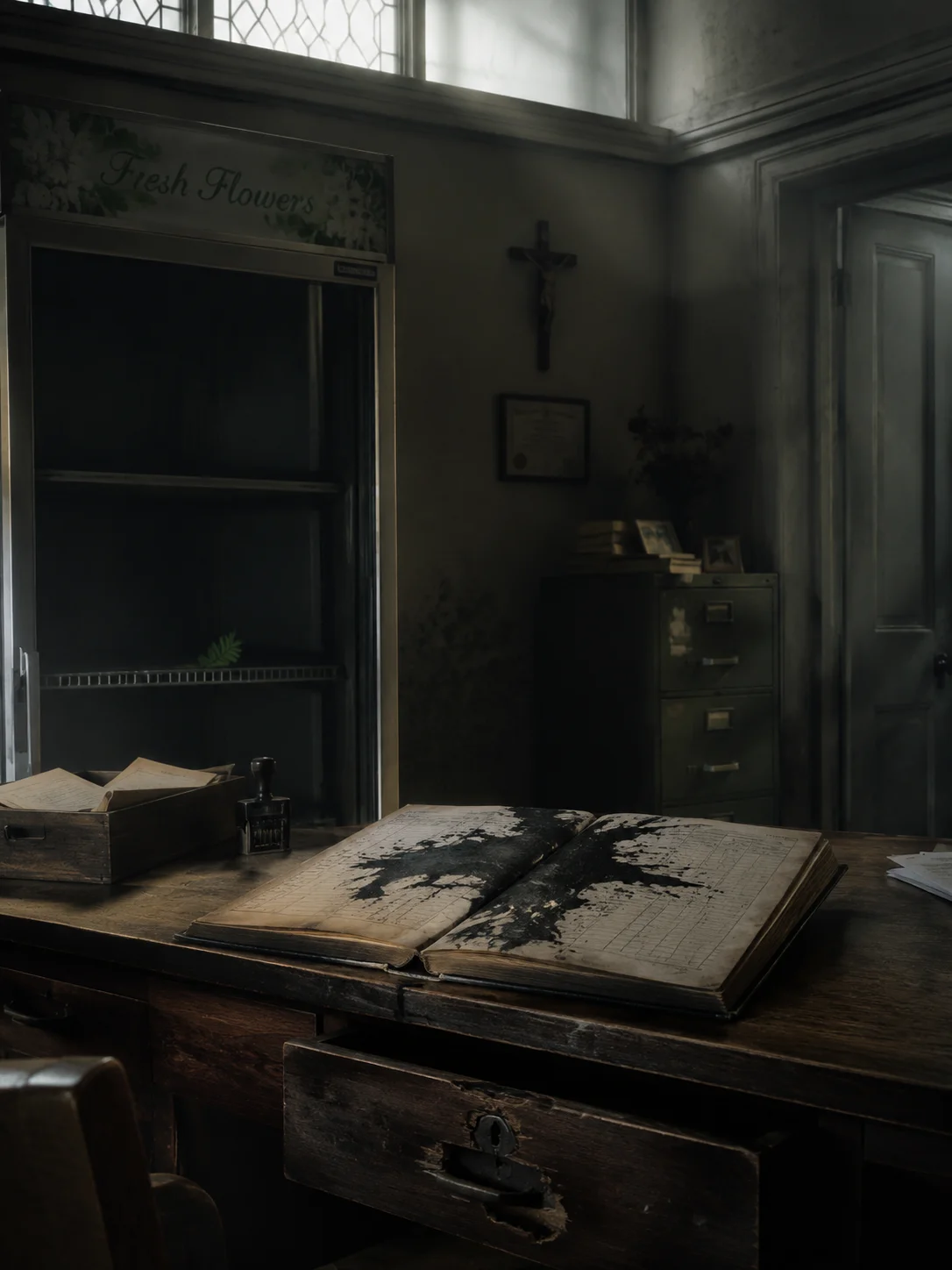
The sharp, chemical scent of spilled black ink cuts through the air, stale and acrid. A low, mechanical hum emanates from the floral cooler in the corner. Your gaze catches on the massive, irregular ink blot obscuring the figures on the open ledger page, the forced lock on the desk drawer, and the single, torn fern leaf resting on the cooler's shelf.
 Crime Scene Environment
The ambient light is diffused and indirect, filtered through high windows, casting long, placid shadows. The air is cool and carries a damp, garden-variety humidity, marked by the stale scent of beeswax and old paper. Acoustic density is high; silence is thick, punctuated only by the cooler's hum and the faint, distant creak of floorboards.
 Investigation Constraints
Handwritten ledgers, rotary telephones, local post office, basic mechanical locks, paper calendars, telegrams, fountain pens, personal diaries with simple latches, manual garden tools, church donation boxes, and carbon-copy receipts.
✦ Related Cases ✦