The Aetheric Flaw
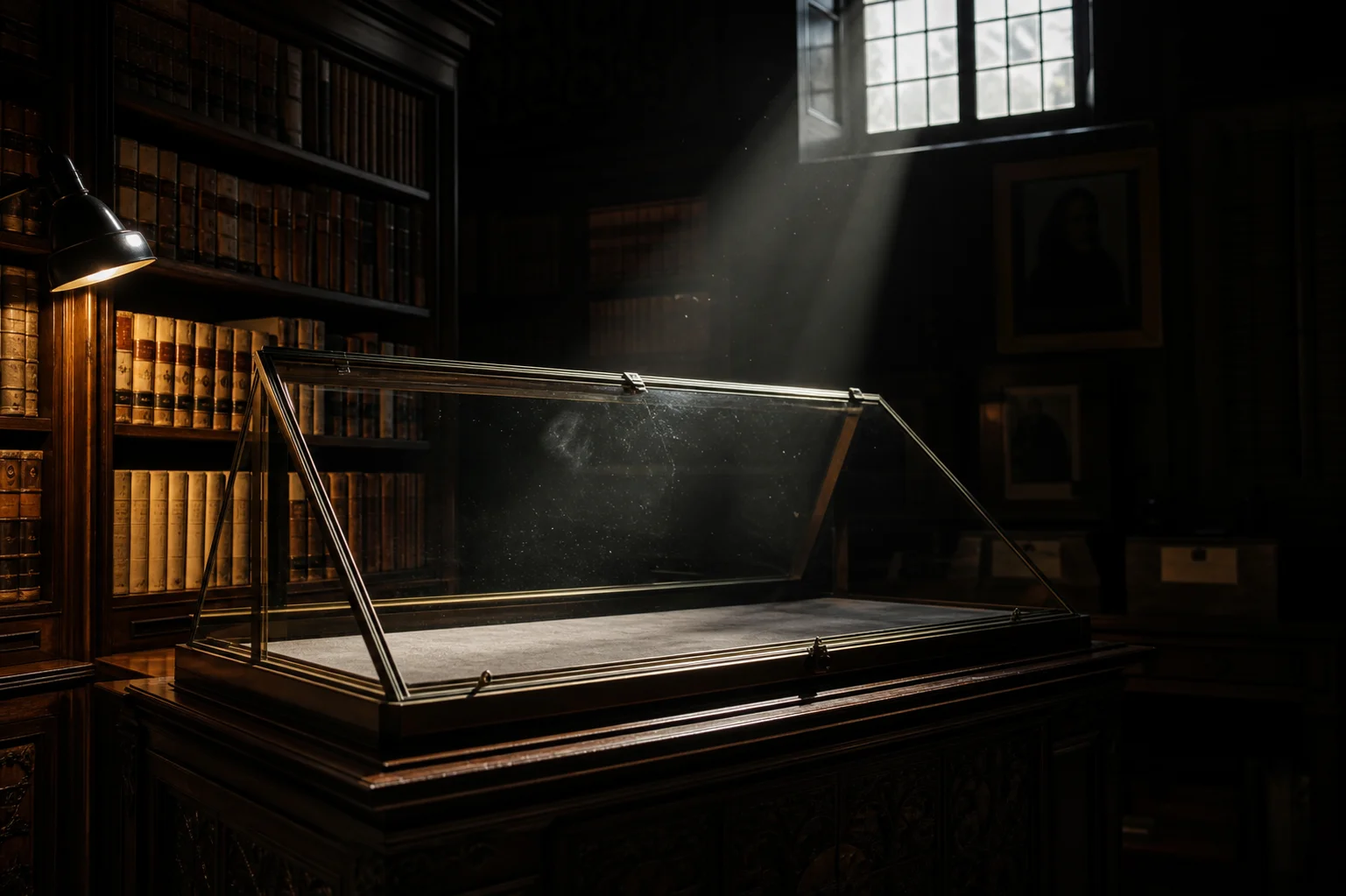
In the hallowed, dusty halls of a prestigious 1920s university, a fatal experimental accident fractures a closed circle of colleagues and students. An investigator must untangle a web of conflicting statements and physical evidence to isolate the sequence of events.
 Initial Crime Scene
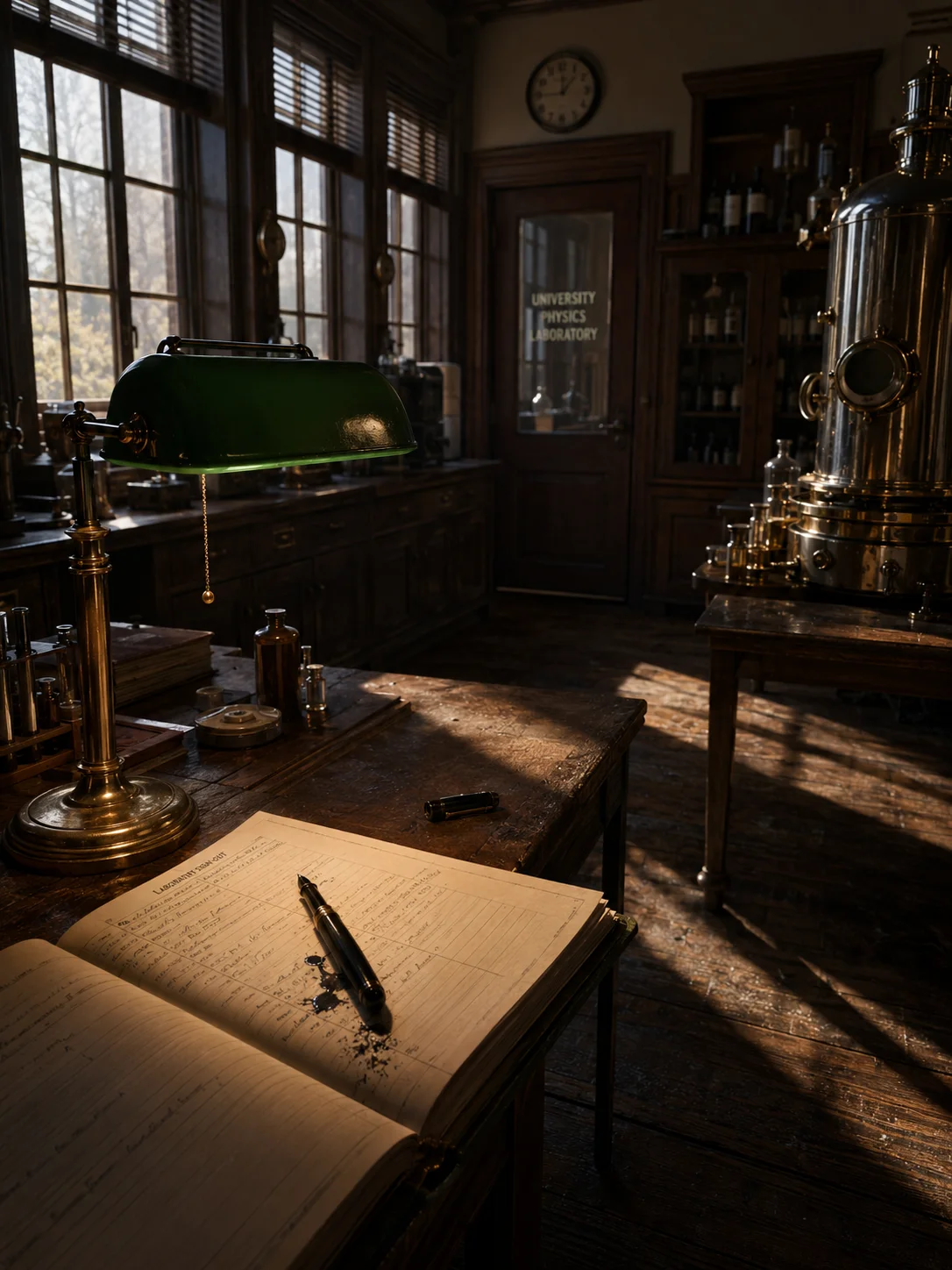
The smell of ozone and heated brass hits first, sharp and electric against the hallowed scent of old paper. A single, uncapped fountain pen lies on a polished wood bench, its ink stain a dark bloom. Your gaze follows the gleaming brass and glass of the vacuum chamber, then lands on the leather-bound sign-out book, its pages open and pristine under the green-shaded lamp light.
 Crime Scene Environment
The lighting profile is a pool of focused, green-shaded lamplight casting long, sharp shadows across wooden floorboards. The humidity/temperature profile is dry and still, with the ambient temperature cool to the skin. The acoustic density is a profound, hushed silence, broken only by the distant, rhythmic tick of a clock.
 Investigation Constraints
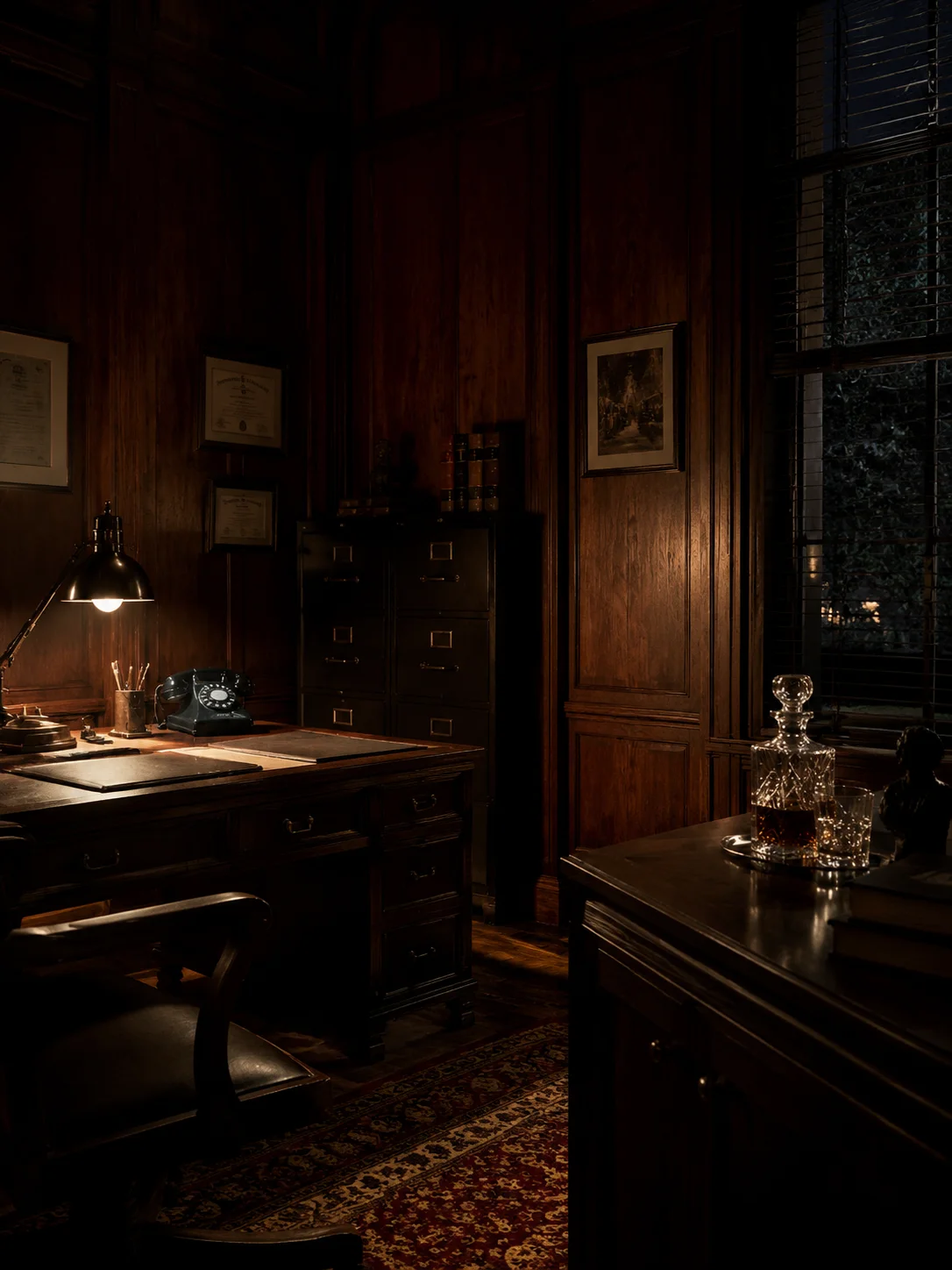
Early 20th-century academic setting. Communication is via handwritten notes, rotary telephones (in shared offices), and posted mail. Security relies on simple mechanical locks, filing cabinets, and personal keys. Scientific data is recorded in leather-bound lab notebooks with fountain pens. No electronic surveillance, computers, or digital trails exist.
✦ Related Cases ✦