The Affidavit's Stain
A decade-old case file is reopened when a box of physical evidence arrives, its contents contaminated by time and improper storage. The original participants are drawn back to confront the official record and the local reputation it was built to protect.
 Initial Crime Scene
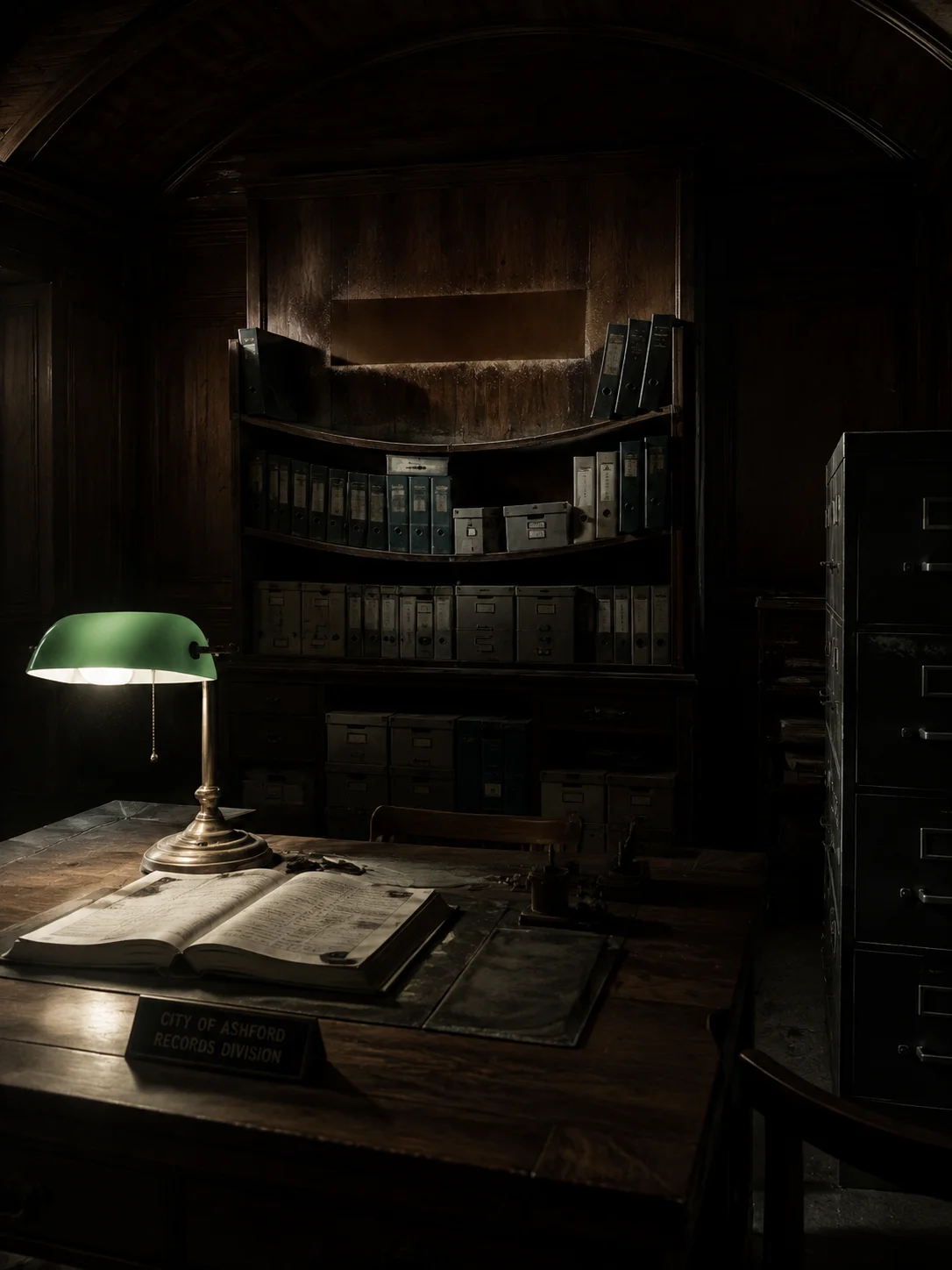
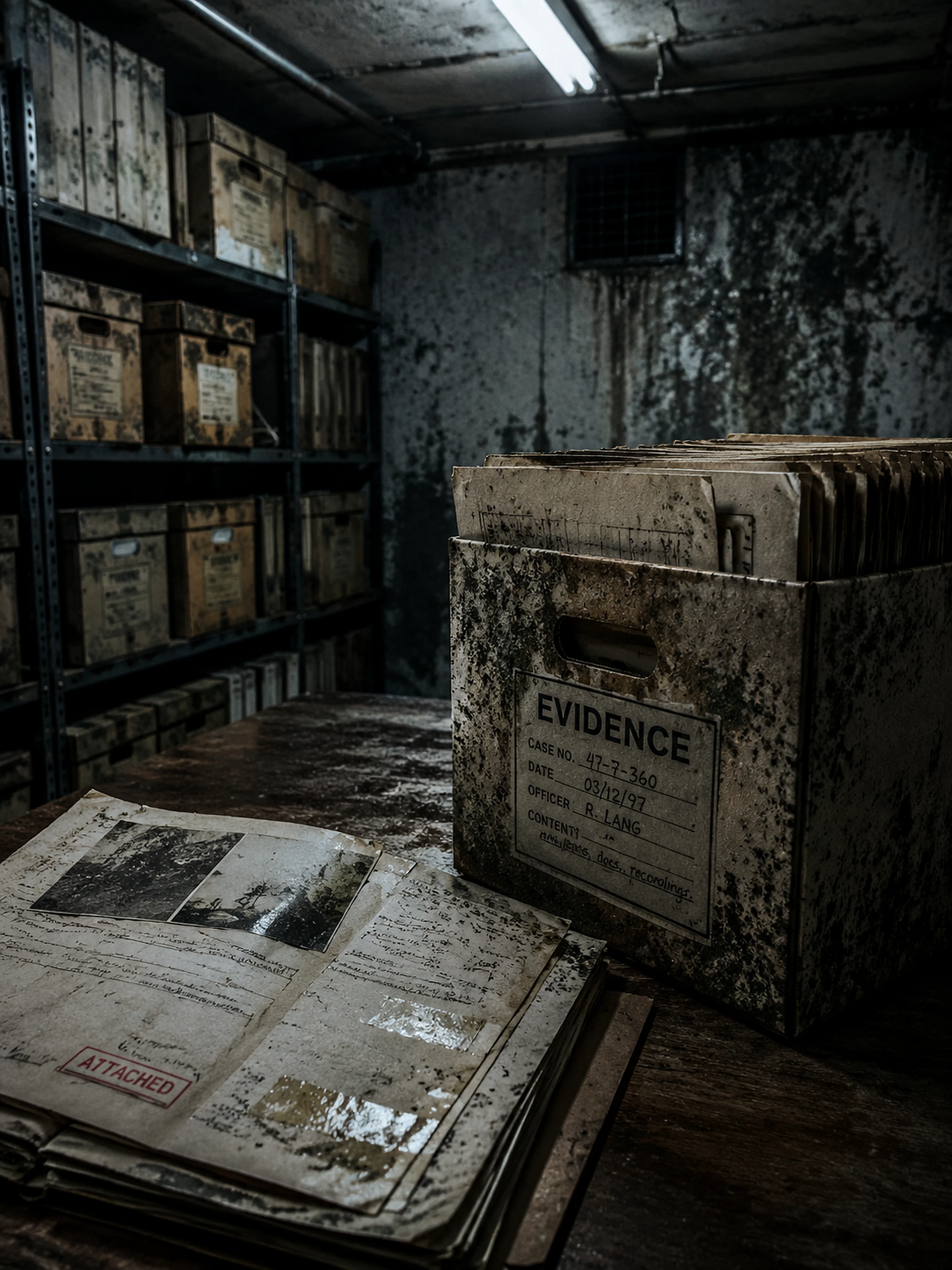
The scent of mildew blooms from damp paper fills your nostrils as you cross the threshold. A fluorescent light hums overhead, casting a flat, sterile glare. Your gaze lands on three points: the inconsistent mold patterns on a file box, the precise grain of the wooden desk, and the chemical odor of old adhesive rising from the open archive.
 Crime Scene Environment
The space is lit by a single, flickering fluorescent tube, creating a cold, high-contrast illumination. The air carries a persistent, high humidity that clings to surfaces, fostering a tangible chill. Acoustic density is low, dominated by the hum of the light and the muffled silence of thick concrete walls.
 Investigation Constraints
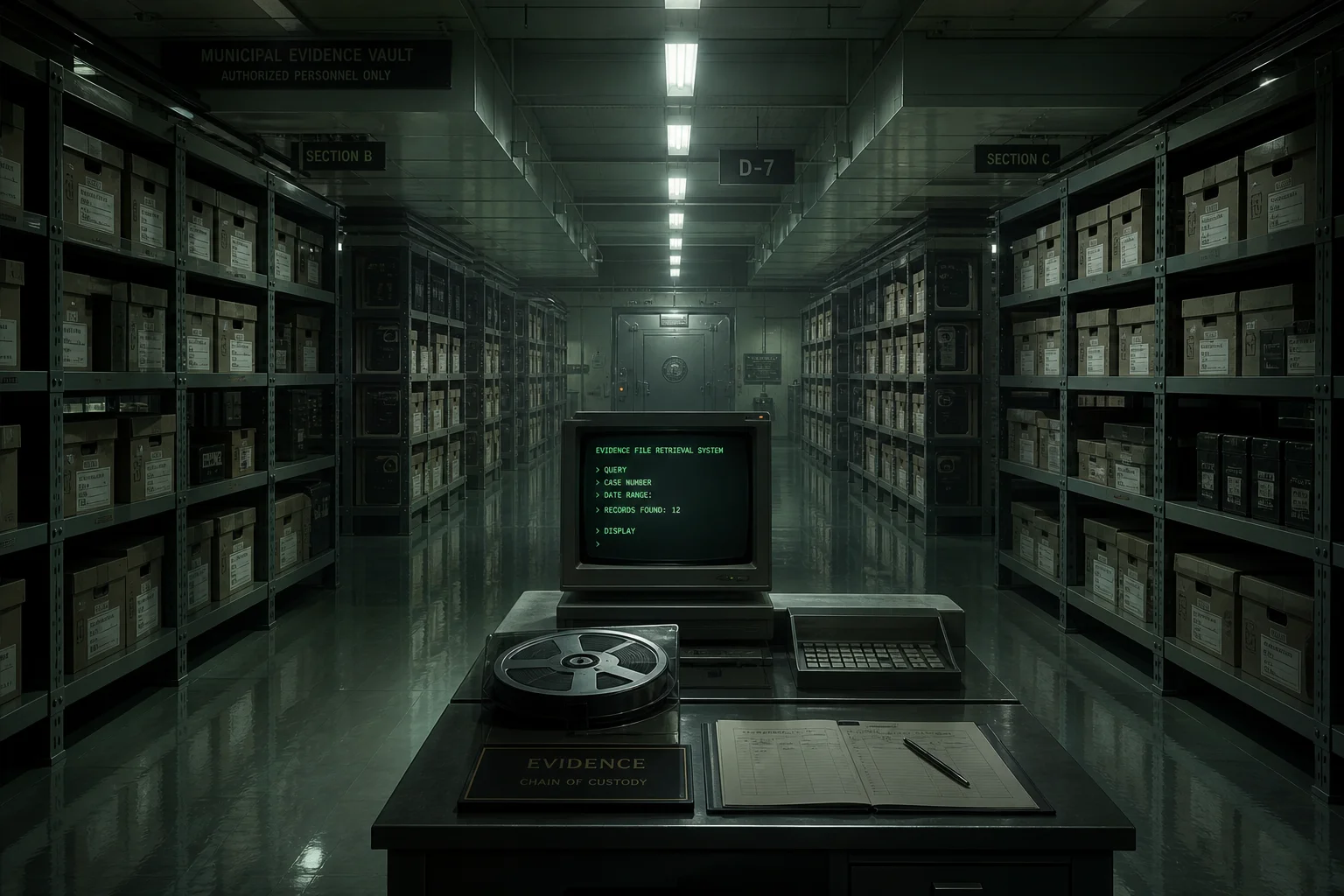
Early 2000s analog-digital hybrid. Landline telephones with answering machines, fax machines, physical newspaper archives, personal diaries, handwritten notes, early-model digital cameras with low-resolution images, VHS camcorders, and basic email accessed via dial-up. Evidence is stored in physical file boxes with paper documents, Polaroid photos, and cassette tape interviews. No smartphones, social media, or cloud storage.
✦ Related Cases ✦