The Analog Silence
In a corporate safe house operating on late 1990s analog systems, a covert operative is found dead. A personal recording device from the scene is missing. Five associates, each managing private professional pressures, must navigate a web of interconnected evidence created by their own logistical and procedural actions.
 Initial Crime Scene
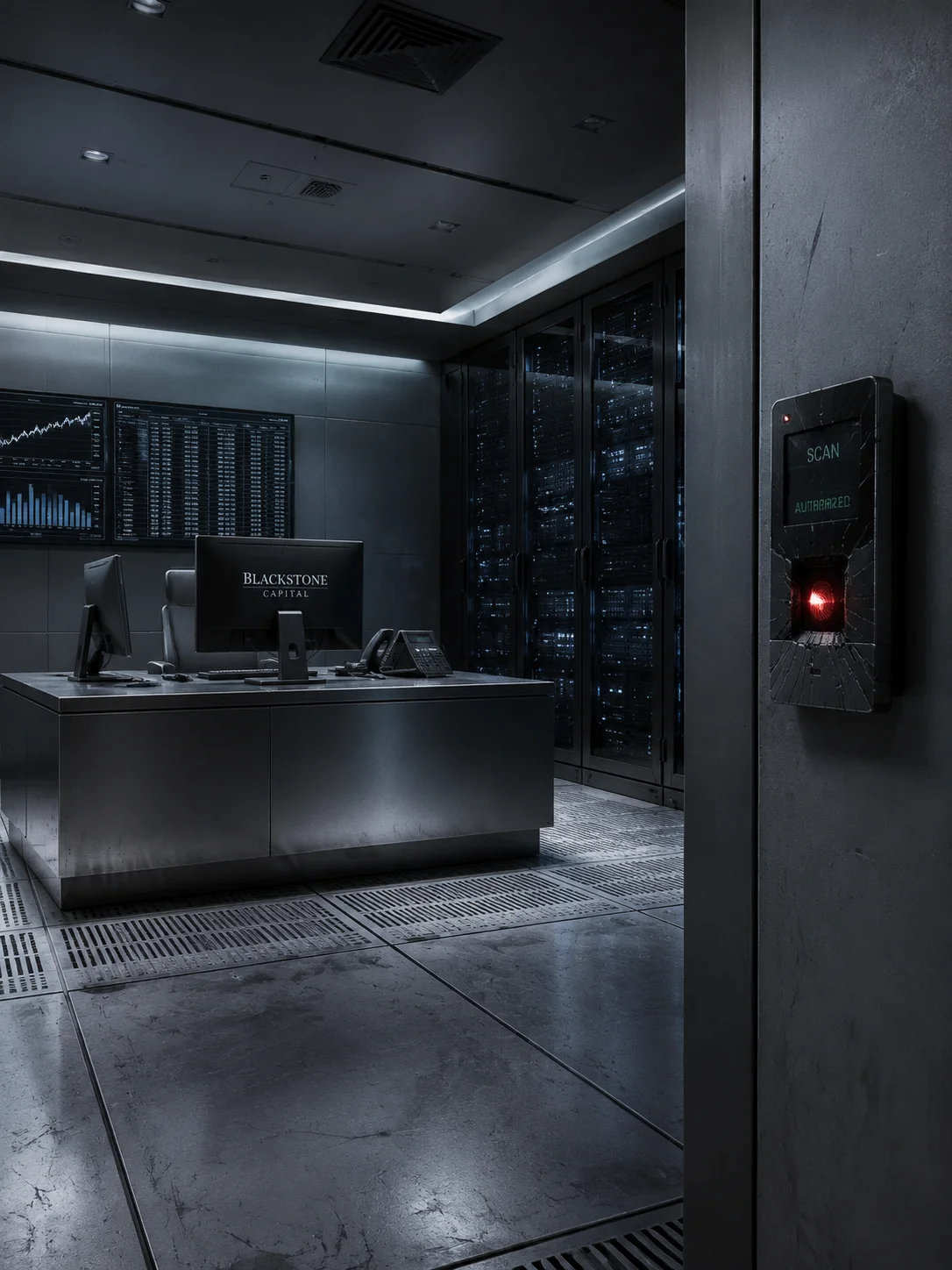
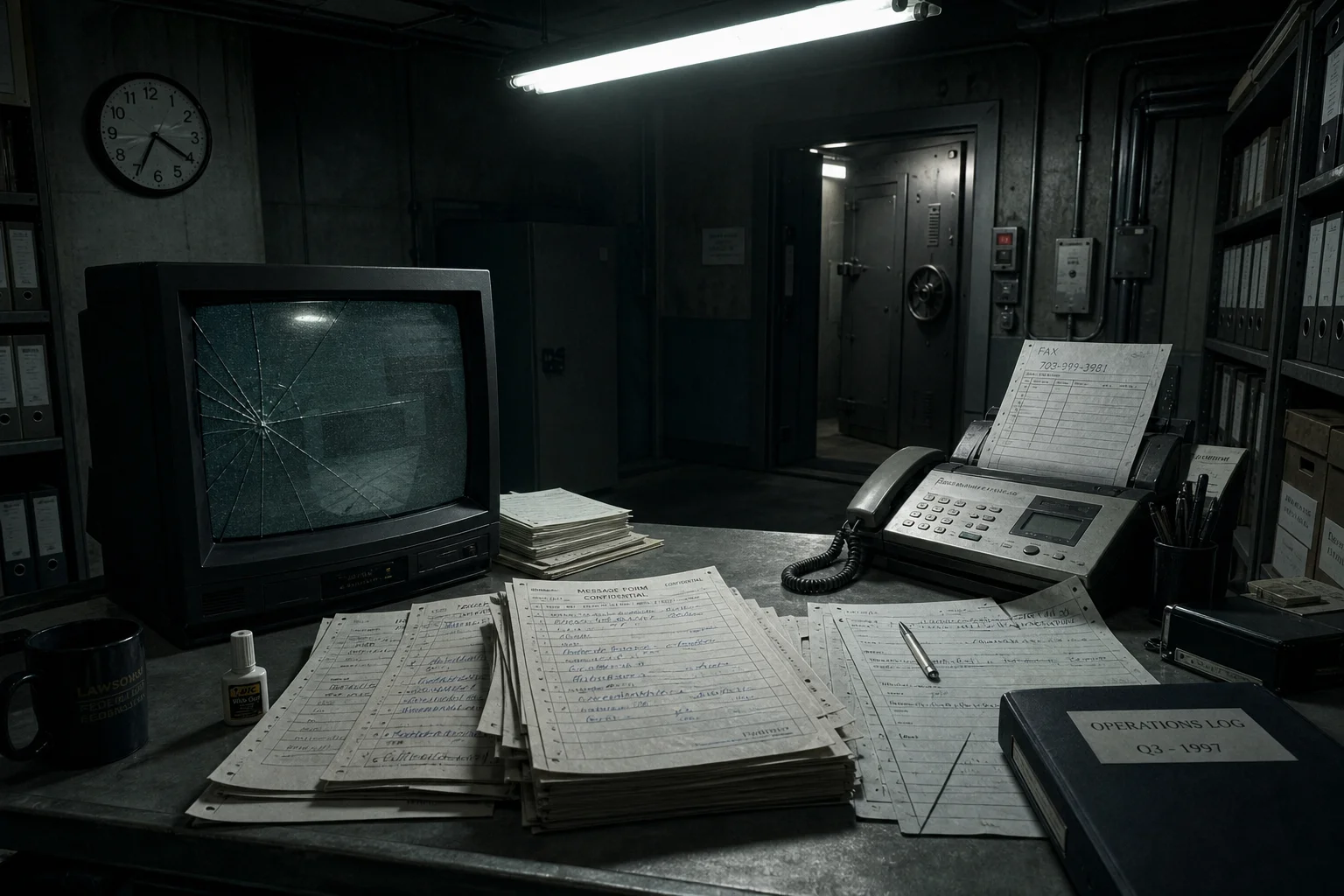
The hiss of rewinding VHS tape cuts through the hum of server racks. Faded ink on carbon-copy triplicate forms lies stacked on a steel desk. The high-pitched whine of a fax machine's dial tone emanates from the secure vault doorway. A single fluorescent light flickers over a cracked VHS monitor casing. The air carries the chemical scent of correction fluid.
 Crime Scene Environment
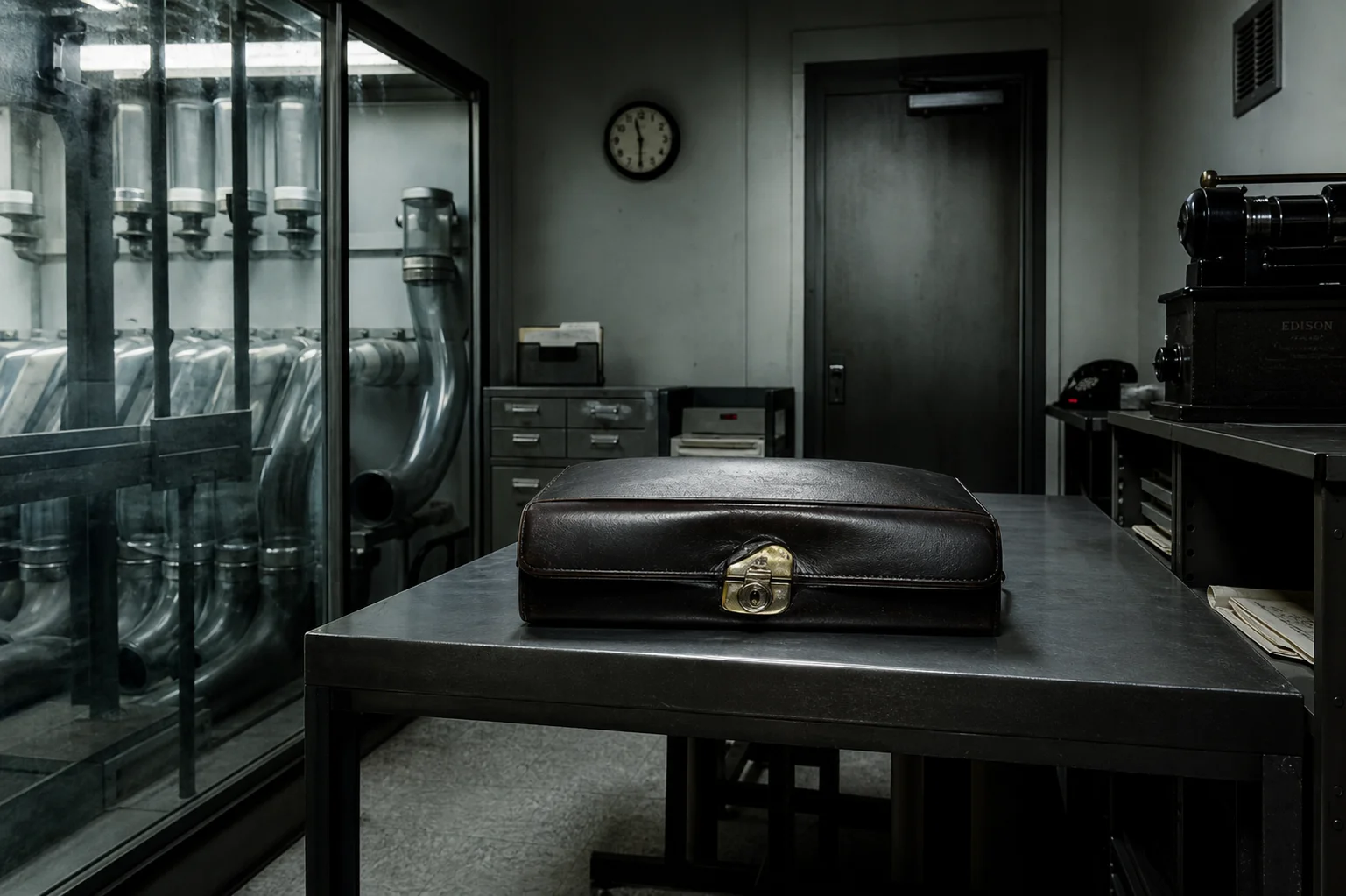
The environment is defined by a late 1990s analog-digital hybrid technology profile. Lighting is primarily artificial fluorescent, creating stark shadows and cold, even illumination. The humidity is low, controlled for electronics, with a constant ambient temperature. Acoustic density is moderate, featuring the layered sounds of magnetic tape whine, analog phone line hiss, pneumatic tube clunks, and the low hum of cooling fans. The tonal vocabulary includes 'Flicker', 'Static', 'Cold', 'Analog', 'Hiss', and 'Faded'.
 Investigation Constraints
Late 1990s/early 2000s analog-digital hybrid tech: physical keycards with magnetic strips, VHS security cameras with time-date generators, pneumatic tube document delivery systems, early encrypted fax machines, analog phone lines with *69 trace, paper-based internal memo routing slips, and prototype digital voice recorders (lipstick camera). No internet, smartphones, or cloud computing. All data is physically stored or transmitted via vulnerable, localized systems.
✦ Related Cases ✦