The Archive Paradox
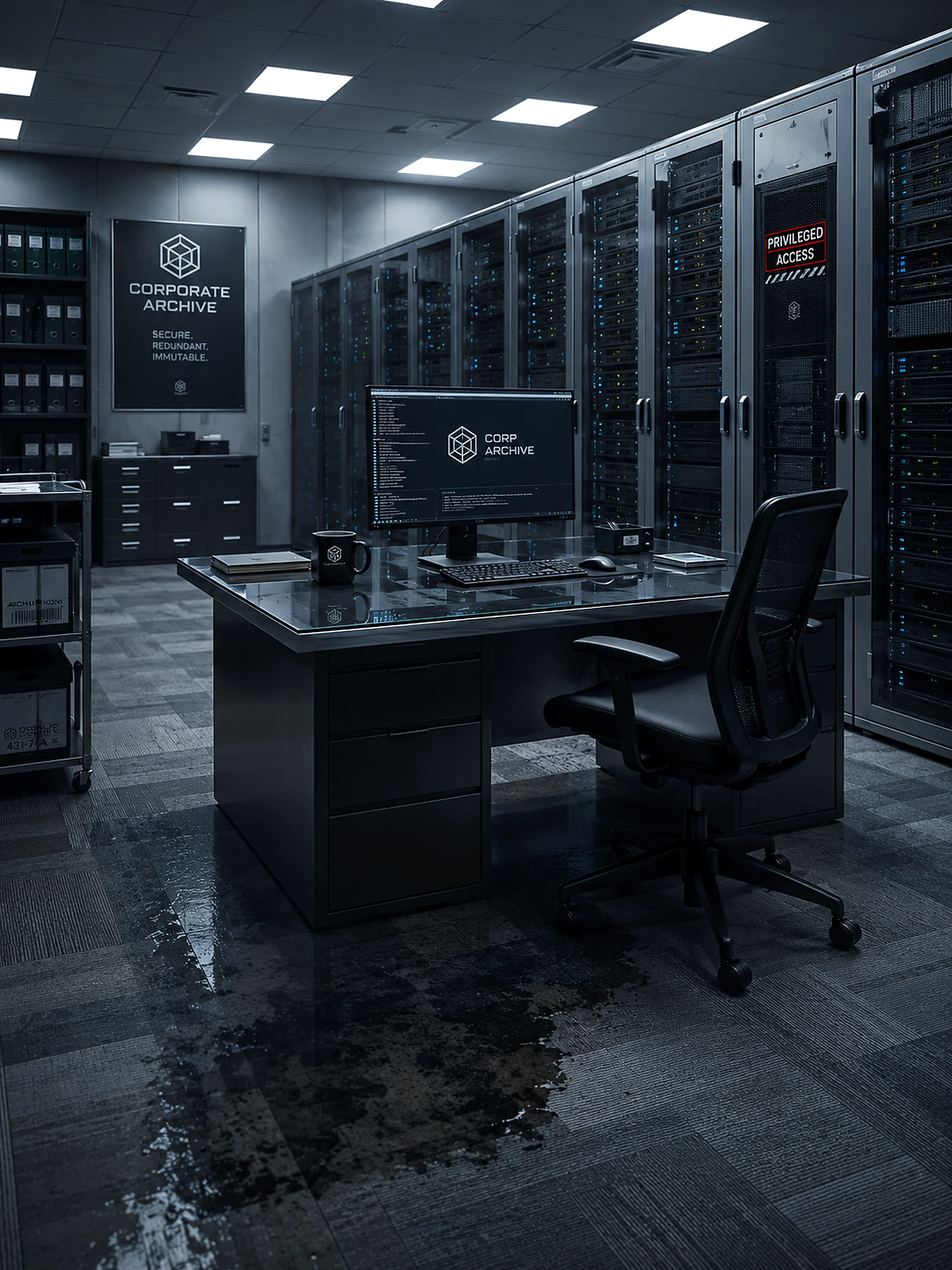
An investigative podcaster is found deceased in a corporate archive. The climate-controlled environment logs indicate stable, dry conditions. A localized area of carpet fiber displays moisture saturation. Five professionals with access to the space face scrutiny over overlapping digital and physical traces.
 Initial Crime Scene
The recycled air carries a faint tang of machine ozone. Your gaze first catches on the flat, shadowless glare of overhead LEDs reflecting off rows of grey steel server racks. A low, constant hum vibrates from the HVAC system, a sound felt in the chest as much as heard. Three visual anchors hold your attention: the industrial-grade carpet tiles underfoot, the 'PRIVILEGED ACCESS' sticker on rack unit ACH-04, and the polished composite surface of a single desk in the center of the room.
 Crime Scene Environment
Lighting is a uniform, shadowless LED panel array. The humidity profile is a digitally logged 3% relative, maintained by a zoned HVAC system. Acoustic density is dominated by the low-frequency hum of climate control machinery, with footsteps muffled by the industrial carpet.
 Investigation Constraints
Corporate biometric access logs (keycard/retinal scan), encrypted cloud-based document management systems, smartphone GPS data (sparse, often manually disabled), internal email and instant messaging servers with strict retention policies, automated building climate control (HVAC) systems with zone-specific digital readouts, forensic toxicology labs, police body-worn cameras with limited storage, automated external defibrillators with event logs.
✦ Related Cases ✦