The Ashworth Parlor Tangle
An independent investigator is summoned to Ashworth Manor following the discovery of the matriarch's lifeless body in her private chambers. The household staff and residents present a unified facade of ignorance, yet physical traces and personal testimonies reveal a complex web of misplaced objects, altered surfaces, and individual secrets. The task is to untangle the contradictory clues and reconstruct the events leading to the tragedy.
 Initial Crime Scene
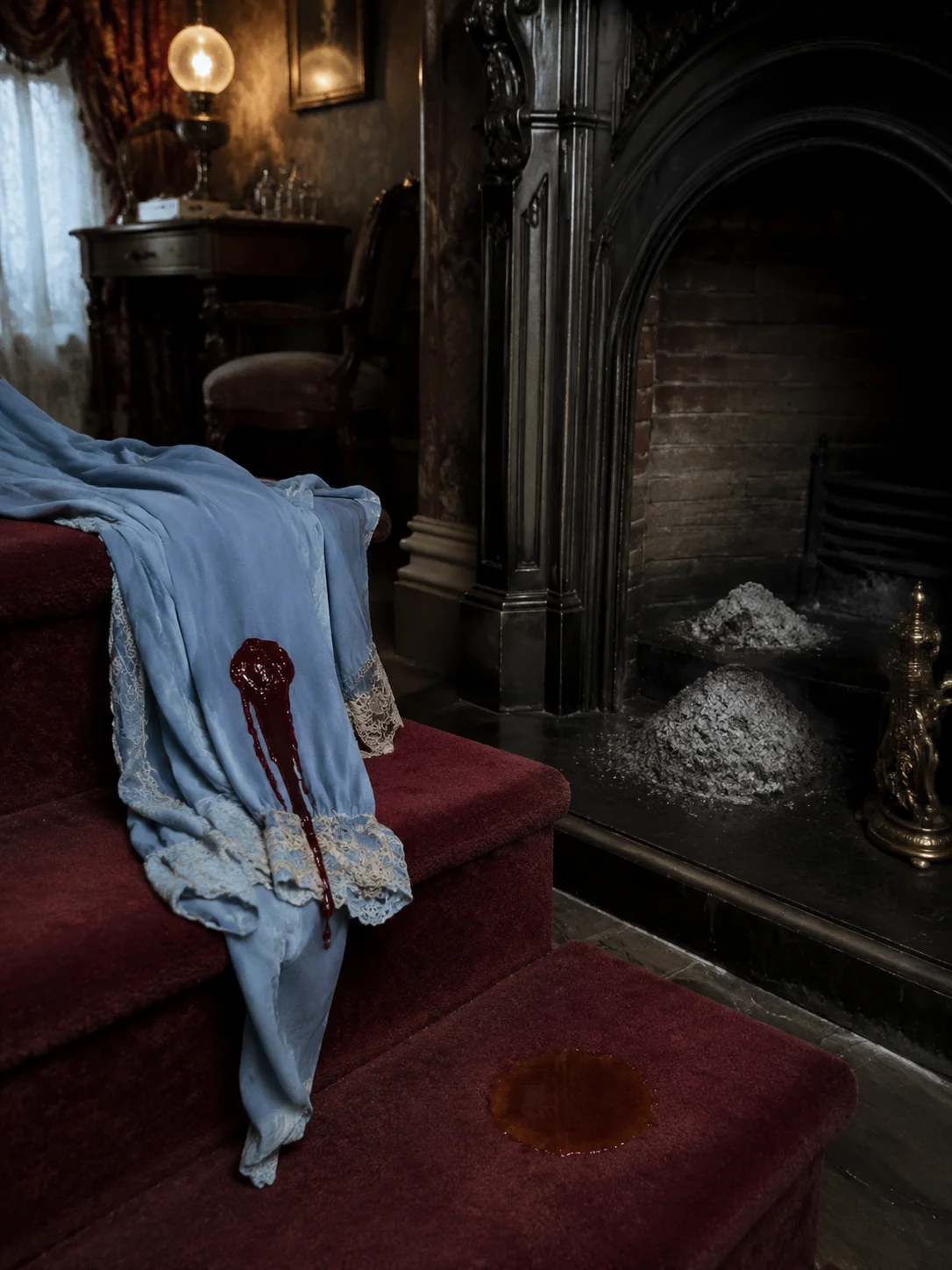
The first scent to reach you is a cloying mixture of cold wax and faded lavender, undercut by the faint, acrid tang of burned paper. A persistent, hollow ticking from a decorative mantel clock marks the silence, its rhythm slightly irregular. Your gaze lands on three distinct details: a heavy, deep garnet wax drip staining the pale blue fabric of a morning gown sleeve; a viscous, amber-colored, circular stain on the deep red wool of the staircase runner; and two separate, distinct piles of ash in the cold boudoir hearth—one fine and dark, the other coarser and light grey.
 Crime Scene Environment
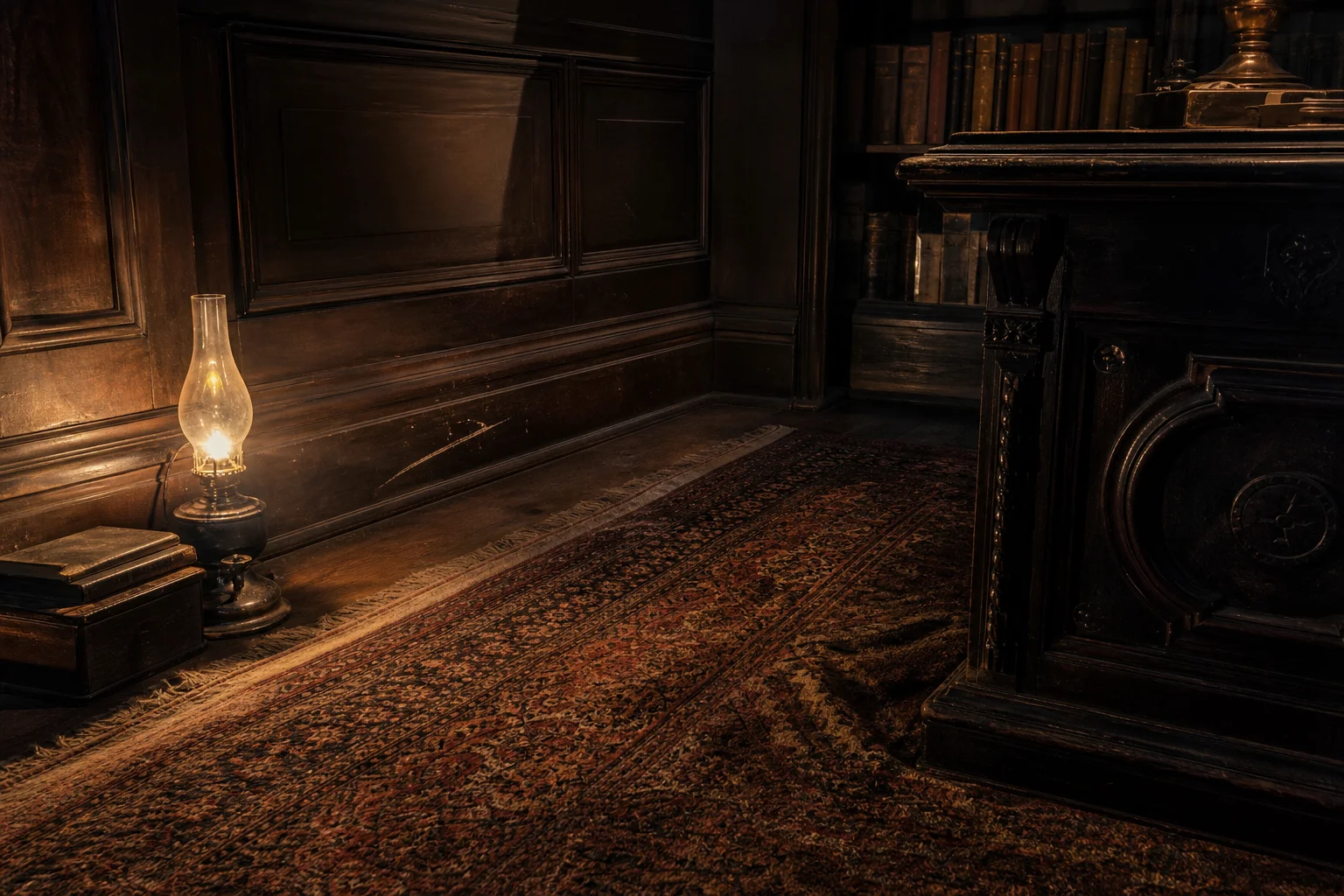
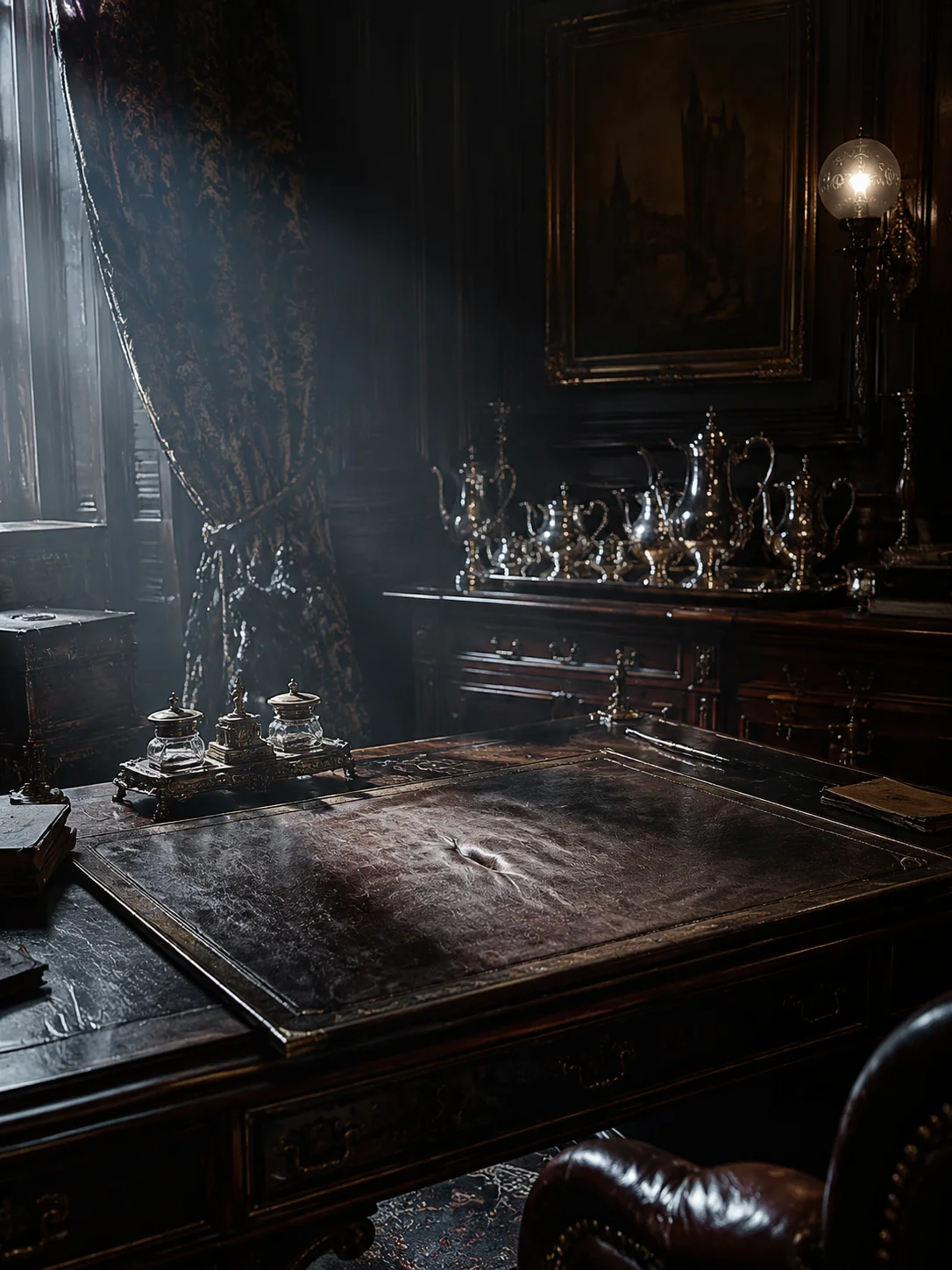
The light is a soft, diffuse yellow from gas lamps, casting long, muted shadows that pool in corners. The air is cool and carries a tangible dampness, a micro-climate of held breath and suppressed whispers. Acoustic density is low, dominated by the irregular clockwork ticking, the faint rustle of stiff fabrics, and the occasional, sharp intake of breath from a cornered figure.
 Investigation Constraints
Handwritten correspondence and ledgers, wax-sealed envelopes, mechanical clockwork timepieces, manual telegraph machines, candlelight and gas lamps, brass door locks with keys, mechanical sewing machines, and basic photographic equipment with chemical developing.
✦ Related Cases ✦