Whispers in Wychwood
An independent investigator arrives at a decaying country estate after the discovery of the master's body in his private study. The household, from the senior staff to the heir and his wife, presents a facade of rigid Victorian propriety, each resident operating under their own web of unspoken obligations and hidden histories. The immediate physical evidence is sparse and contradictory, forcing a meticulous reconstruction of social rituals, nervous habits, and environmental disturbances to separate the sequence of events from the layers of personal secrecy that now obscure it.
 Initial Crime Scene
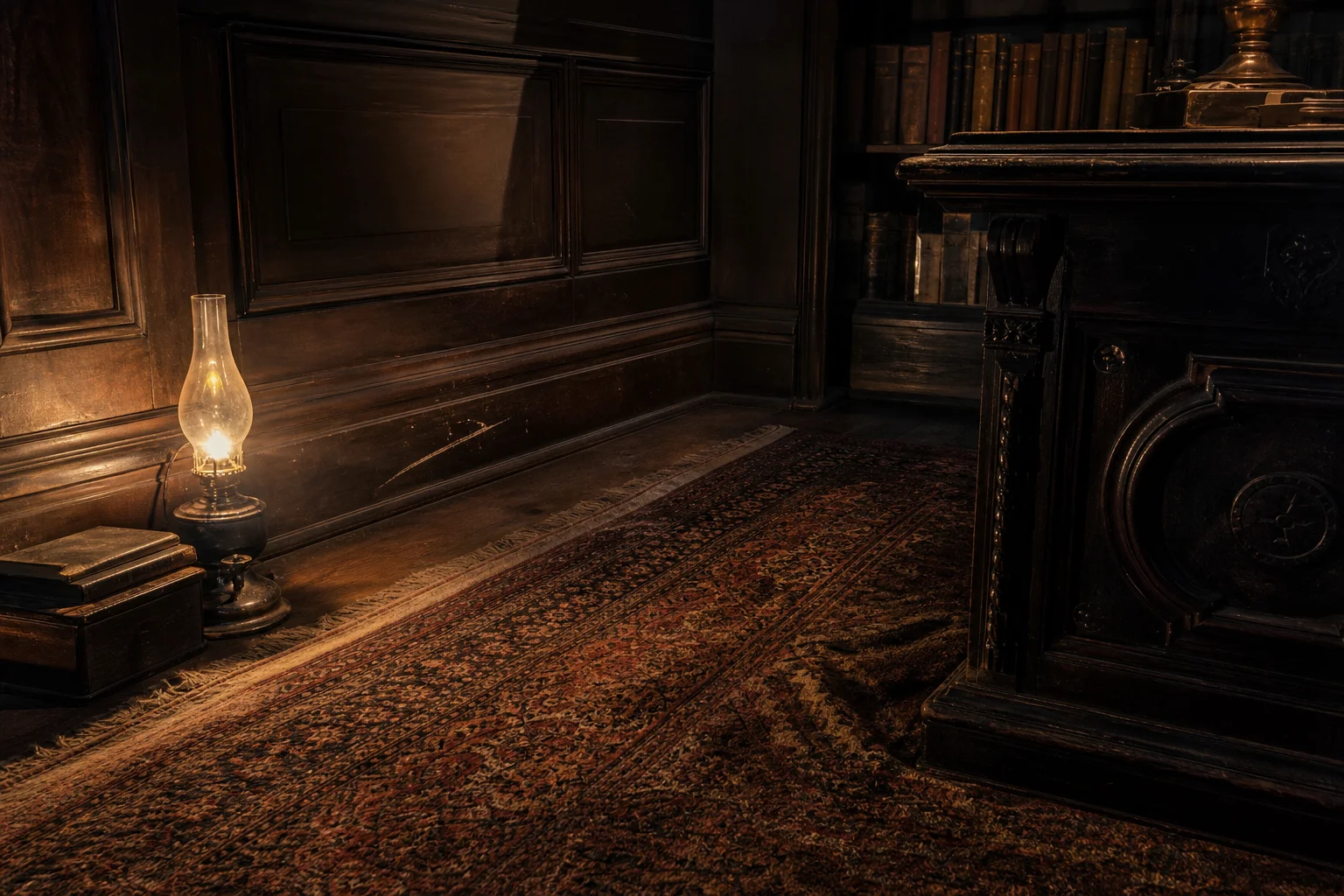
The scent of damp wool and old paper hits first, clinging to the still air. A single, sharp scuff mark on the polished baseboard near the study door catches the low gaslight, a small violence against the glossy surface. Beyond it, a permanent, heavy indent in the Persian rug where a heavy desk was once positioned deepens the silence of the dark, wood-paneled room.
 Crime Scene Environment
A pervasive atmosphere of low, yellow gaslight creates pools of shadow and long, distorted shapes. The air is cool and carries the faint, sweet tang of spilled port wine seeped into floorboards, layered under the acrid hint of cold pipe smoke. Acoustic density is low, characterized by the occasional creak of floorboards and the stifled, suppressed sounds of household movement.
 Investigation Constraints
Late Victorian/Edwardian era domestic technology: mechanical skeleton keys and lever-tumbler locks, gaslight fixtures, handwritten correspondence, household ledgers, mantel clocks, coal-fired hearths, manual dumbwaiters, and early telephones (not in common household use). No electrical lighting, digital systems, or advanced forensic chemistry beyond basic toxicology.
✦ Related Cases ✦