The Audit
An independent investigator is summoned to a late-1990s corporate tower following the unattended death of its CEO in his penthouse office. The subsequent audit of the building's physical and digital systems reveals a series of inconsistencies, missing data entries, and improperly filed artifacts across multiple departments.
 Initial Crime Scene
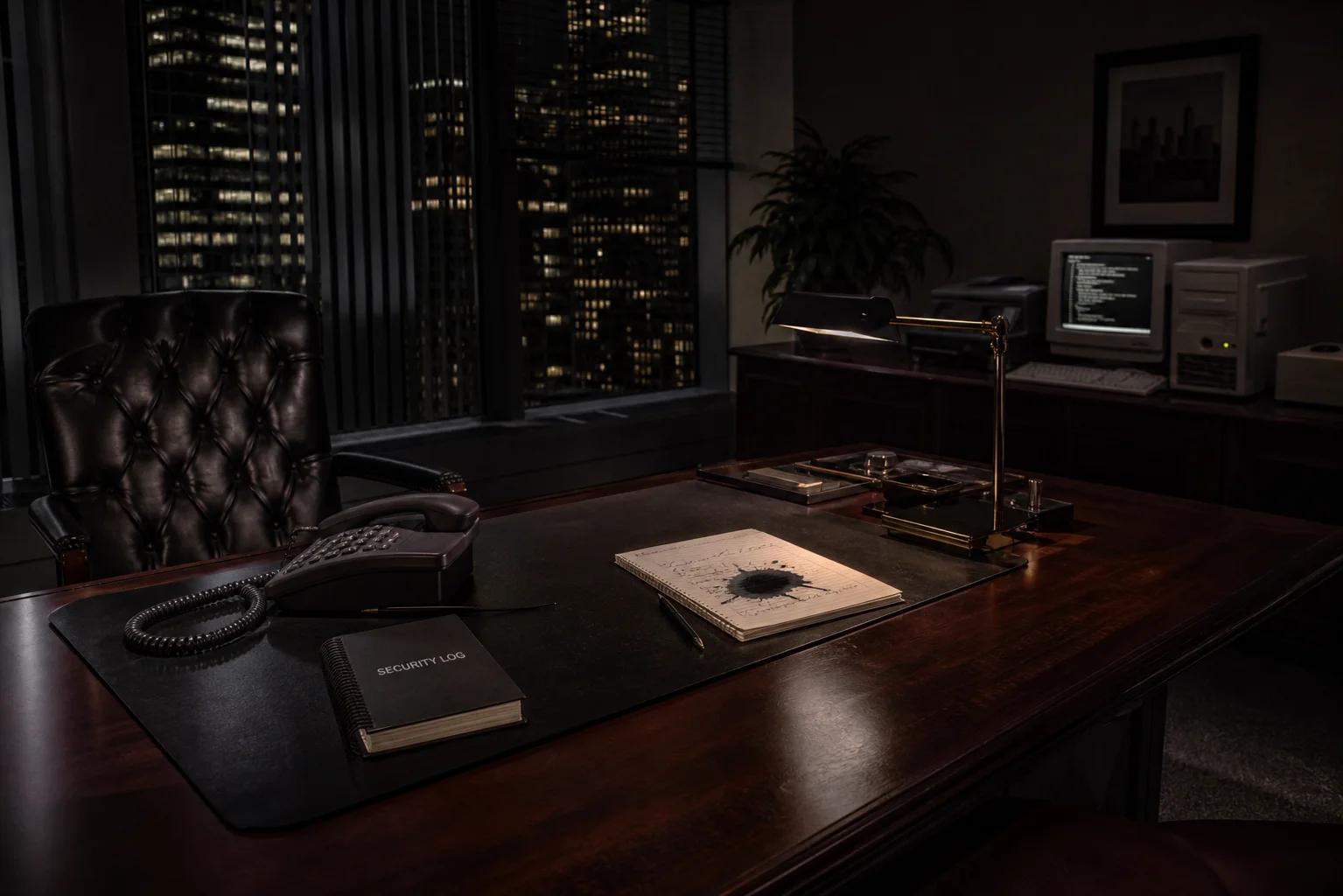
The door clicks shut behind you, a sound muffled by the thick carpet. Your nostrils catch the sharp, chemical tang of ozone, layered over the warm plastic scent radiating from a cluster of humming desktop towers. The air is filled with the faint, persistent hum of the building's cooling system, a low vibration felt in the floor. In the center of the room, a single desk lamp casts a harsh, isolated pool of light onto a mahogany surface. Your eyes adjust to pick out the distinct, corded shape of a landline phone, the sticky residue of tape on a nearby security logbook, and the dark, spreading stain on a legal pad.
 Crime Scene Environment
The lighting profile is harsh, localized fluorescent pools casting deep, sterile shadows in corners. The humidity is low, maintained by the HVAC, creating a dry, cool micro-climate. Acoustic density is dominated by the constant, redundant drone of server cooling fans and HVAC blowers, punctuated by the analog hiss of idle electronics and the occasional, sharp click of a mechanical component.
 Investigation Constraints
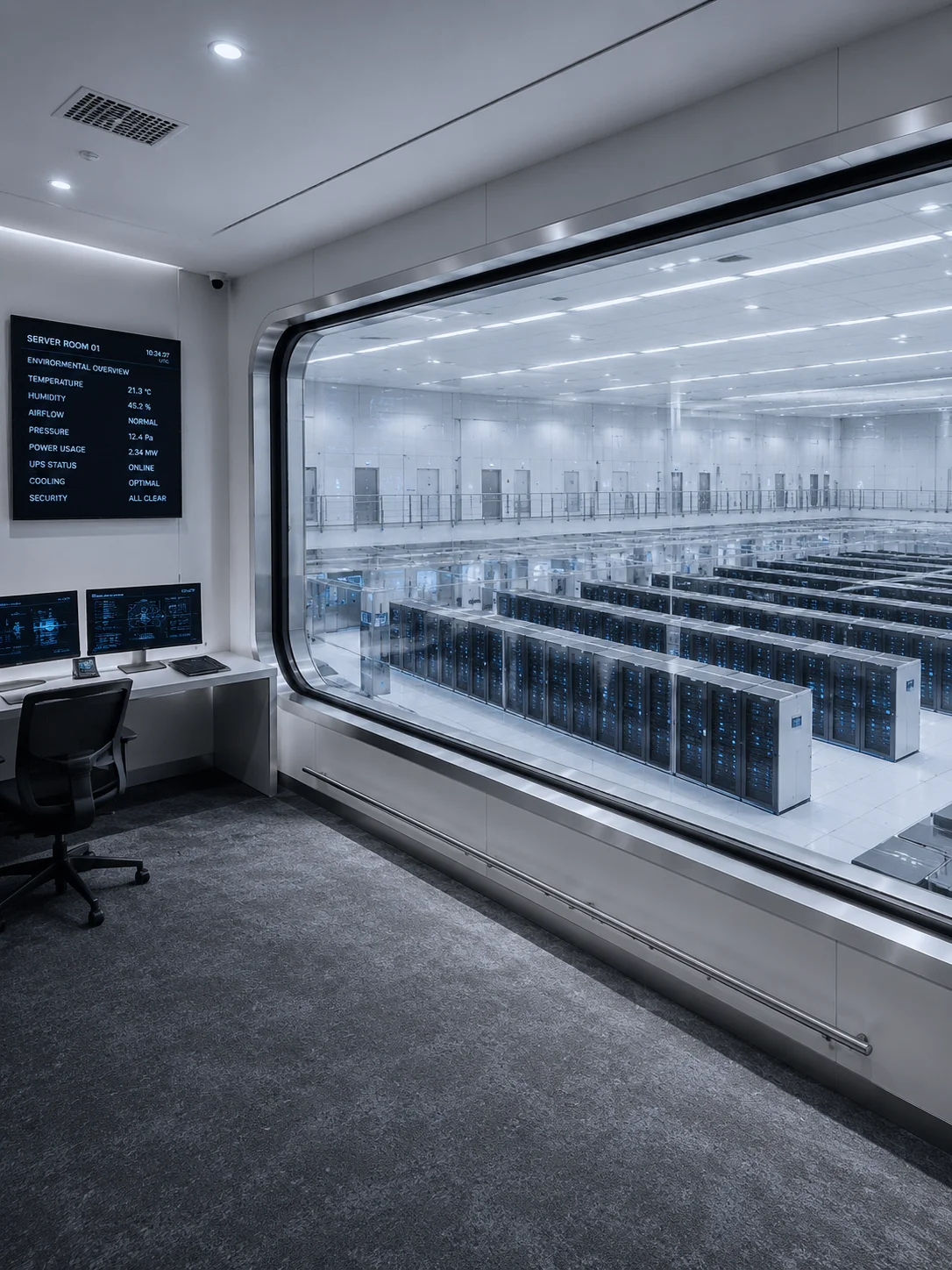
The world is defined by late-1990s to early-2000s corporate tech: landline phones with voice-memo tape, desktop computers with dial-up modems and internal network logs, paper-based and digital hybrid filing systems (early PDFs, Lotus Notes), CCTV with grainy VHS tapes, keycard access logs, early biometric safes (thumbprint scanners), pneumatic tube systems for internal mail, and physical server rooms with magnetic tape backups.
✦ Related Cases ✦