The Blackgate Chronometer
An independent forensic auditor arrives at Blackgate Federal Penitentiary to investigate an inmate death. Initial inspection reveals an official day log, punch-clock records, and medical charts that present conflicting timestamp data. The investigation involves examining the warden's administrative records, the guard's patrol logs, the infirmary's medication charts, and the physical state of the cell.
 Initial Crime Scene
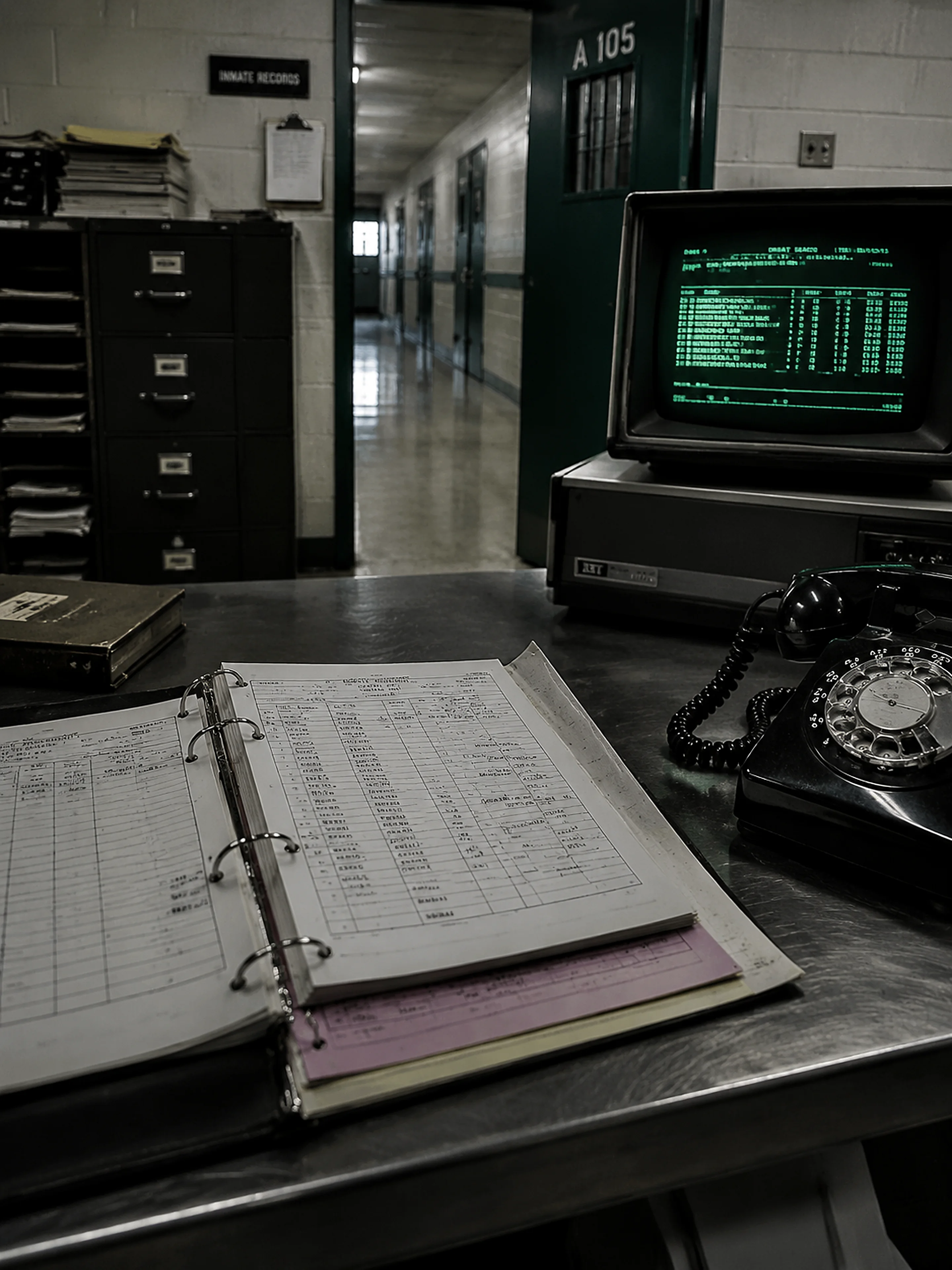
The smell of stale cigarette smoke and institutional floor wax hangs heavy. A faint, rhythmic hum emanates from the flickering security terminal's cooling fan. You first see the open Day Log binder with its crisp, carbon-copy pages, the rotary dial phone with its coiled cord, and the monochrome green phosphor text scrolling across the terminal screen.
 Crime Scene Environment
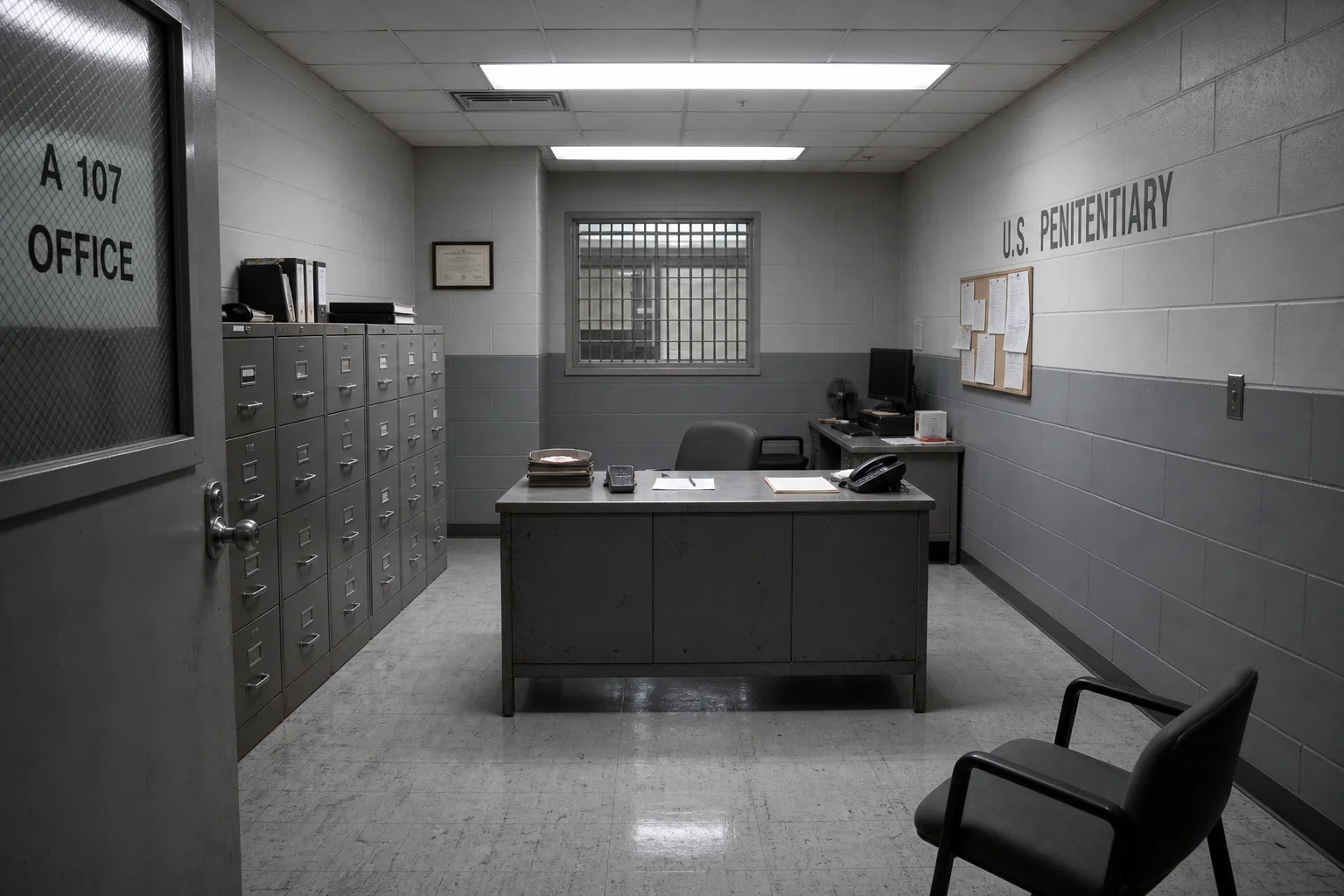
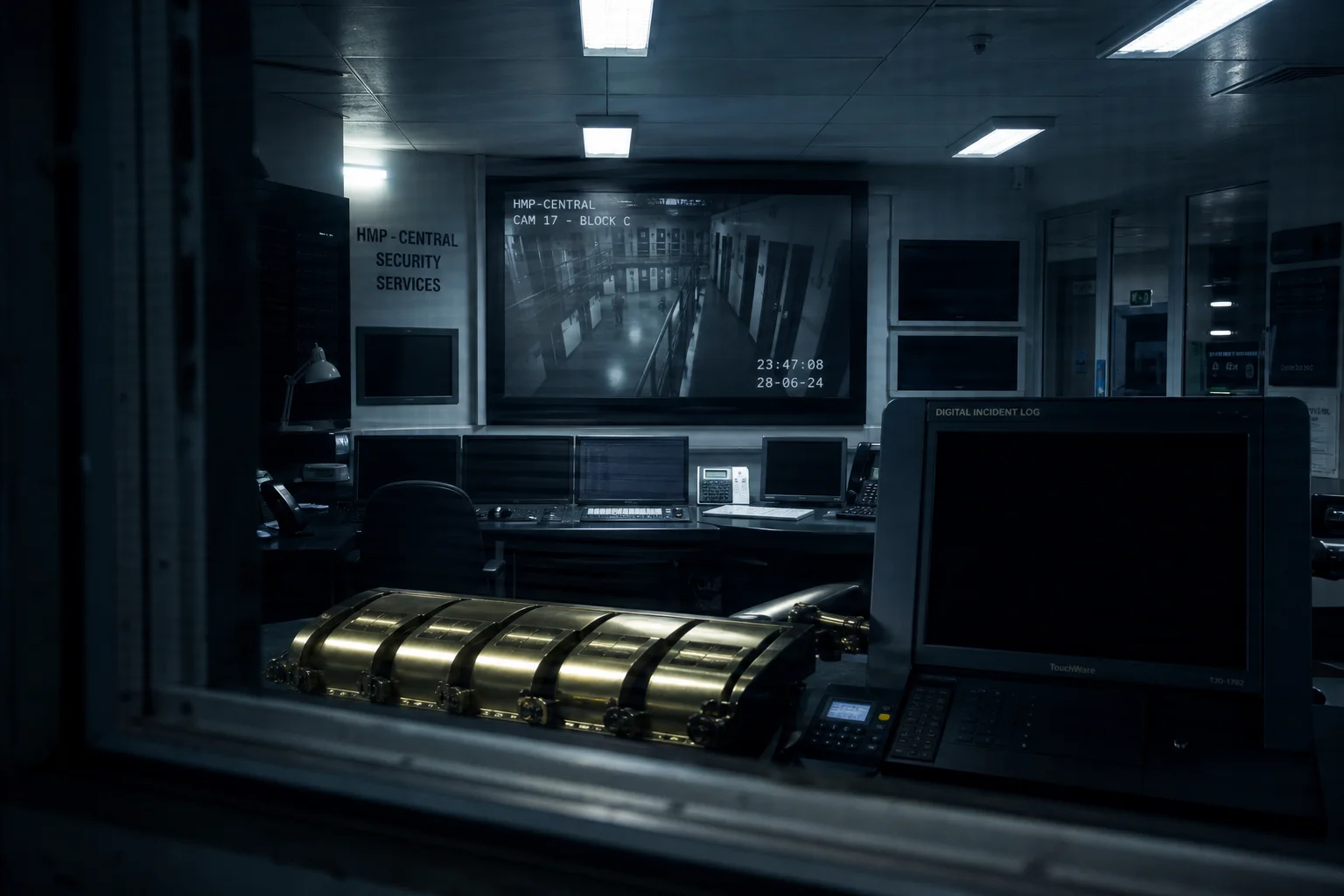
Lighting is provided by harsh overhead fluorescents, casting sharp, sterile shadows. The air is dry and recycled, carrying the scent of paper dust and cheap floor wax. Acoustic density is low, dominated by the mechanical hum of electronics and the distant, echoing clang of cell doors.
 Investigation Constraints
Analog and early digital systems: rotary dial telephones, pneumatic tube messaging, standalone security computer terminals with monochrome displays and dot-matrix printers, mechanical lever locks on cell doors, paper-based guard patrol logs with carbon copies, and institutional cassette-tape voice recorders.
✦ Related Cases ✦