The Blackwell Protocol
At the Blackwell Correctional Facility, a scheduled system diagnostic coincides with the reported absence of a master keyring. An internal affairs investigator is dispatched to audit the facility's encrypted logs, biometric records, and personnel accounts during a period of administrative transition.
 Initial Crime Scene
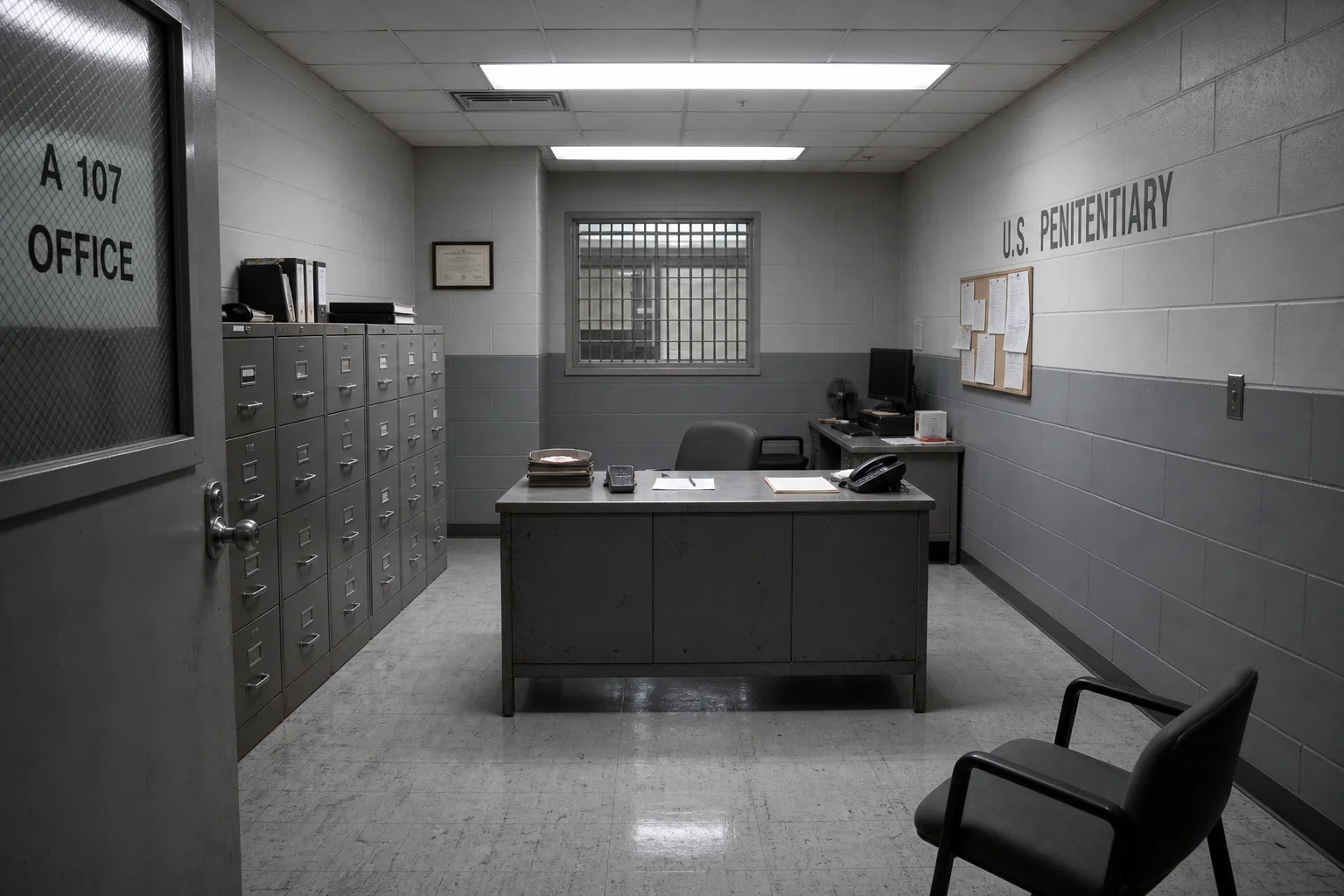
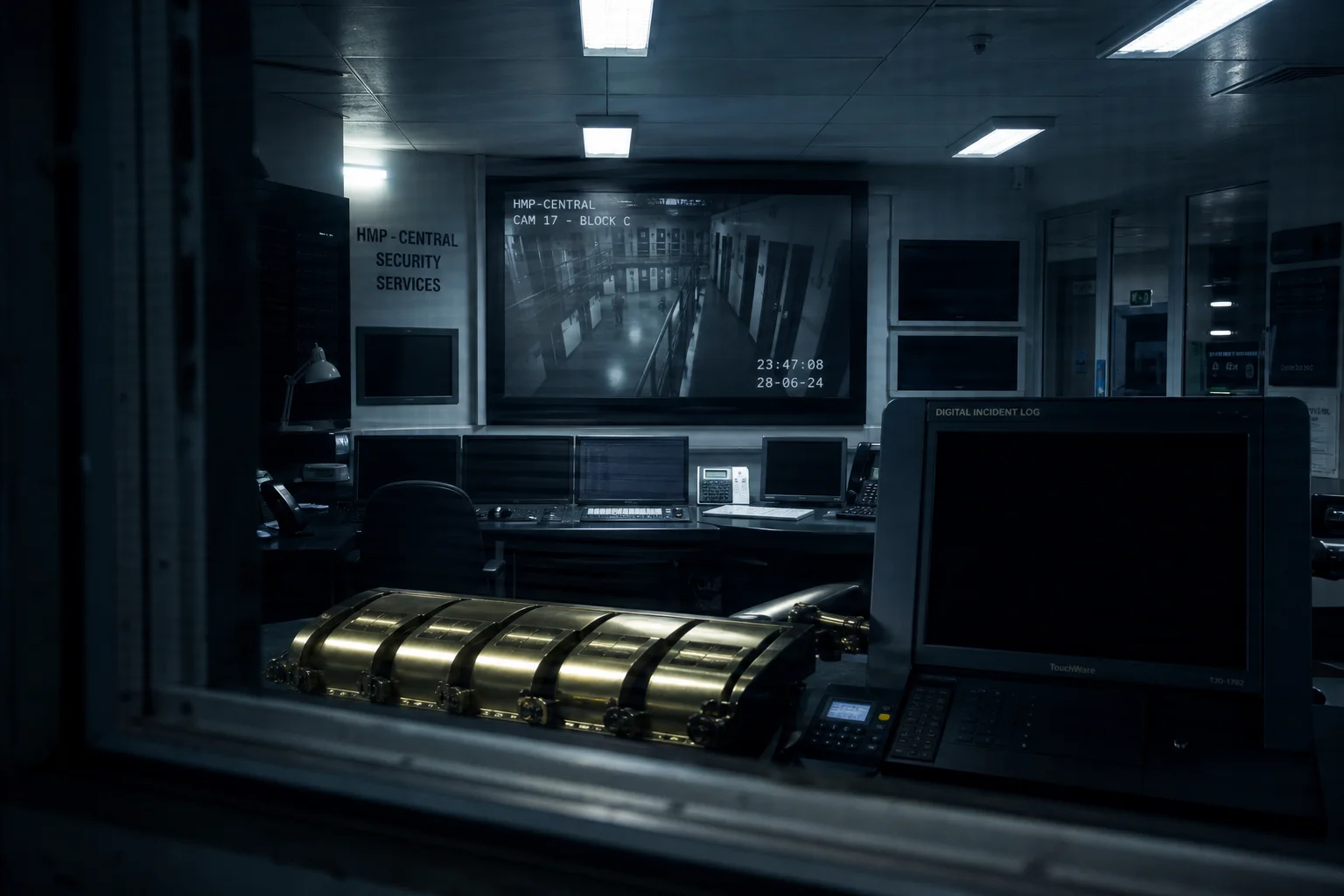
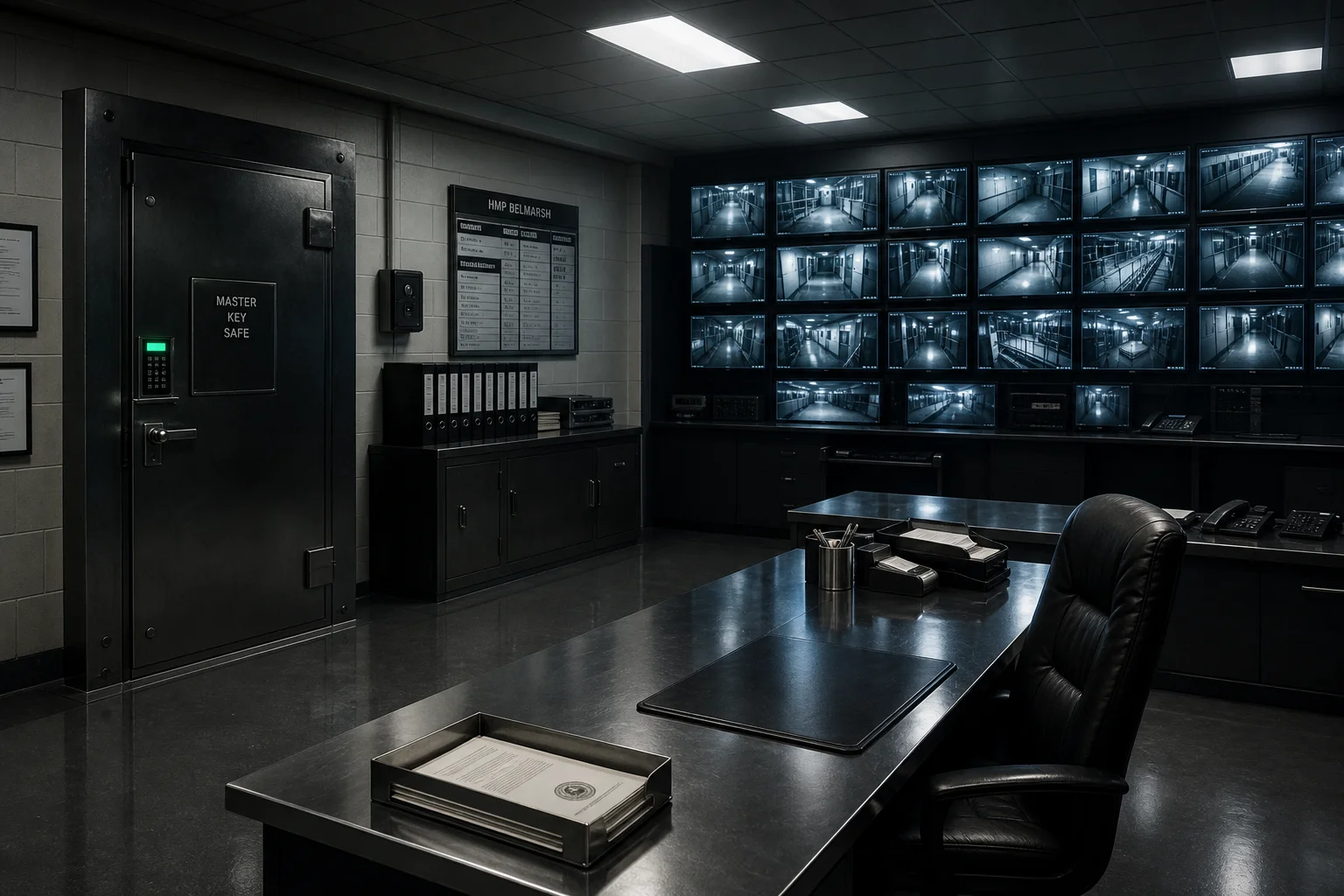
The first breath catches on the sharp, chemical scent of institutional disinfectant. A low, pervasive hum emanates from the ceiling-mounted fluorescent panels, casting a flat, shadowless light across the polished linoleum floor. Your gaze fixes on three points: the heavy steel door of the master key safe, its digital panel glowing a steady green; the bank of silent, flickering security monitors against the far wall; and the polished surface of the warden's steel desk, reflecting the sterile overhead glow.
 Crime Scene Environment
The environment is defined by a sterile, fluorescent-lit atmosphere with a constant, low-frequency acoustic hum from servers and electronics. The air is cool and dry, carrying a persistent chemical-clean odor. All interactions are subject to biometric logging, with access timestamps recorded to the second under a rigid, institutional protocol.
 Investigation Constraints
Biometric scanners (fingerprint/retinal) on all cell blocks and administrative doors; encrypted digital logbooks for guard patrols and prisoner movements; CCTV with 72-hour overwrite cycle; electronic keycard and PIN access systems; landline intercoms between posts; encrypted email for internal memos; central server room with scheduled maintenance purges.
✦ Related Cases ✦