The Bramblewick Fracture
An incident in a village bakery and a misplaced ledger force an investigation into the routines, personal errands, and hidden anxieties of a picturesque community, where testimony and alibis begin to show inconsistencies.
 Initial Crime Scene
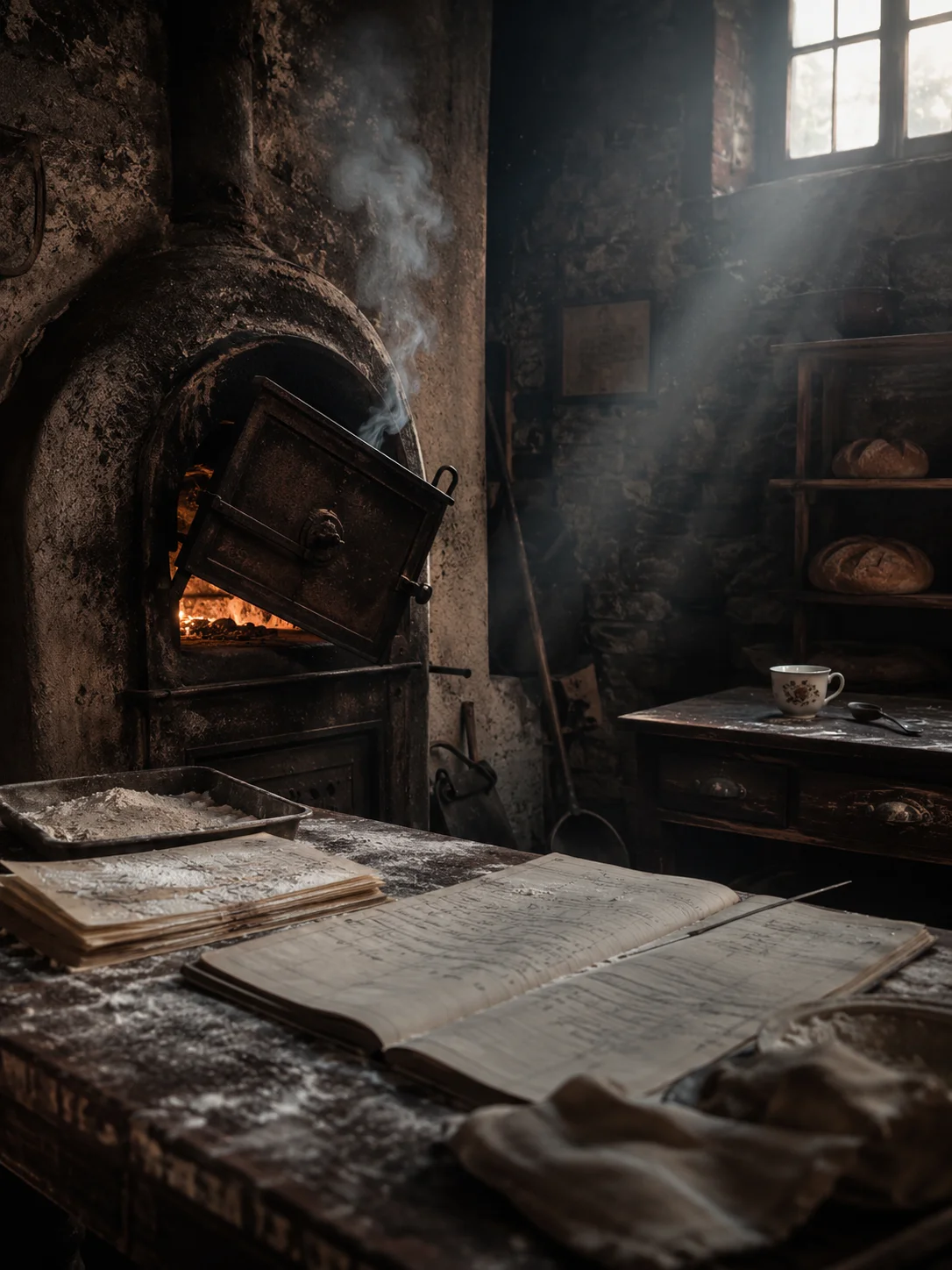
The sharp, acrid bite of burnt sugar and yeast stings your nostrils before your eyes adjust. A low, continuous clinking—the sound of a spoon against fine china—comes from a desk in the corner. Flour-dusted ledgers lie open on a worn counter, their handwritten entries stark against the parchment. Nearby, a coal-fired oven door hangs at a slight, unnatural angle, a thin wisp of grey smoke curling from its mouth. The air itself feels thick, warm, and heavy with particulate.
 Crime Scene Environment
The lighting is a patchwork of thin, high window shafts and the dim, warm glow from residual oven heat, creating deep shadows in corners. The air is humid with residual kitchen steam and carries a persistent, sweet-then-acrid smell. Acoustic density is low, dominated by the occasional, distant clink of metal on porcelain and the low, intermittent hiss of cooling metal.
 Investigation Constraints
Quill pens and ink, handwritten ledgers, wax seals, pocket watches, physical clocks, oil lamps, coal-fired ovens, mechanical door latches, parchment letters delivered by hand or local post.
✦ Related Cases ✦