The Bramblewick Terroir
During the annual Rose & Thistle Preserve Competition in Bramblewick, a judge is found deceased in the pantry. An anomalous wax seal on a jam jar and a series of disrupted timelines present a complex web of professional conduct and personal discretion for the investigator to map.
 Initial Crime Scene
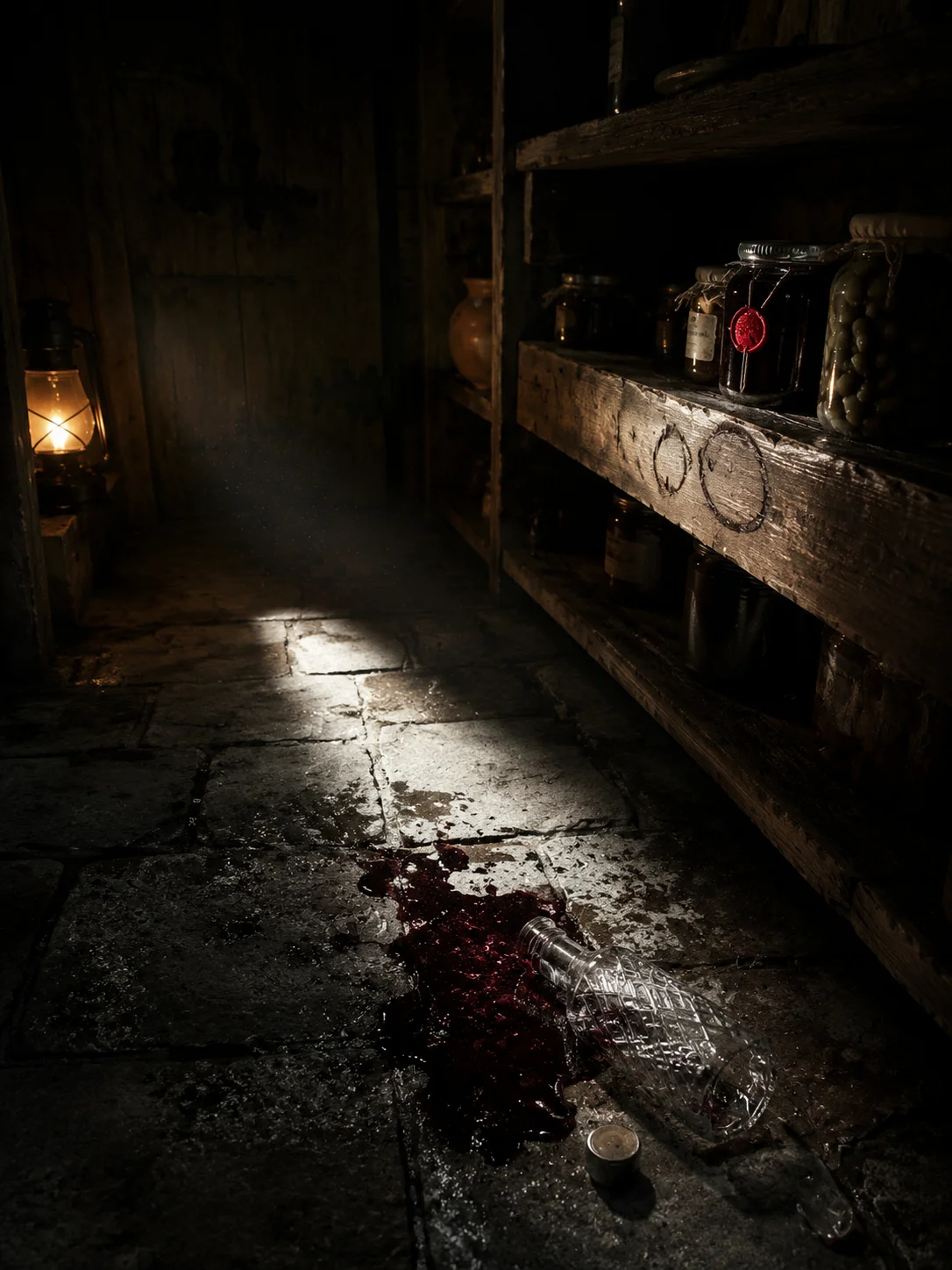
A single, harsh beam of lamplight cuts across the stone flags of the pantry, catching the dust motes in its path. The air carries the sharp scent of spilled vinegar and a underlying sweetness of preserved fruit. Your gaze is drawn to three things first: the dark, sticky pool spreading from a knocked-over crystal bottle, the rough, unnatural wax seal on a nearby jar, and the distinct circular pattern where dust has been wiped from the wood of the main shelf.
 Crime Scene Environment
The environment is one of forced, still order under low, warm lamplight, creating deep shadows in the corners. The air is cool and carries a damp humidity from the stone floors, buffered by the sugary, acidic scent of preserves. Acoustic density is low, punctuated by the distant, muffled clink of bone china from the adjacent hall and the heavy silence of the unlit passage to the potting shed.
 Investigation Constraints
Pre-digital era. Communication is via handwritten notes, village telephone party lines, and face-to-face conversation. Locks are mechanical (warded or pin-tumbler). Record-keeping is done in leather-bound ledgers, handwritten receipts, and personal diaries. Forensic analysis is limited to visual inspection, tactile examination, and rudimentary chemical tests (e.g., vinegar for acidity).
✦ Related Cases ✦