The Bureaucratic Anomaly
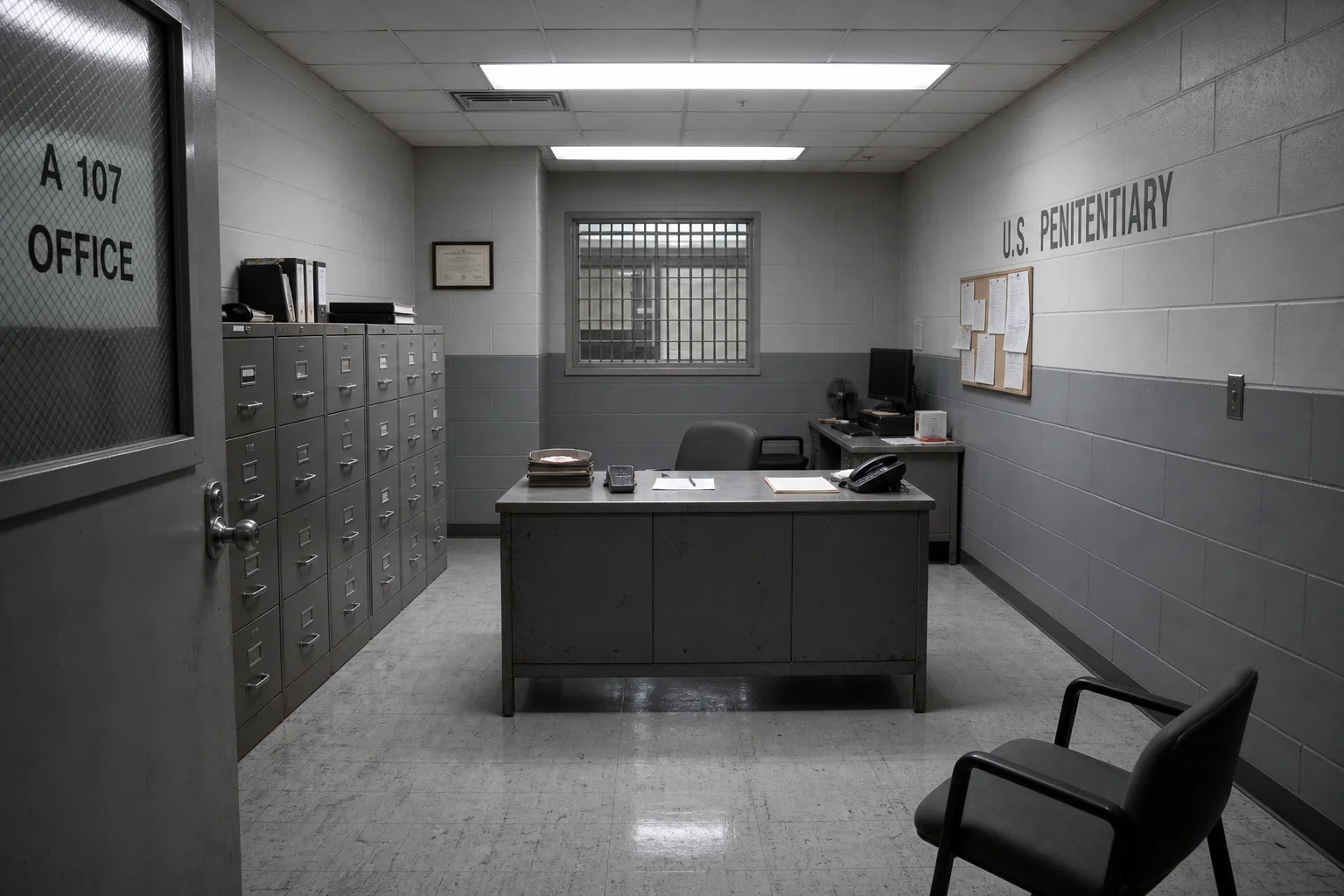
An independent forensic specialist is summoned to a federal penitentiary to investigate the death of an inmate in a visitation booth. The initial scan reveals a physical anomaly on a phoneline junction box and a gap in security surveillance logs. The inquiry involves examining institutional records, maintenance schedules, and staff testimonies to establish a factual timeline.
 Initial Crime Scene
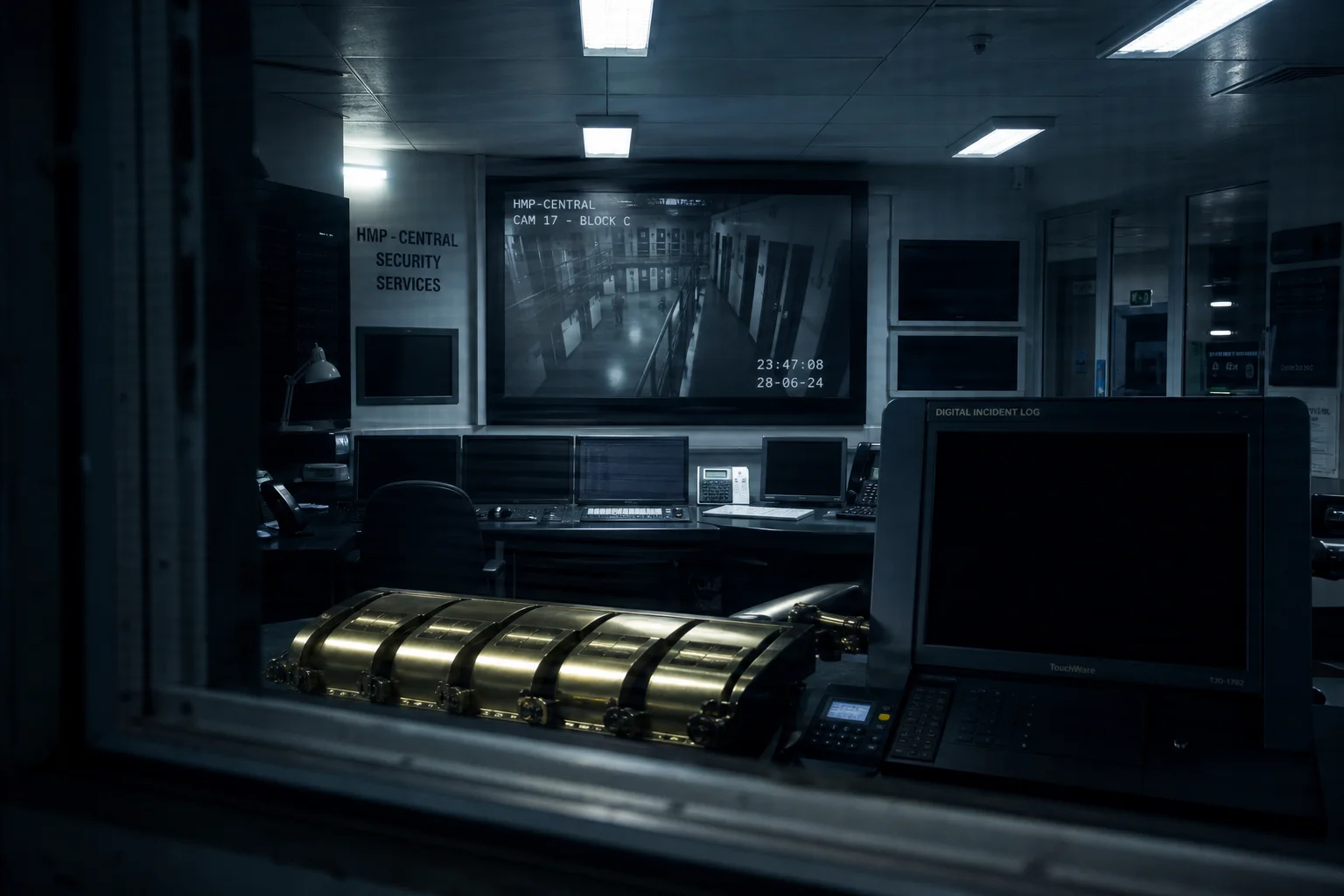
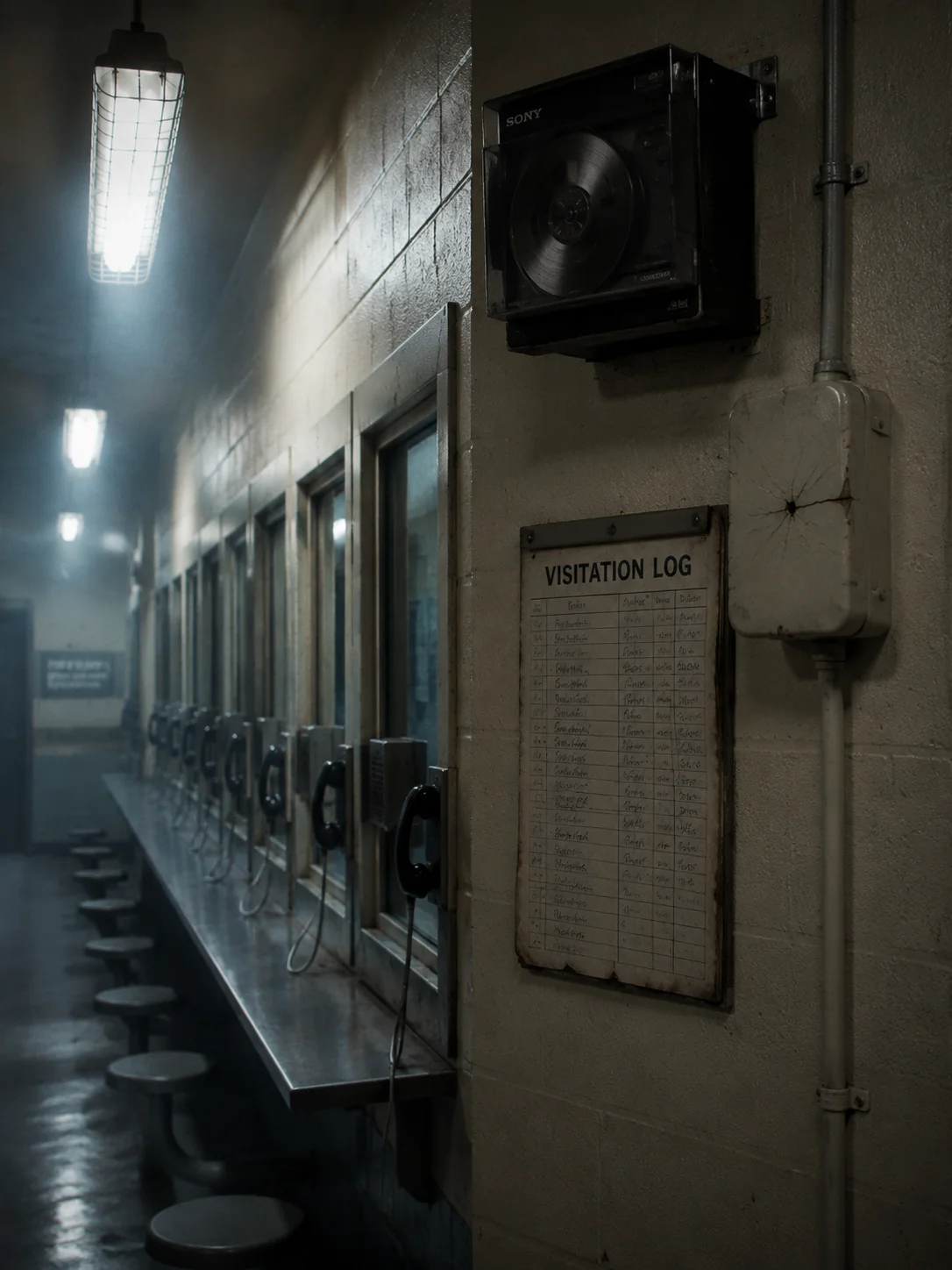
The stale, cool air of the visitation booth corridor hits first, carrying the sharp, chemical scent of adhesive. A low fluorescent hum vibrates through the institutional beige walls. Your eyes fix on three points: the cracked plastic laminate of a junction box housing, the black plastic reel of a VHS security camera, and the faded ink lines of a wall-mounted logbook.
 Crime Scene Environment
Lighting is a flat, sterile fluorescence with intermittent flicker. Humidity is low, the air dry and carrying a persistent chill. Acoustic density is defined by a constant, low-volume hum from the lighting fixtures, punctuated by the distant, intermittent crackle of an institutional intercom system.
 Investigation Constraints
Analog and early digital prison infrastructure: landline phone systems with physical line-tap splitters, pneumatic tube message capsules, electronic door lock solenoids (key-card or keypad), security camera systems (VHS tape, limited digital storage), basic computer terminals for inmate records (no network, only local database), manual log books, and wire-tap detection equipment (signal strength meters).
✦ Related Cases ✦