The Canary in the Code
The investigation into the unexpected death of a senior intelligence analyst during a high-stakes diplomatic summit examines compromised communications and contaminated evidence. Colleagues' individual professional and personal pressures have introduced systemic noise into testimonies and the physical audit trail.
 Initial Crime Scene
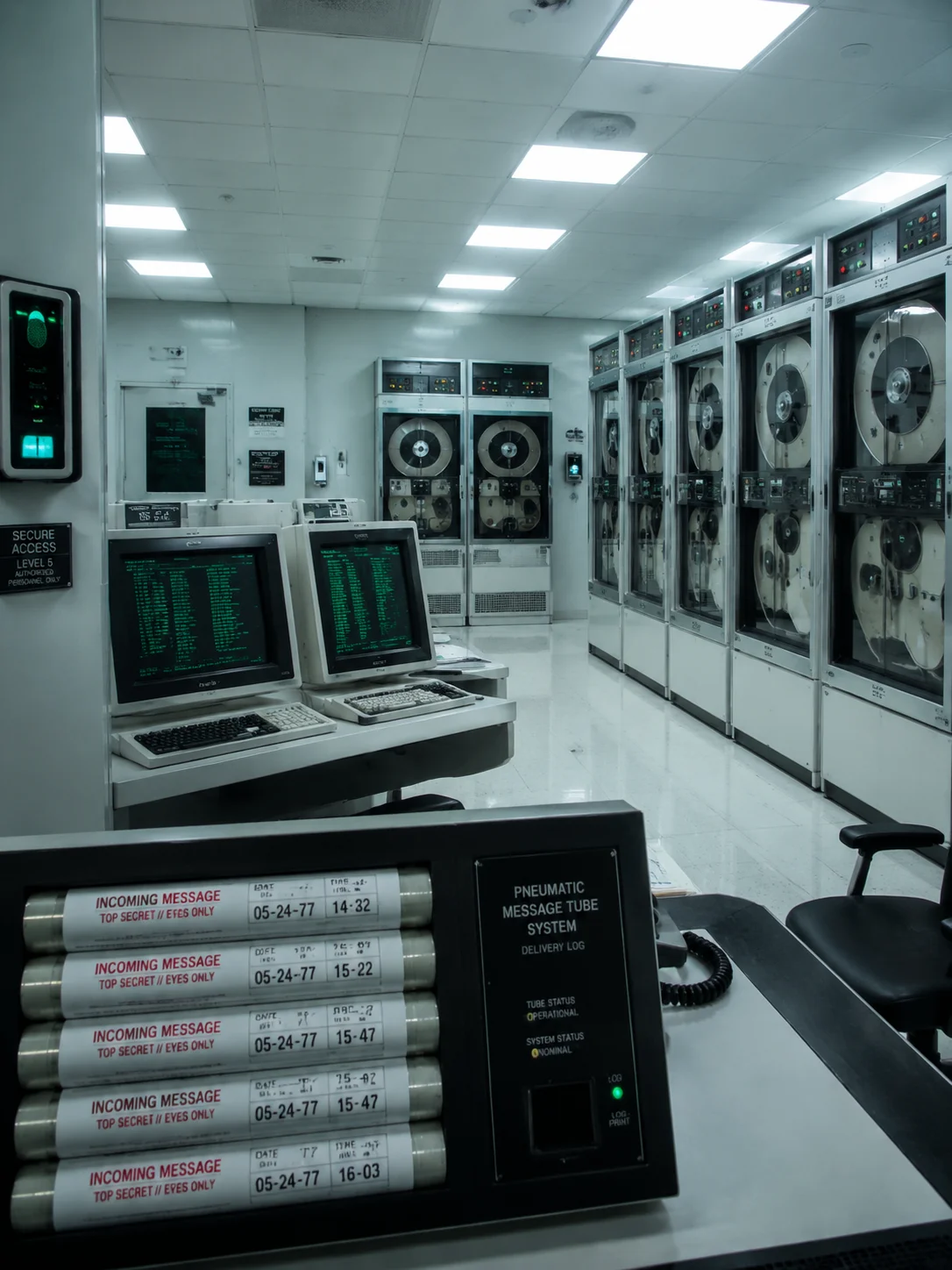
The fluorescent lights hum with a clinical, shadowless glare. A low, constant drone emanates from rows of reel-to-reel tape drives. The air smells of ozone, warm electronics, and cleaning solvent. Banks of secure data terminals display green diagnostic text. Biometric access panels gleam under the sterile light. Pneumatic message tube delivery logs with stamped timestamps sit in rigid stacks on a nearby console.
 Crime Scene Environment
A sterile, climate-controlled environment with flat, shadowless fluorescent lighting. The air is dry, carrying the impersonal scents of warm electronics and solvent. Acoustic density is defined by the constant, low-frequency hum of tape drives and the rhythmic hiss of the pneumatic tube system.
 Investigation Constraints
Secure government-issued data terminals, pneumatic message tubes, analog encryption machines (e.g., electromechanical cipher devices), biometric-locked filing cabinets, paper-based audit logs with carbon copies, sealed diplomatic pouches, landline telephones with switchboard operators, microfilm archives, and central server rooms with reel-to-reel tape storage.
✦ Related Cases ✦