The Carbon Copy Echo
During a 1960s-era diplomatic reception, a Soviet Cultural Attaché is found deceased in his private office. An independent forensic specialist is summoned after a single souvenir stamp from his personal album is discovered displaced in the communal coatroom.
 Initial Crime Scene
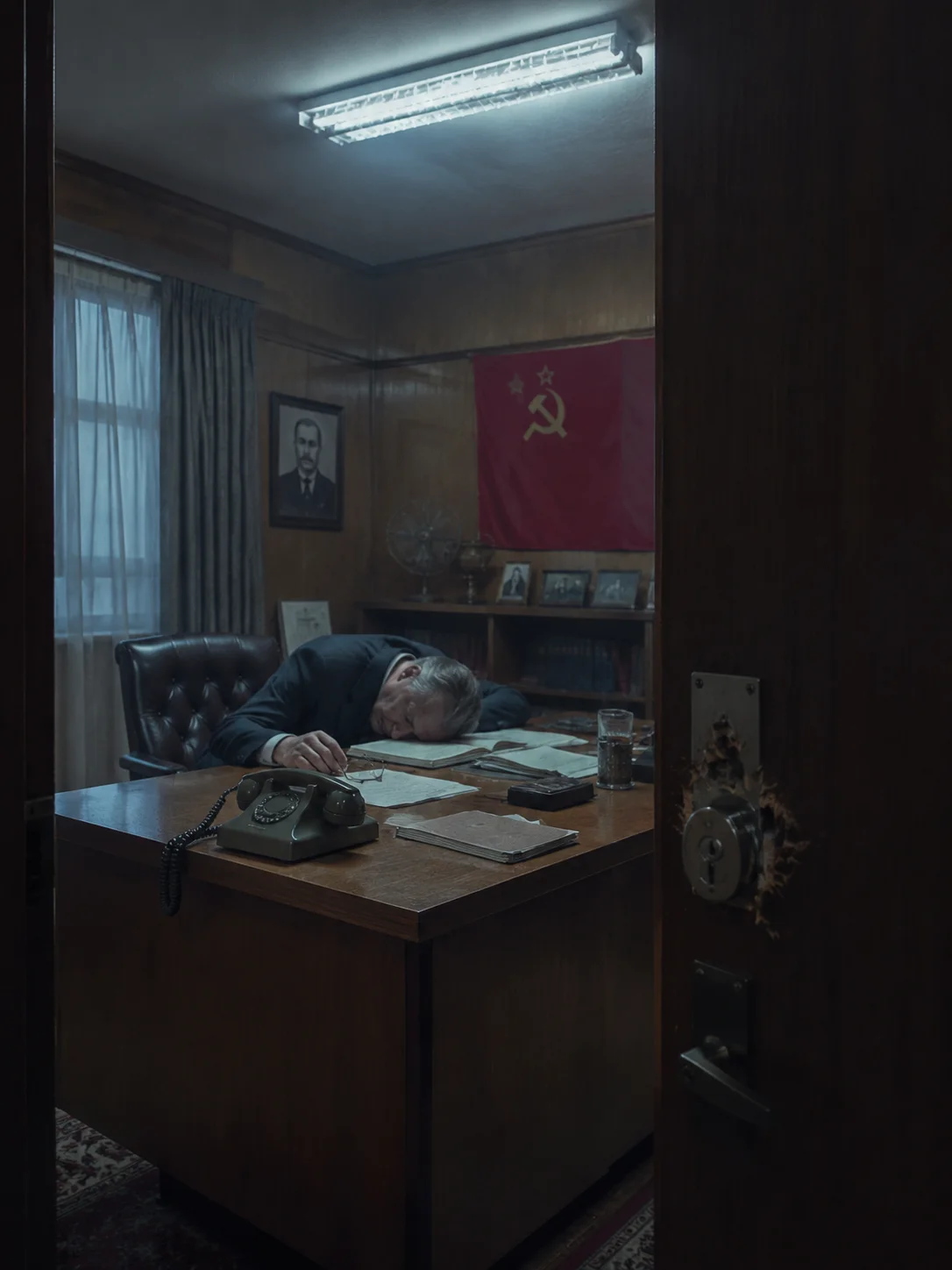
The fluorescent tube above the desk hums and stutters, casting a pallid, intermittent glare over scattered personal correspondence. The air carries the sharp, acrid scent of developer fluid mixed with the stale perfume of old paper and floor wax. Your gaze traces the rotary telephone cradle's dark circular impression on the carbon-copy blotter, then the stiff posture of the deceased, head resting on an open letter, before finally noting the minute, fresh splinters caught in the lock cylinder of the office door.
 Crime Scene Environment
A sterile, oppressive envelope defined by the flickering, uneven light of fluorescent tubes and a cool, dry air profile with low acoustic density, punctuated only by the static hiss of idle equipment and the deep hum of the building's systems.
 Investigation Constraints
1960s-era analog technology: rotary telephones, reel-to-reel tape recorders, mechanical cipher machines, manual typewriters, postal mail systems with wax seals, microfilm cameras, physical dead drops, and chemical-based invisible inks. Digital technology is non-existent.
✦ Related Cases ✦