The Carbon-Smudged Transfer
A mid-level embassy attaché is found deceased within the secure government archive. A forensic specialist must untangle the overlapping personal and professional circumstances surrounding the event to establish a factual sequence.
 Initial Crime Scene
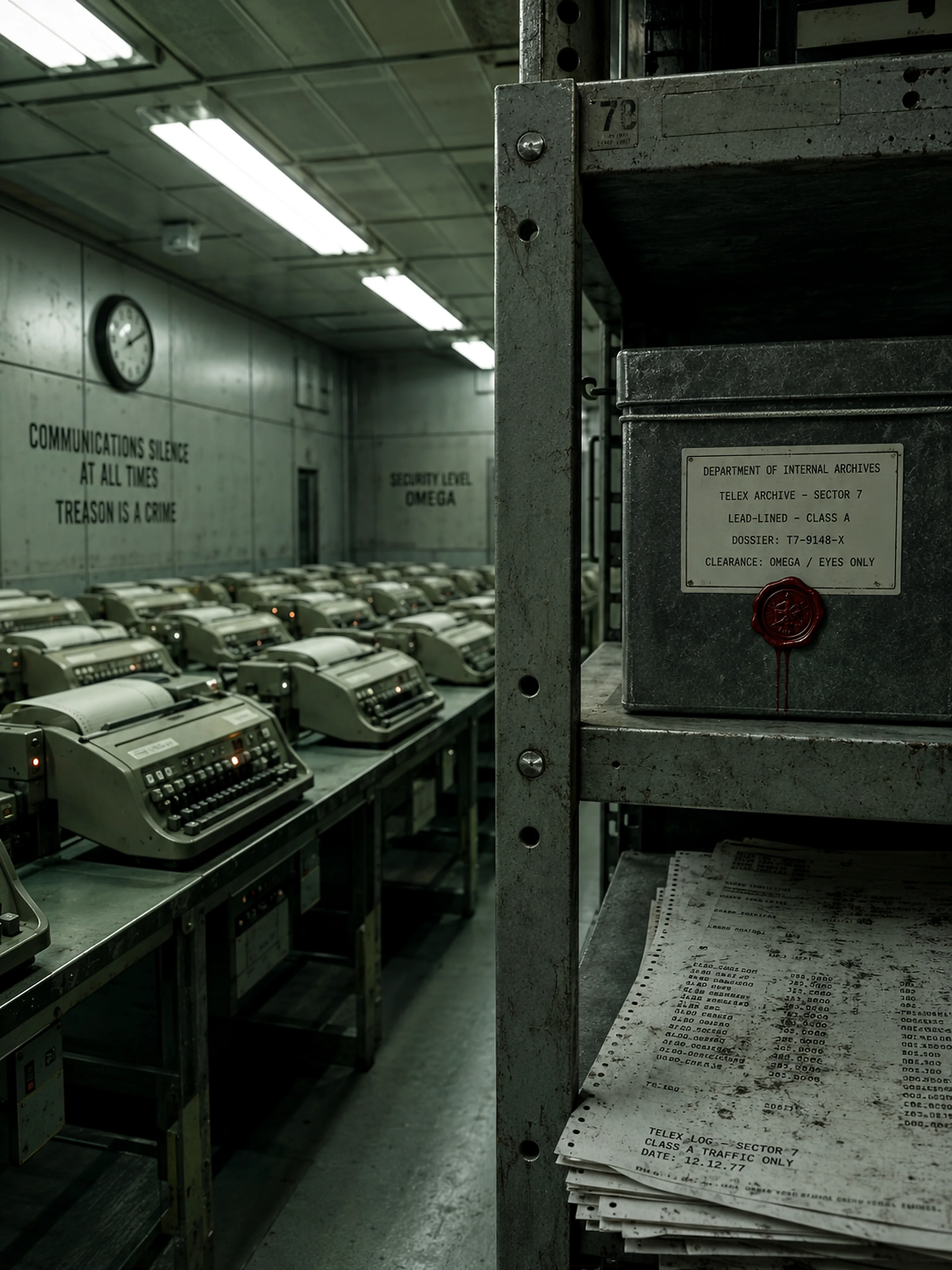
The fluorescent hum presses in from the ceiling, casting a greenish-white glare over banks of inert telex machines. The air carries a sharp scent of warm ozone and machine oil. Your gaze fixes on a thermal paper log curling from its slot, its surface dense with carbon-smudged prints. A single, lead-lined box sits on a steel shelf, its wax seal cool and intact. The analog tick of a wall clock provides the only steady rhythm in the sterile quiet.
 Crime Scene Environment
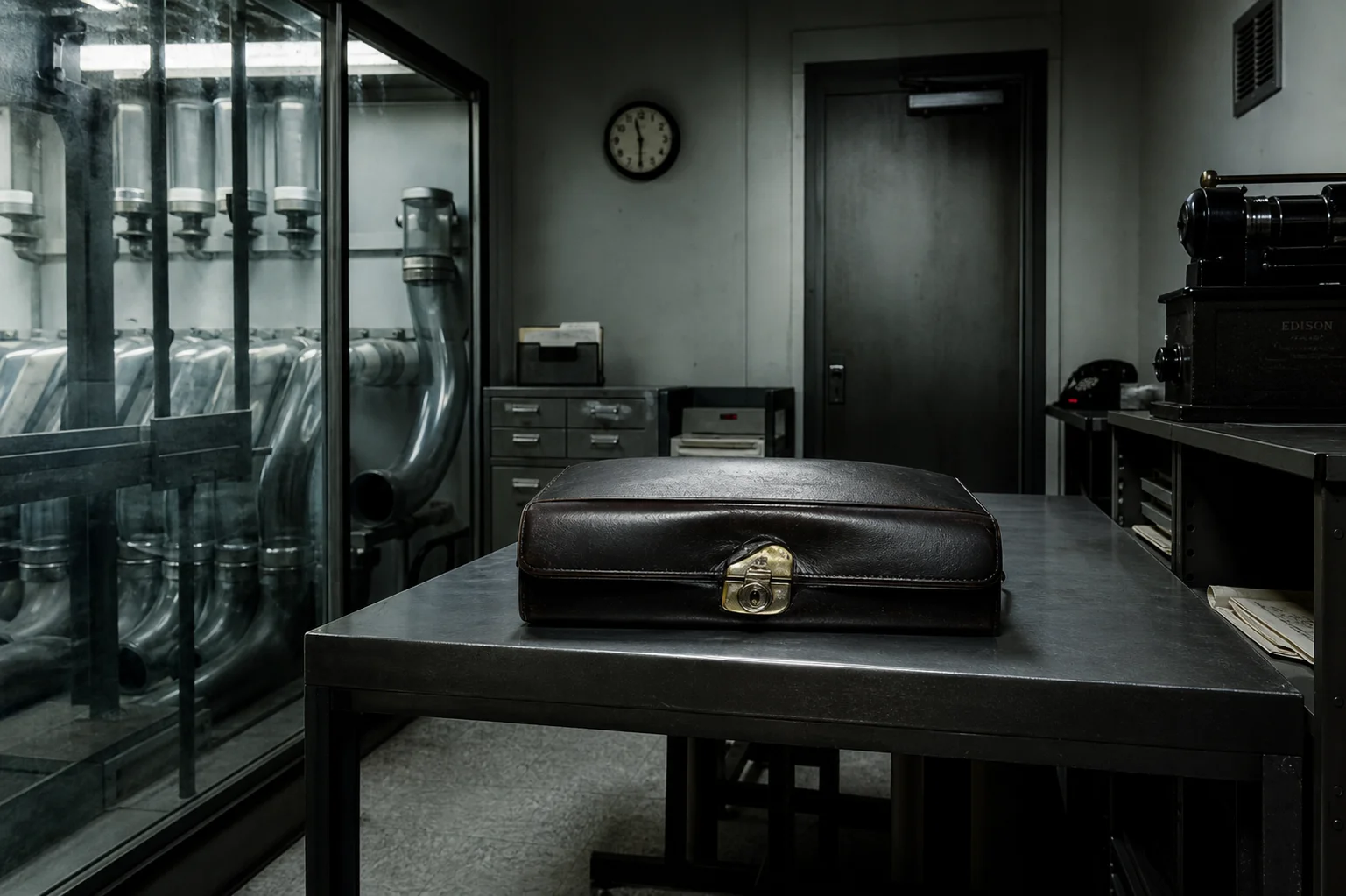
Lighting is a constant, sterile fluorescent glare from ceiling panels, casting no shadows. The air is cold, dry, and conditioned, carrying a persistent scent of ozone, machine oil, and carbon paper. Acoustic density is muffled and internal, with lead-lined walls absorbing external sound, leaving only the hum of electronics, the analog tick of clocks, and the intermittent hiss of pneumatic tubes.
 Investigation Constraints
Cold War-era (1970s-80s) analog and early digital systems: electromechanical cipher machines, microfilm readers, pneumatic tube message systems, thermal paper printouts, tamper-evident wax seals, carbon-copy filing, manual keycard locks with log printers, early motion-activated CCTV with tape loops, and dedicated telex networks. No personal computers, internet, or mobile phones. Data trails are physical: carbon copies, printer ribbons, metered telephone logs, and paper tape punch records.
✦ Related Cases ✦