The Carrel of Silent Marks
A quiet university library becomes the focus of an investigation after a cryptic message is discovered on the wood paneling of a locked study carrel.
 Initial Crime Scene
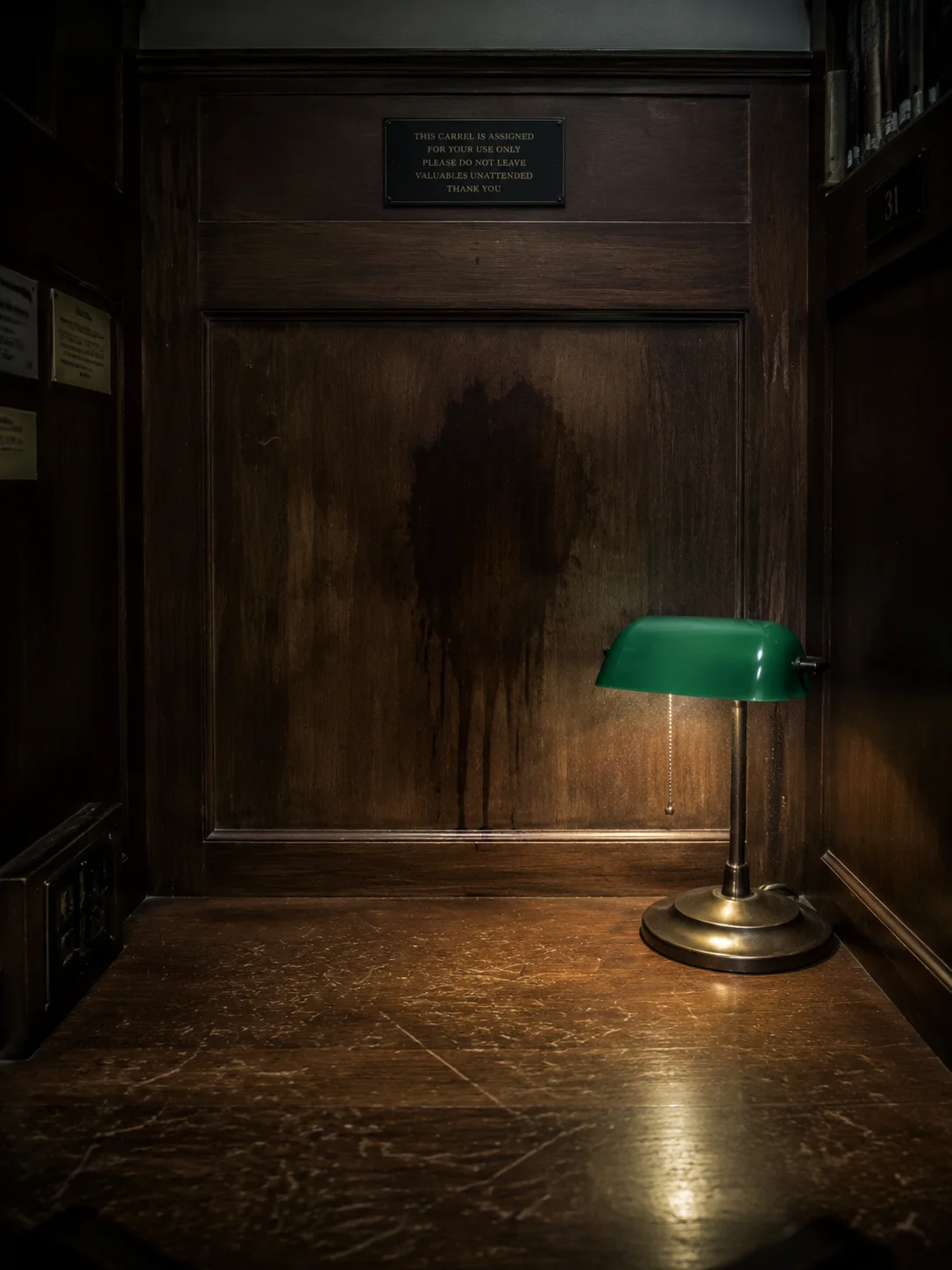
The first thing that hits is the smell: a faint, ozone tang from the climate control system, layered over the parchment-dry scent of old paper. A low, constant hum vibrates through the room, the sound of machines maintaining the air. Your eyes adjust to the weak, green-shaded light from a single desk lamp, catching dust motes hanging still in the beam. Three things are immediately visible: the scarred oak surface of the desk, the narrow, wood-paneled walls of the carrel, and a fresh, dark stain on the paneling at eye level.
 Crime Scene Environment
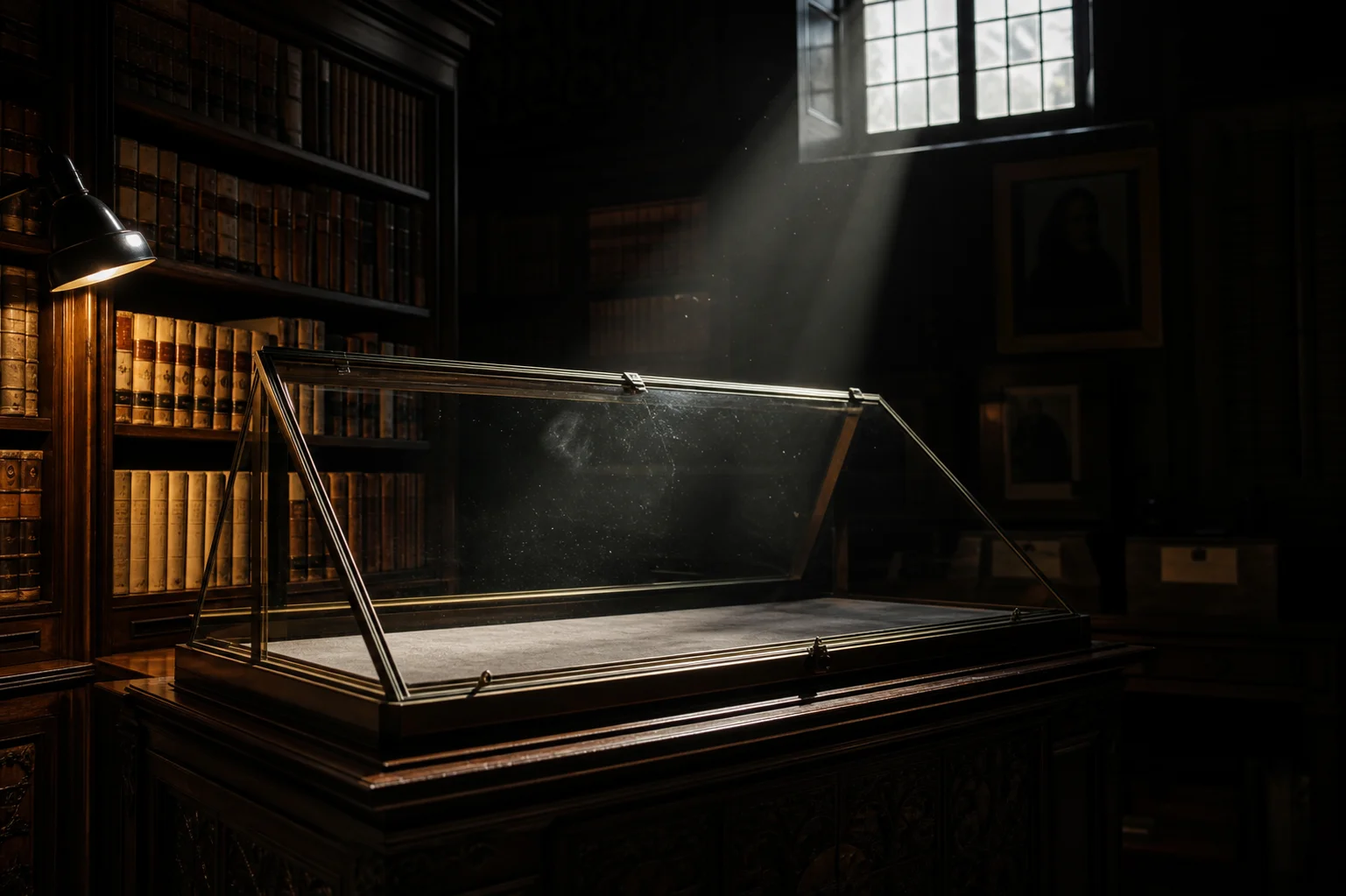
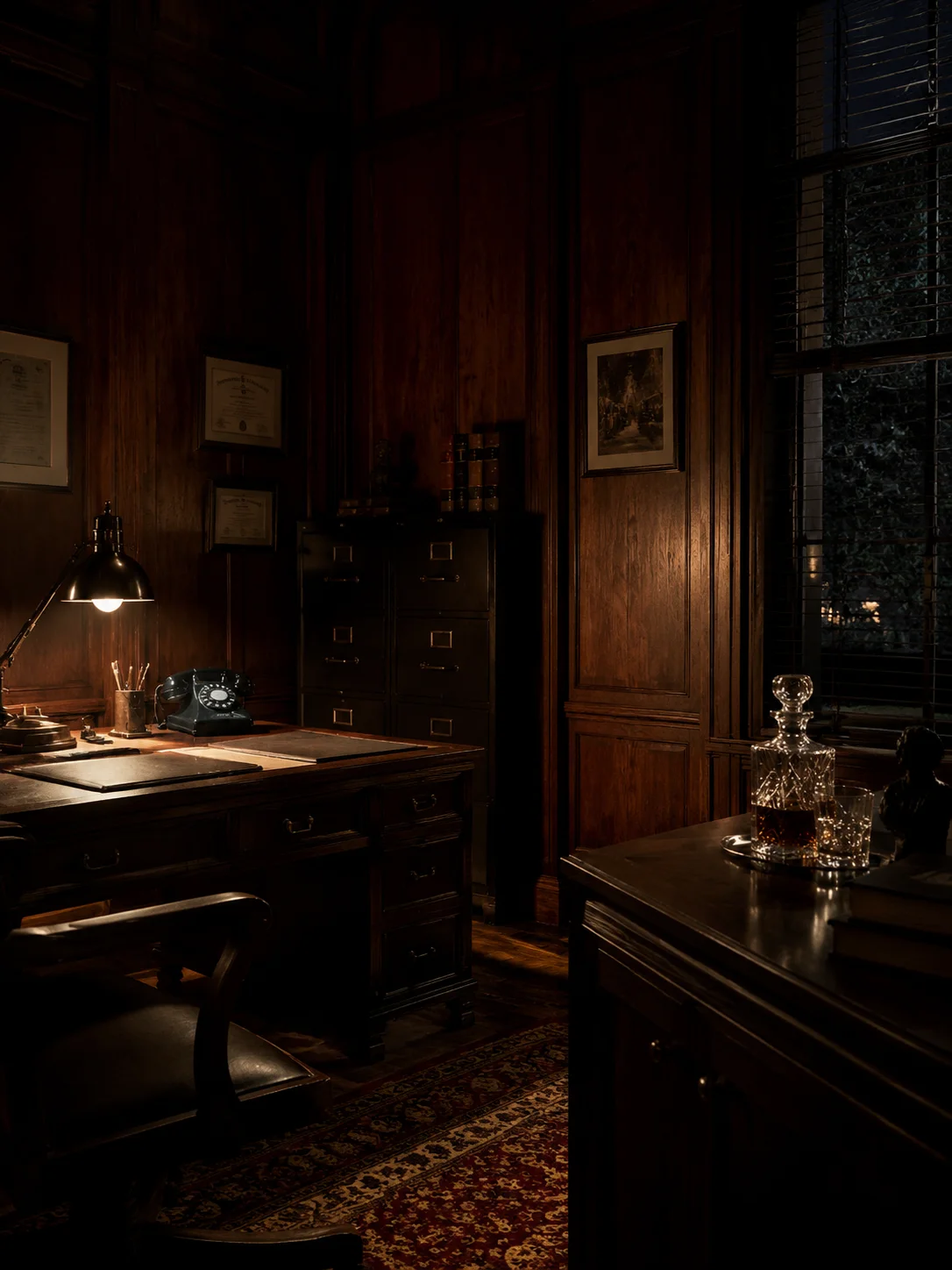
The lighting is a patchwork of weak, localized pools from desk lamps against a pervasive institutional gloom. The air is cool and dry, its humidity meticulously controlled by the low, persistent hum of the mechanical systems. The acoustic density is one of oppressive silence, broken only by the faint hiss of humidifiers and the occasional rustle of parchment from distant corners.
 Investigation Constraints
Handwritten letters, fountain pens, carbon-copy interdepartmental memos, mechanical typewriters, leather-bound ledgers, rotary telephones, periodical indexes in card catalogs, brass key locks, and manual, hour-based environmental control systems for rare book preservation (humidifiers/dehumidifiers activated by duty librarians).
✦ Related Cases ✦