The Cartographer's Chart
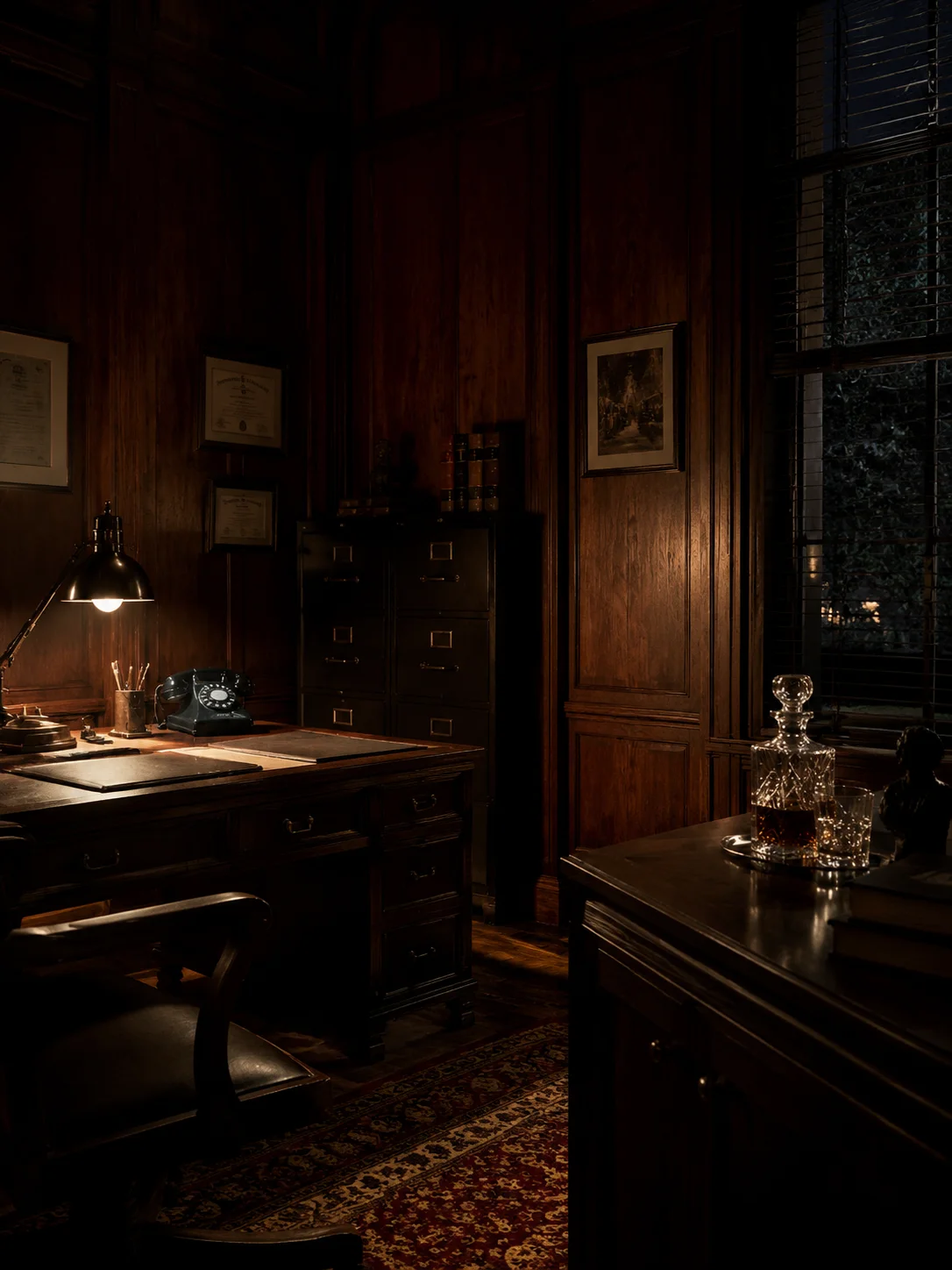
A visiting scholar arrives to assess a campus cartography exhibition. The central exhibit is a meticulously annotated map. Several faculty members and staff possess access to the professor's office and the exhibition space, each involved in their own professional concerns regarding the upcoming academic event.
 Initial Crime Scene
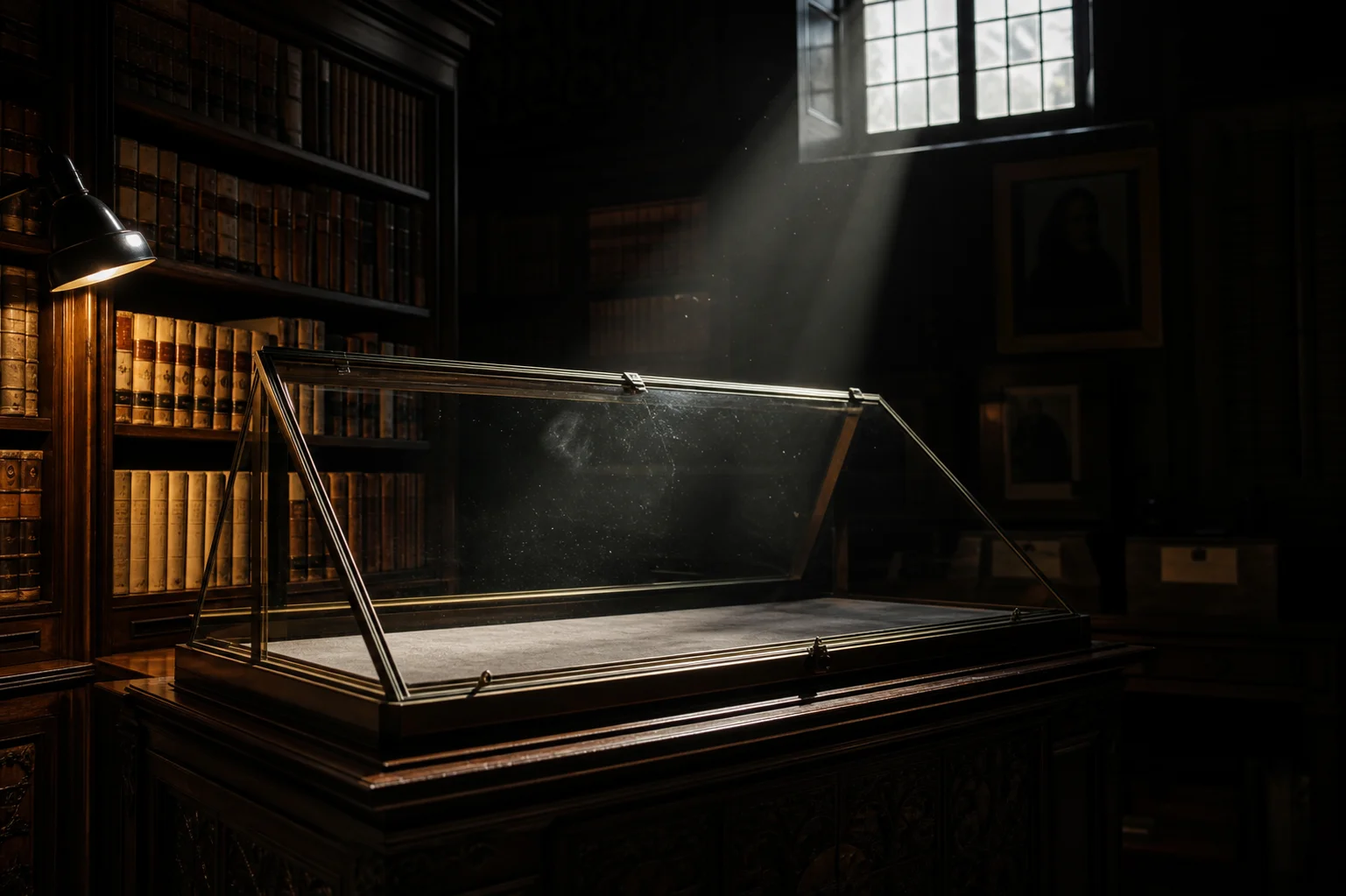
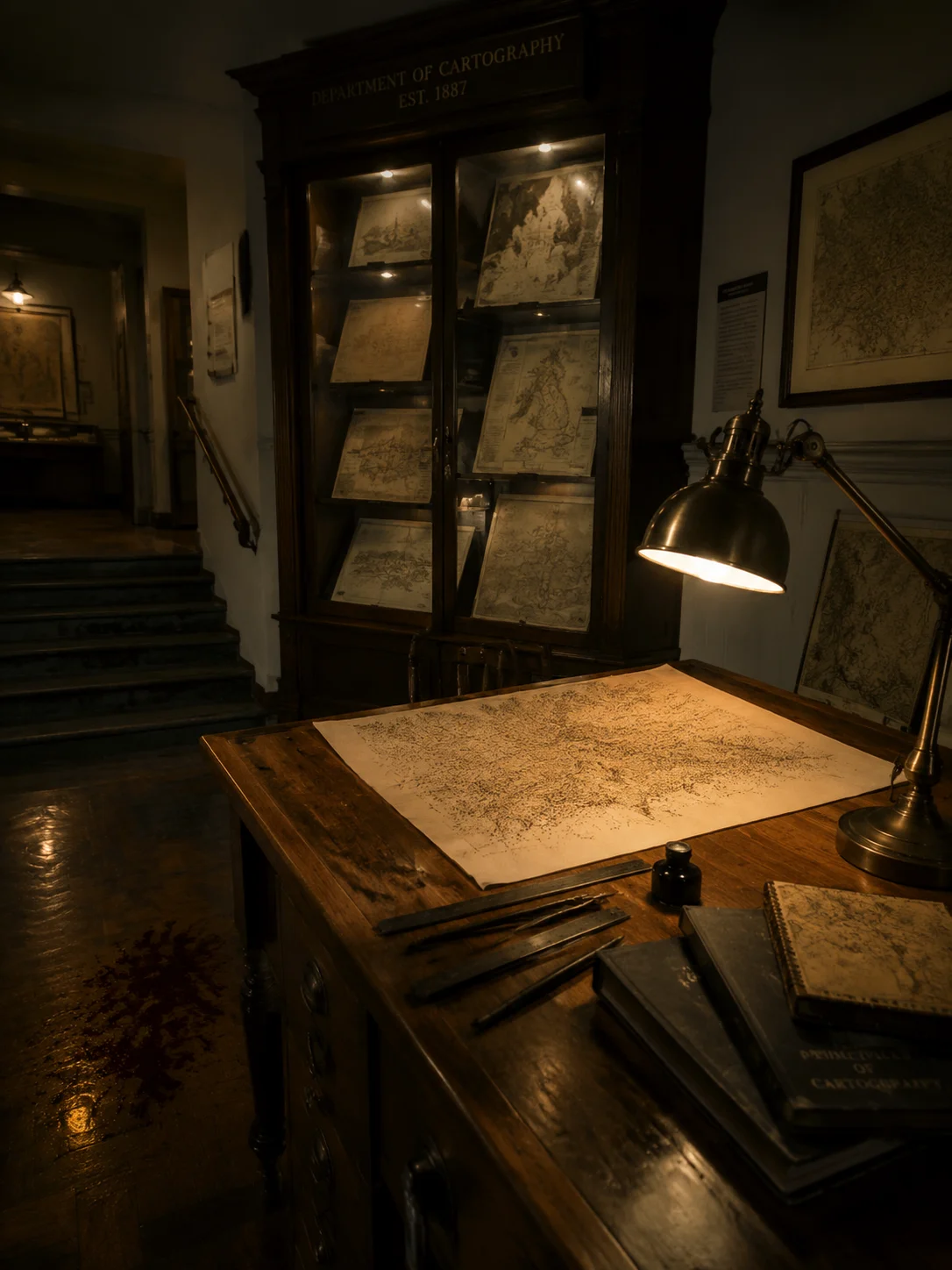
The polished oak of the drafting table reflects the low, yellow light from a brass desk lamp. A scent of ink and aged paper hangs in the air. The quiet is broken only by the distant, rhythmic tick of a grandfather clock in the hallway. Three localized visual markers dominate: a tall, glass-fronted map display cabinet with a visibly warped oak frame; a sheet of heavy blotting paper covered in a dense cluster of overlapping ink indentations; and a faint, smeared dark stain on the floor near a short flight of steps.
 Crime Scene Environment
The sandbox is enveloped in a 'hushed' atmosphere under a 'stifled sob' of low, yellow light from brass fixtures. The humidity is low, with a 'polished oak' dryness, and the temperature is cool. Acoustic density is sparse, characterized by the 'tweed' rustle of movement, the 'ink stain' scratch of a pen, and the 'whispered allegation' of distant, muffled conversation.
 Investigation Constraints
Early 20th-century university setting (1920s-1930s). Tools include handwritten correspondence in faculty mailboxes, rotary dial telephones in offices, typewritten theses, library card catalogs, physical ledger books for office logs, brass lock-and-key safes in department offices, and telegrams. Information travels via gossip, posted notices on bulletin boards, and hand-delivered inter-departmental memos. Forensic traces exist as ink stains, pencil smudges, wax seals, pressed flowers in books, and the precise pressure of penmanship.
✦ Related Cases ✦