The Chalk Outline
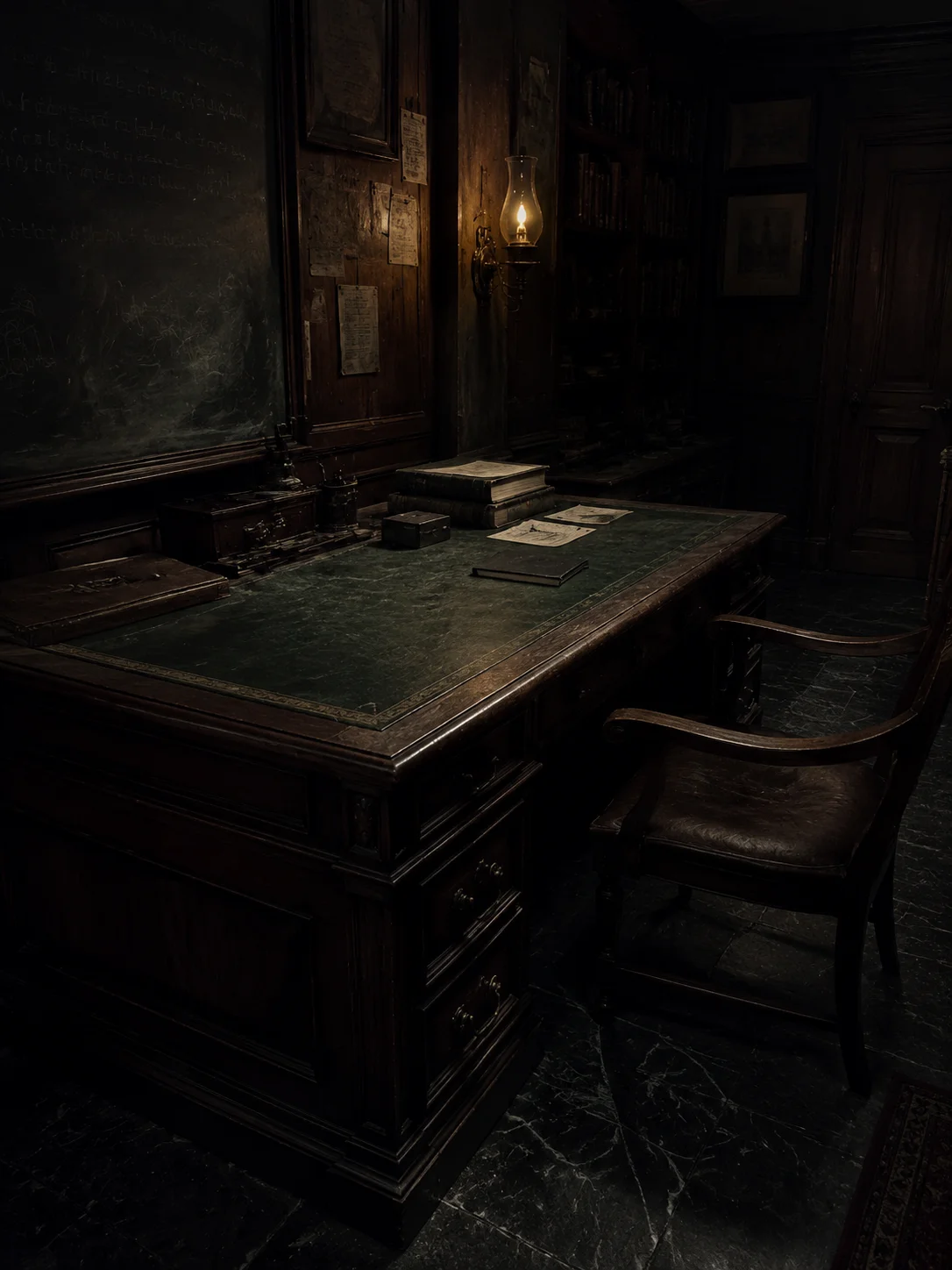
At Ashworth University, the death of Professor Alistair Finch is recorded as a suicide. His study contains an erased blackboard, faint chalk dust patterns, and a leather blotter bearing obsessive indentations. The professor's colleagues, each managing personal and professional pressures, offer accounts of their movements that intersect with the physical evidence in the room.
 Initial Crime Scene
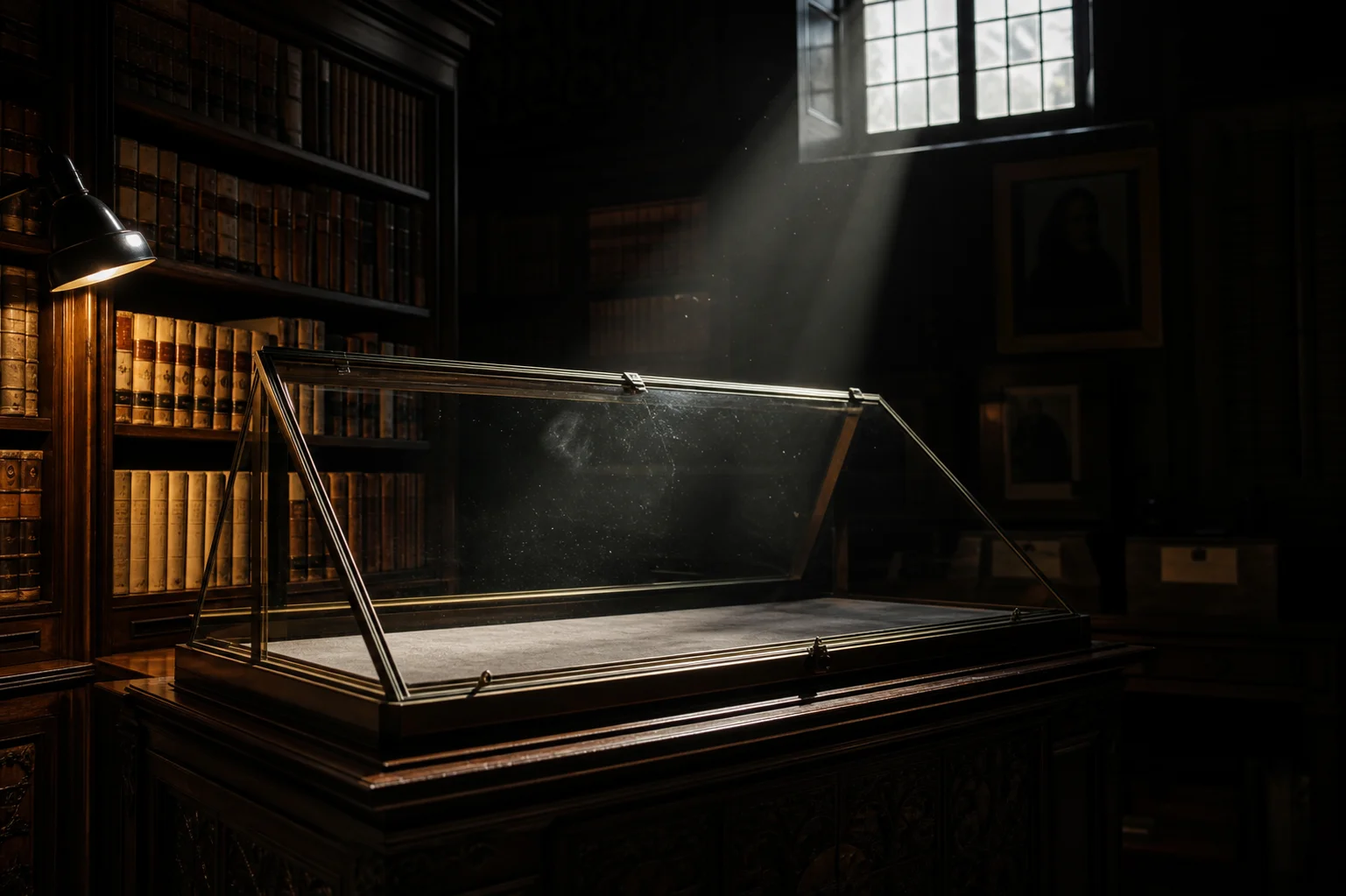
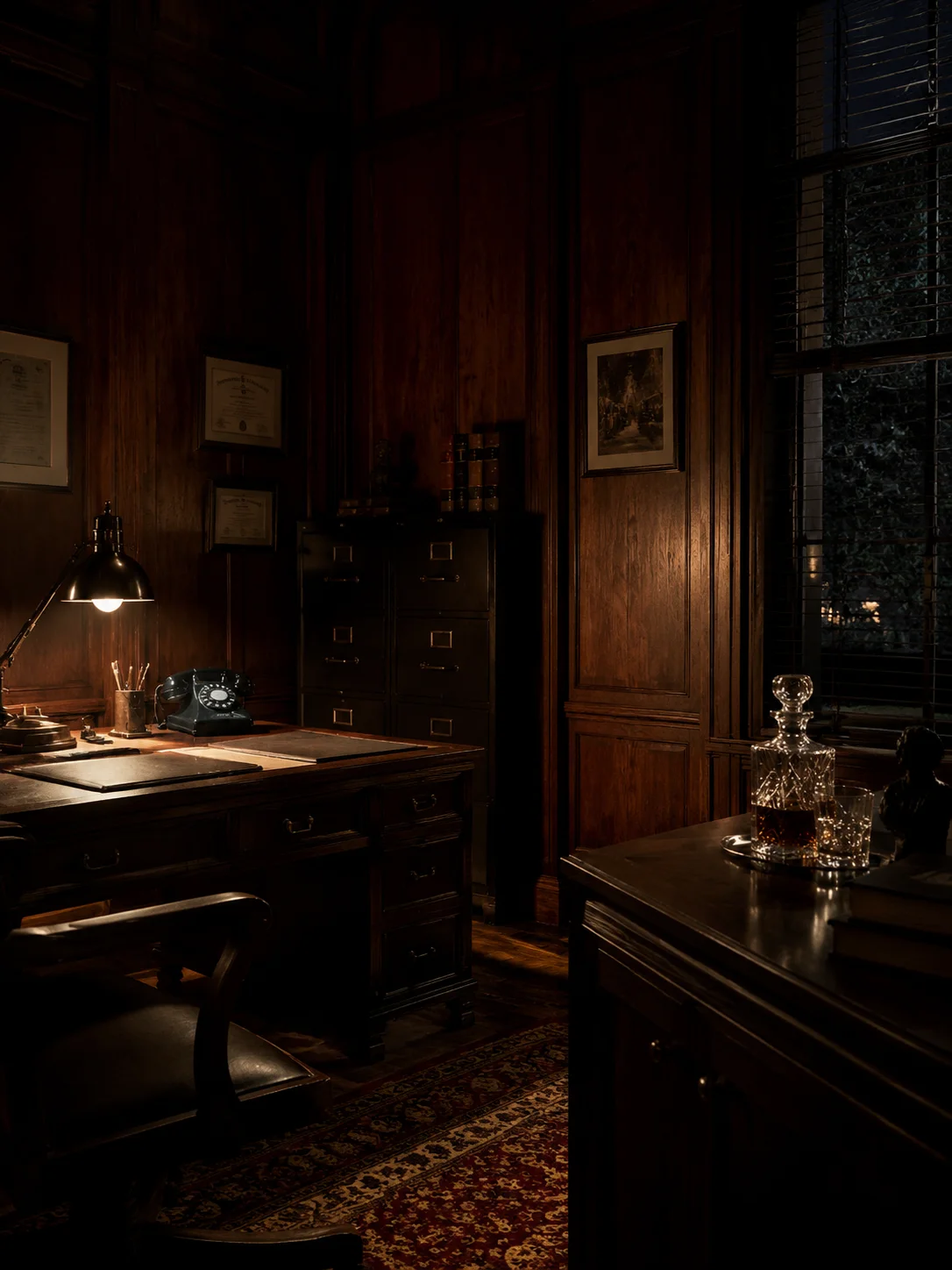
A sharp, chemical scent of ink eradicator burns the nostrils, layered over the dry, papery smell of old books. The only sound is the faint, rhythmic hiss of the single gas lamp in its wall sconce. Long, wavering shadows crawl from the dark oak paneling across a slate floor, where a fine, colored chalk dust has settled in an irregular layer. A heavy, wood-paneled desk dominates the space, its green leather blotter marked with a galaxy of deep, overlapping pen indentations.
 Crime Scene Environment
The lighting profile is a single, low-pressure gas lamp, creating a pool of weak, wavering yellow light and long, deep shadows. The humidity is low and dry, characteristic of a heated, wood-paneled interior, with a cold draft from the single window. The acoustic density is low, dominated by the hiss of the gas lamp and the faint, ambient creak of old wood, creating an oppressive stillness.
 Investigation Constraints
Late-Victorian/Edwardian era academic setting. Tools include handwritten letters, fountain pens, blotting paper, chalk dust, leather-bound ledgers, mechanical clocks, gas lamps, and door keys. Communication is via sealed envelopes, personal notes, and gossip in common rooms. Locks are simple mechanical pin-tumbler types. No electricity, telephones, or any form of digital or early electronic computation.
✦ Related Cases ✦