The Cipher Protocol
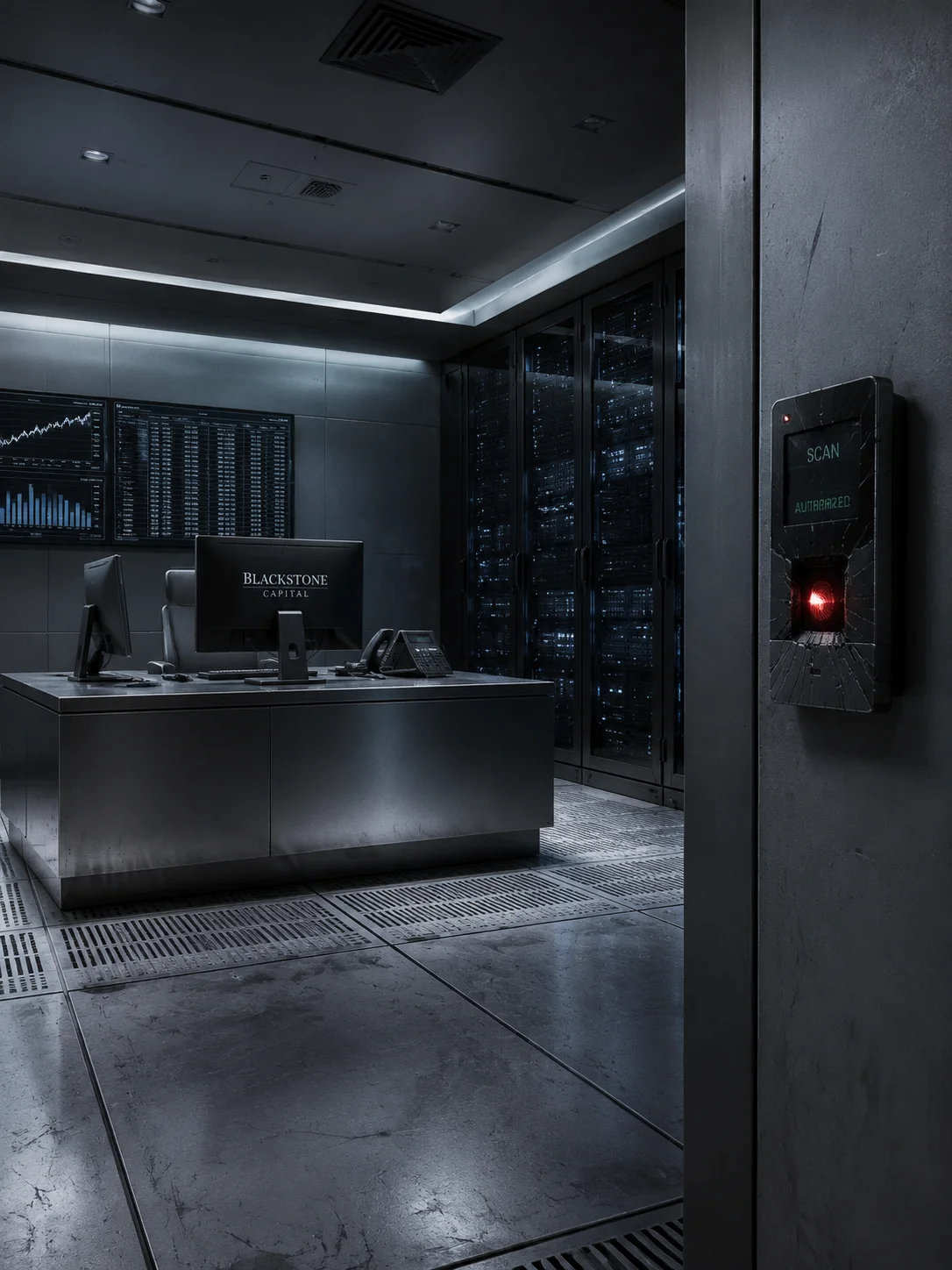
An independent forensic specialist is summoned to a diplomatic complex following the death of a liaison officer. The initial scene reveals a compromised dead drop terminal, conflicting access logs, and a network of personnel under unrelated bureaucratic duress. The objective is to untangle the physical evidence from the noise of systemic panic.
 Initial Crime Scene
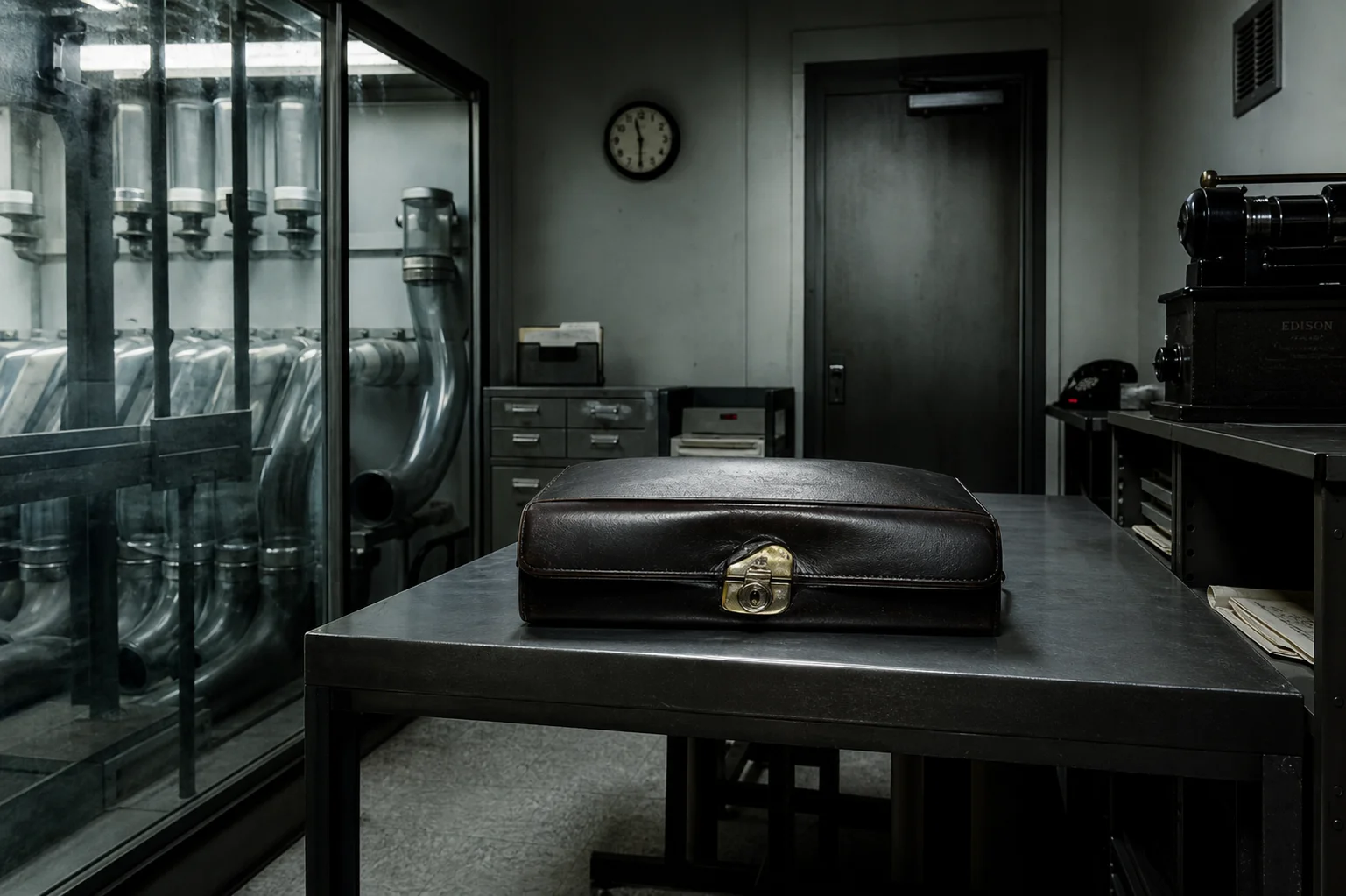
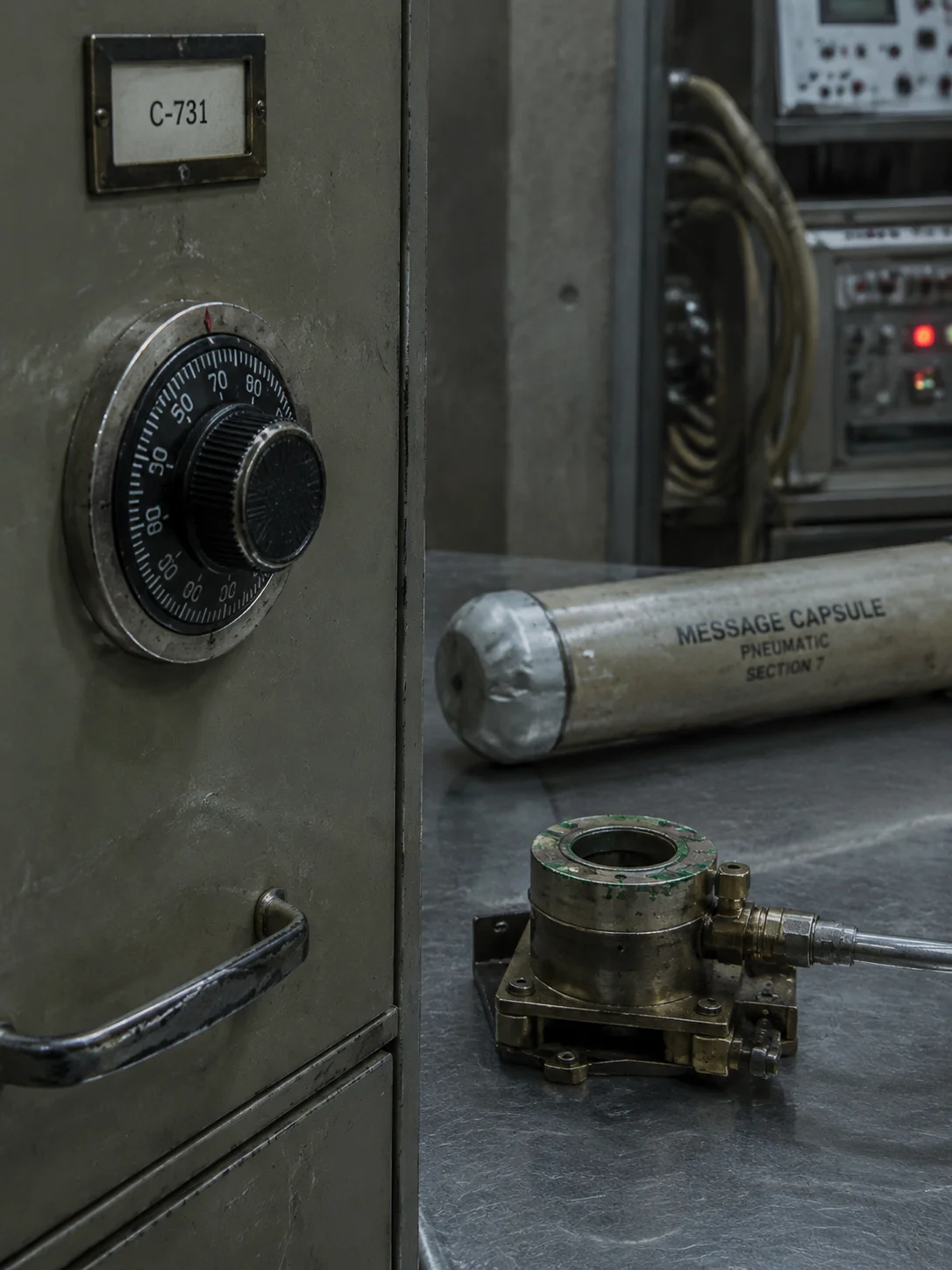
The air is sharp with the scent of carbon paper and machine oil. A distant, rhythmic click of a teleprinter machine echoes from a secure room. Your eyes adjust to the sterile fluorescent light, fixing on three details: the worn combination dial of a filing cabinet, a pneumatic message capsule with a scuffed end resting on a desk, and the green-tinted ink smear on the brass loading mechanism of a terminal port.
 Crime Scene Environment
Lighting is a flat, shadowless fluorescent hum, creating a sterile and exposed atmosphere. The air is cool and dry, with a low humidity that carries static. Acoustic density is minimal, characterized by the low-frequency hum of encryptor machines and the intermittent hiss of pneumatic tubes, with sound deadening concrete walls.
 Investigation Constraints
Analog and early digital Cold War era. Landline telephones, rotary dials, pneumatic tube message systems, mechanical combination locks, encrypted teleprinter machines (e.g., a SIGABA), paper files with carbon copies, physical surveillance (bugging devices, directional microphones), early computer mainframes for cryptographic analysis, physical keycard access for secure areas, and manual photocopiers.
✦ Related Cases ✦