The Collapsed Ledger
An independent investigator is summoned to a venerable university mathematics hall following the death of a professor and the disappearance of a chalkboard equation. The scene presents a series of discrete, institutional anomalies across professional records, personal ledgers, and the physical environment, requiring a meticulous, evidence-based untangling of interconnected timelines and testimonies before the morning faculty meeting.
 Initial Crime Scene
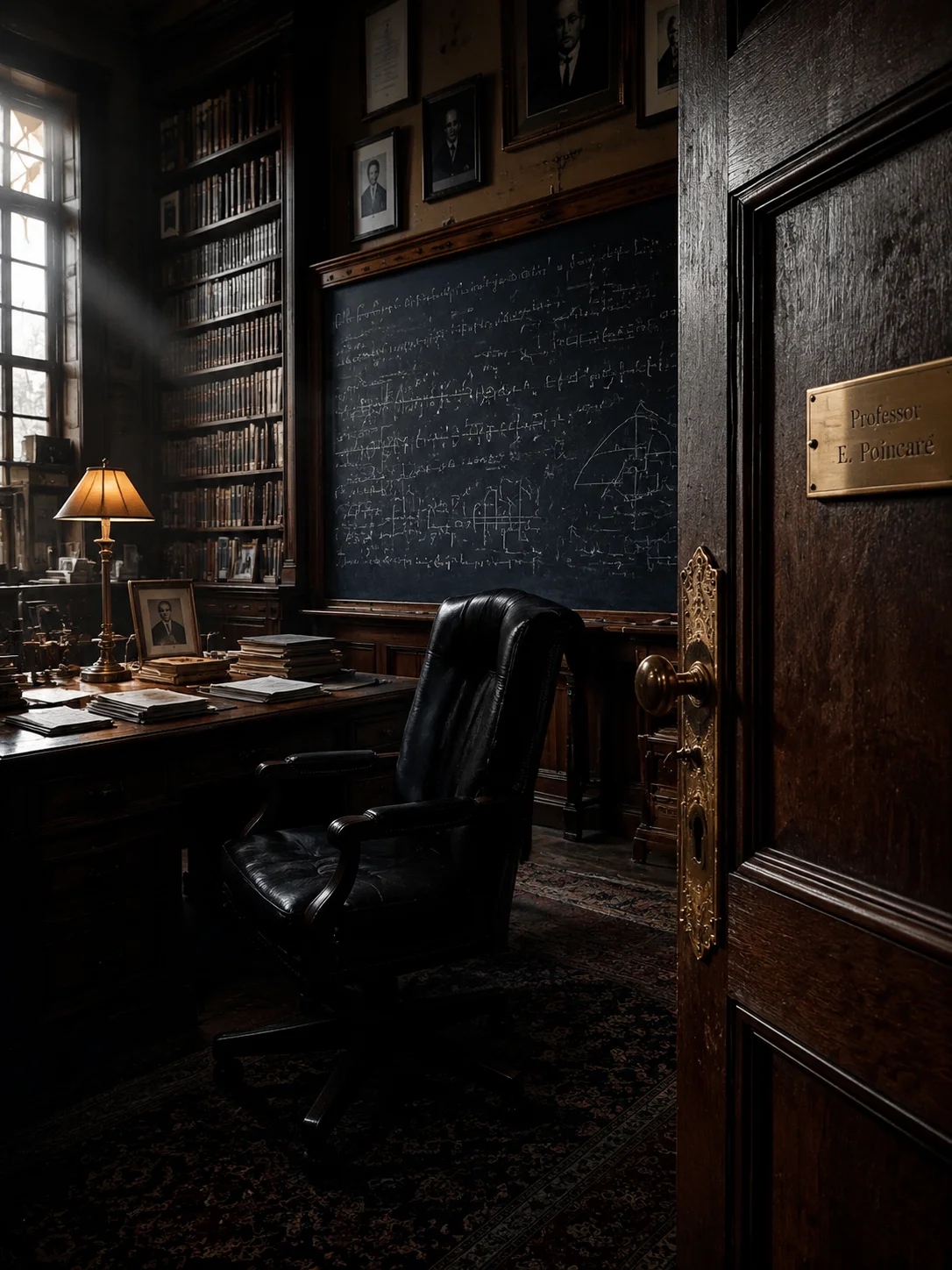
The scent of pipe tobacco and old paper hangs thick in the air, a venerable musk that clings to the deep-pile carpet and the dark wool of the furniture. A single, sharp sound punctuates the silence—the faint, dry squeak of a slate board marker set down too heavily. Your gaze registers the chalk dust patterns on the dark slate and wool, the precise indentation in the carpet from a heavy desk, and the silent, heavy oak door with its gleaming brass keyhole.
 Crime Scene Environment
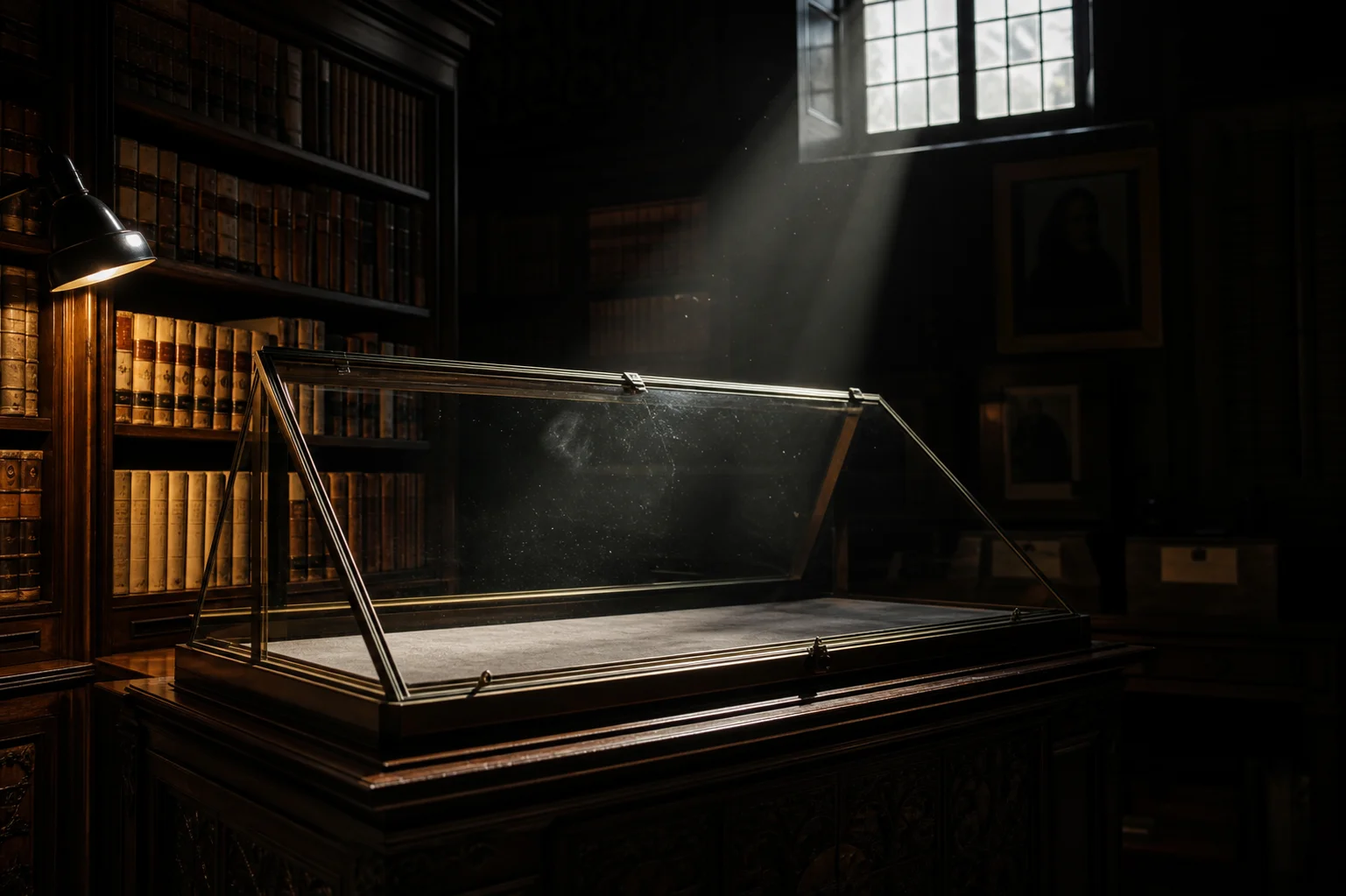
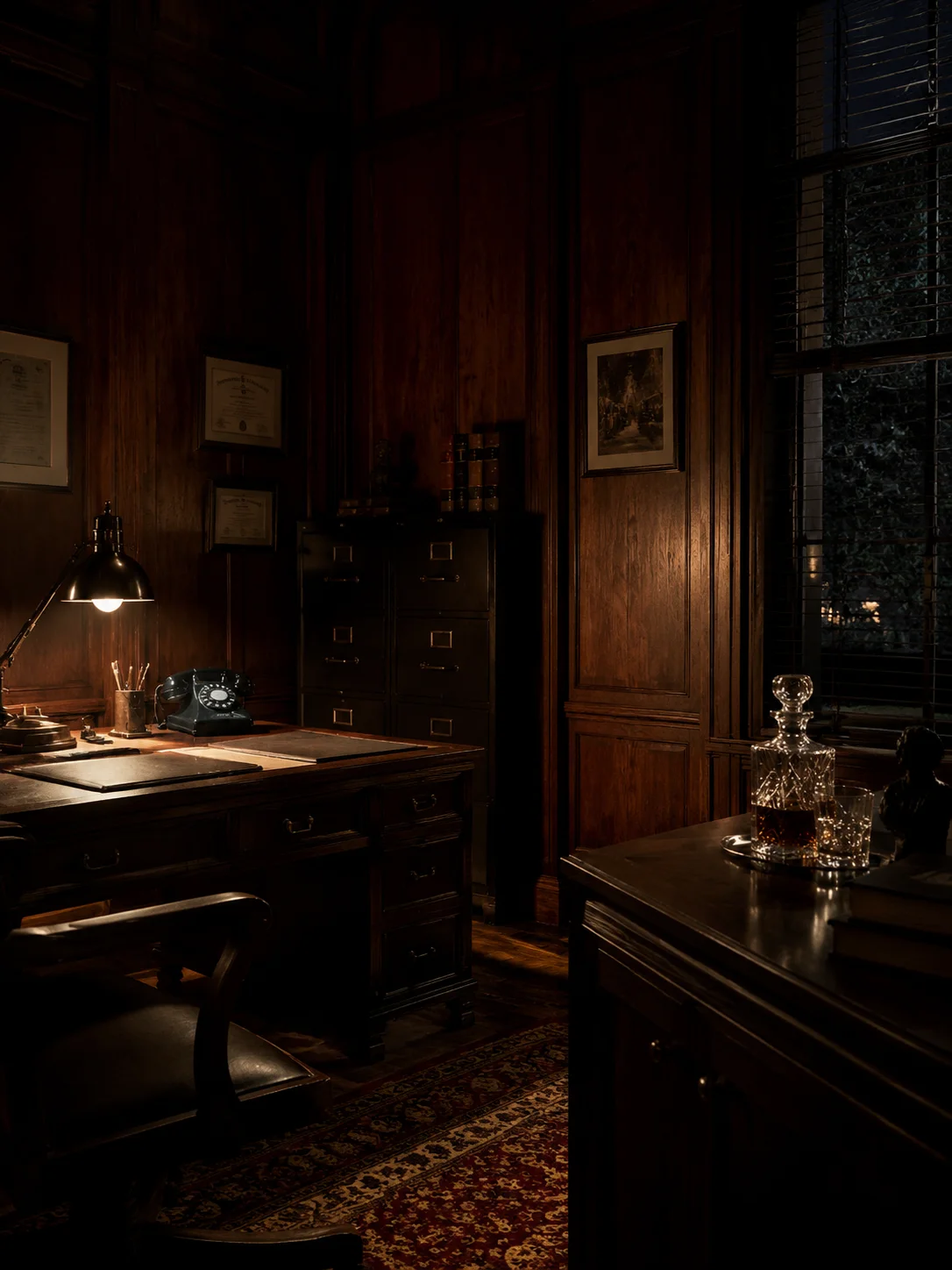
The lighting is a diffuse, institutional glow from shaded desk lamps and high windows, casting long shadows between the book-lined walls. The humidity is low and dry, a byproduct of central heating and aged paper, creating a static charge that makes chalk dust cling to surfaces. Acoustic density is high; sounds are muffled by the deep-pile carpet and heavy drapes, but every sharp click of a pen or rustle of a page carries with crisp, pedantic clarity.
 Investigation Constraints
Handwritten notes, fountain pens, carbon-copy memos, rotary-dial telephones, mechanical door locks with brass keys, manual typewriters, handwritten ledger books, physical library card catalogues, chalk and slate boards.
✦ Related Cases ✦