The Crestwood Audit
A forensic auditor arrives at the aging Crestwood Federal Penitentiary to reconcile a systemic discrepancy in the inmate commissary accounts. The investigation touches multiple departments, involving staff members with various institutional responsibilities and access levels, each providing accounts of routine procedure and occasional oversight.
 Initial Crime Scene
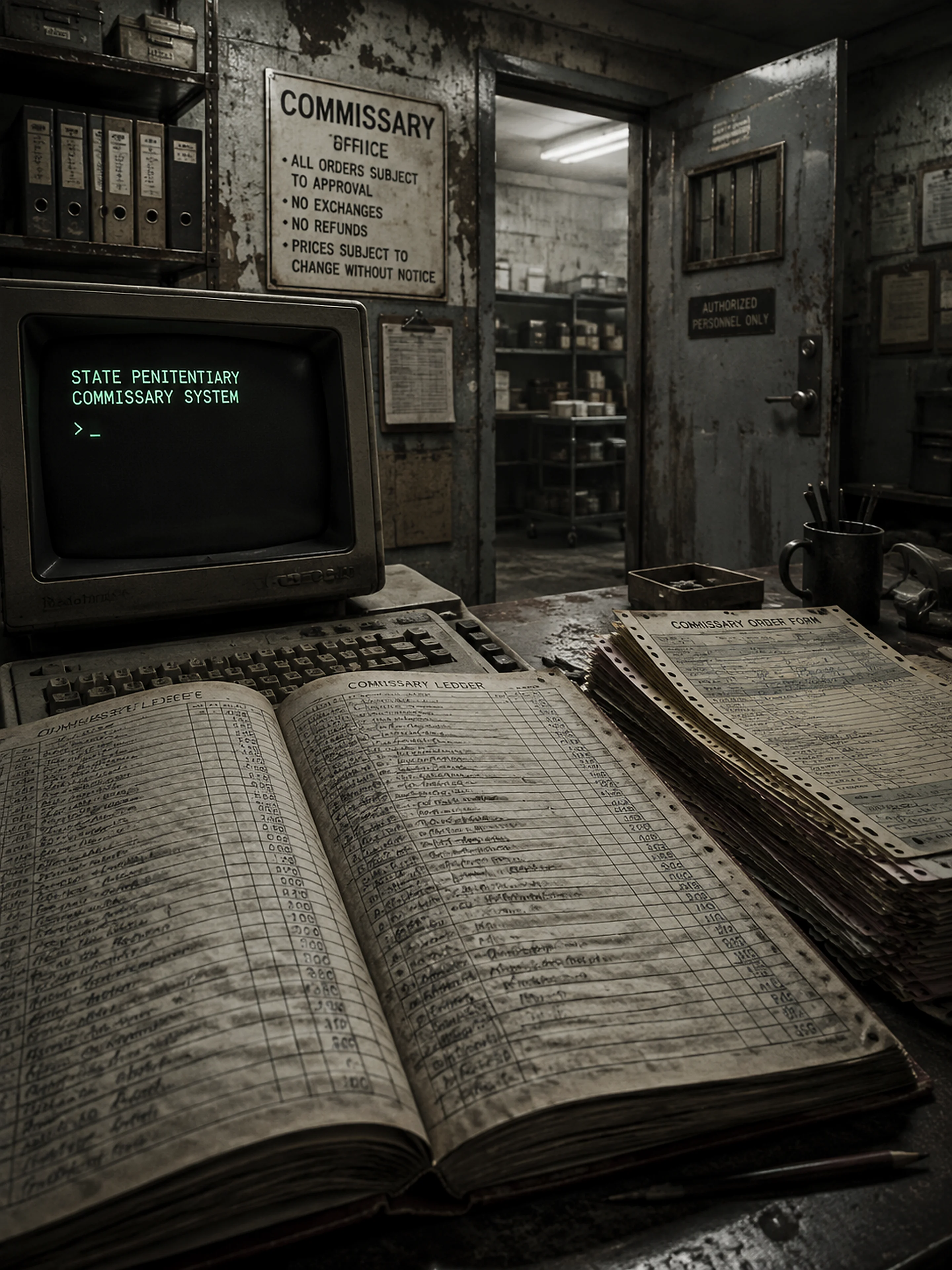
The fluorescent hum of the commissary office is the first sound, a constant, low drone. The smell of old paper and mildew hangs in the air, thick and damp. Three visual markers define the space: the central ledger's faint indentations from overwritten entries on the open page, the carbon-copy bleed-through patterns on a stack of triplicate forms, and the monochrome green-screen CRT terminal, its cursor blinking in the sterile, rust-stained light.
 Crime Scene Environment
The sandbox environment is characterized by a sterile, fluorescent lighting profile casting a cold, even glow. The air carries a persistent, oppressive humidity that makes paper feel damp to the touch. Acoustic density is low, dominated by the constant, algorithmic hum of institutional electronics and the paper-shuffling silence between movements.
 Investigation Constraints
Centralized inmate commissary ordering terminal (monochrome green-screen CRT), paper-based inventory ledger sheets signed in triplicate, security camera VHS tapes on a 72-hour rotation, landline telephone call logs, carbon-copy requisition forms, basic electronic door access cards logging entry/exit times, institutional intercom system.
✦ Related Cases ✦